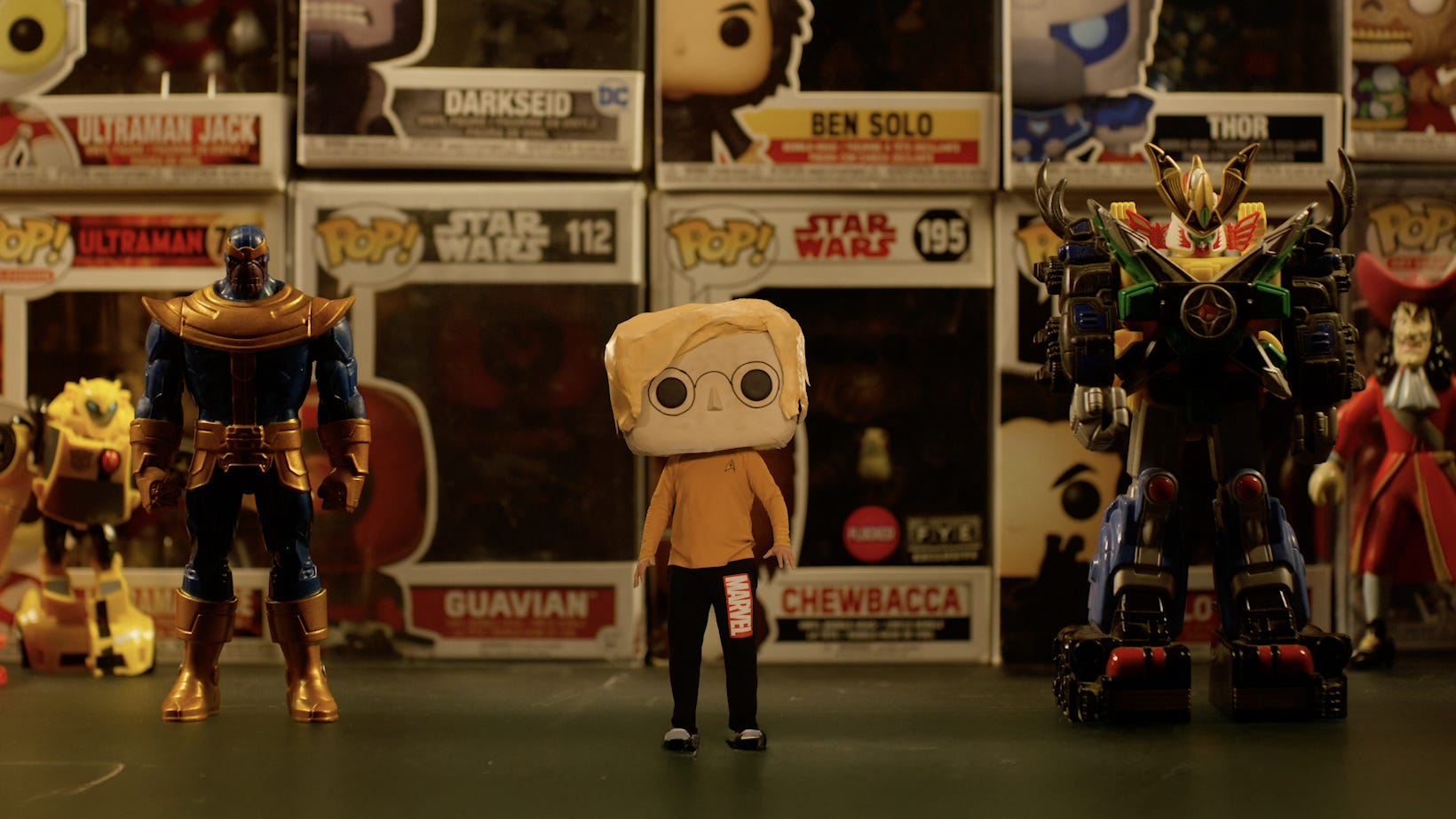
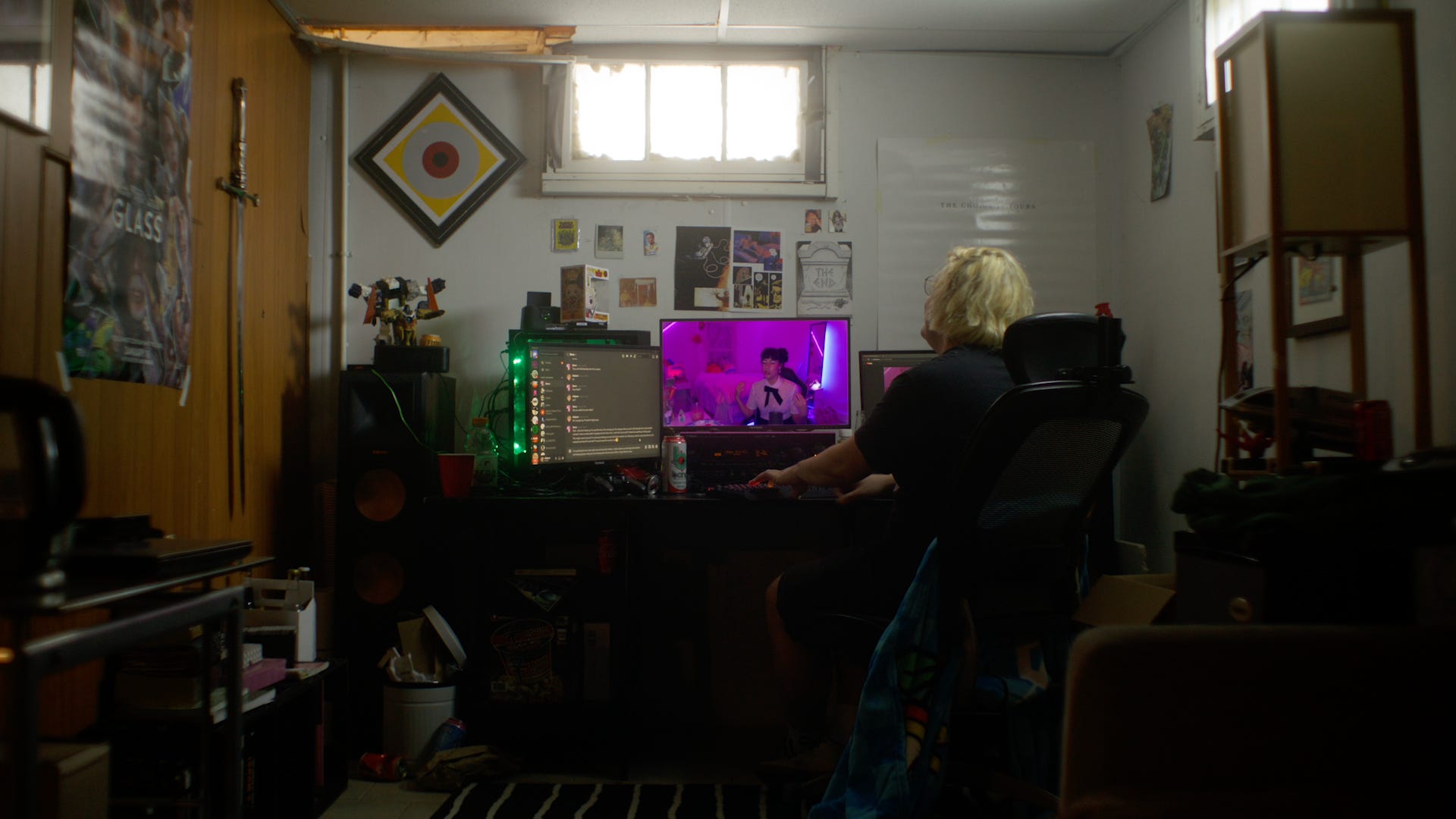
Aidan (Russell Sorbello), an awkward fanboy, finally leaves his mother’s basement to meet Sierra (Natasha Mercado), a bubbly vlogger fresh off a breakup who needs help filming a new video series at Comic-Con. What happens when the orbiter gets promoted to content co-creator?
Mark Leckey once described “the long tail” as a kind of endless shelf where culture never dies. Every image, every sound, every forgotten scene or idea waits to be rediscovered, replayed, remixed. Transformers: Terminal was made for that place, where memory and signs become raw material and meaning is rebuilt through repetition. Its release on YouTube and Do Not Research is a return to the digital commons that raised it.
The film drifts through the ecstatic paralysis of two people reaching for each other through the glow of corporate myth and unending reboots. Fan communities gather around the ruins of shared stories, fusing tenderness with obsession, invention with decay. Their longing animates them even as it confines them. To love through these screens is to dissolve inside a corporate dream and borrow emotion from a Disney logo. Every frame in this film is crowded with trademarked icons that once promised connection. Each borrowed symbol becomes a vessel for unspoken need, a mask worn so long it begins to breathe.
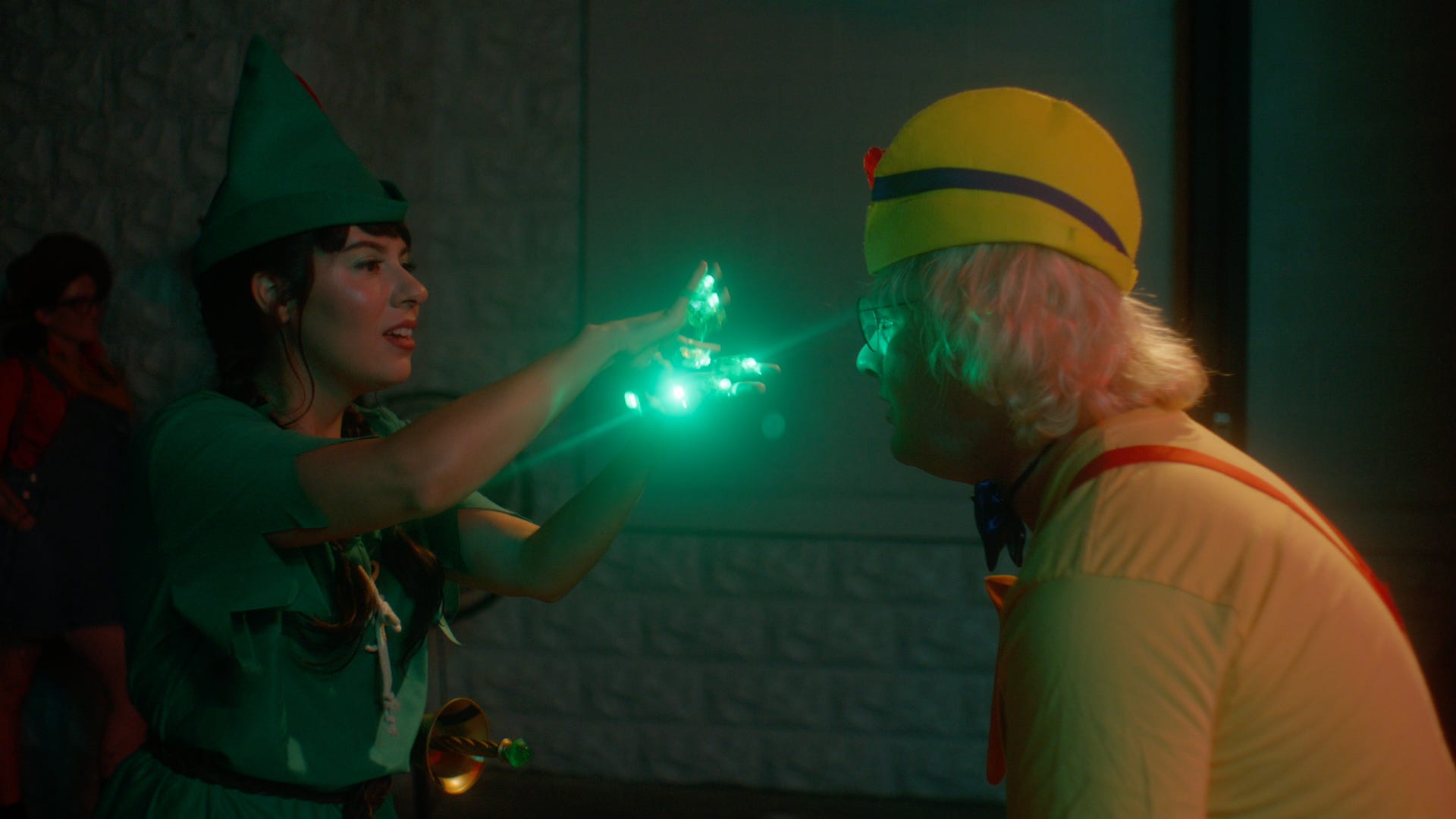
At its heart is Sierra, a young woman who quits her job and becomes a content creator, searching for a space of expression and agency but ends up performing for the very gaze she hoped to escape. Her creativity is genuine, but the algorithm trains it toward spectacle. When she finally meets Aidan, the NEET who has watched her for months, their exchanges collapse into fandom references and fragments of media lore. Aidan can only speak through the language he inherited: that of franchises, fandom, and pop-culture trivia. The parasocial subject par excellence, he is unable to hold Sierra the person, and, uncomfortable with the flesh and blood of the real, he retreats into fantasy and projection. The two orbit each other in a feedback loop of attention and decay, both haunted by the same signal. Just as they think they may have broken free and approach a more genuine connection, something ruptures in the current.
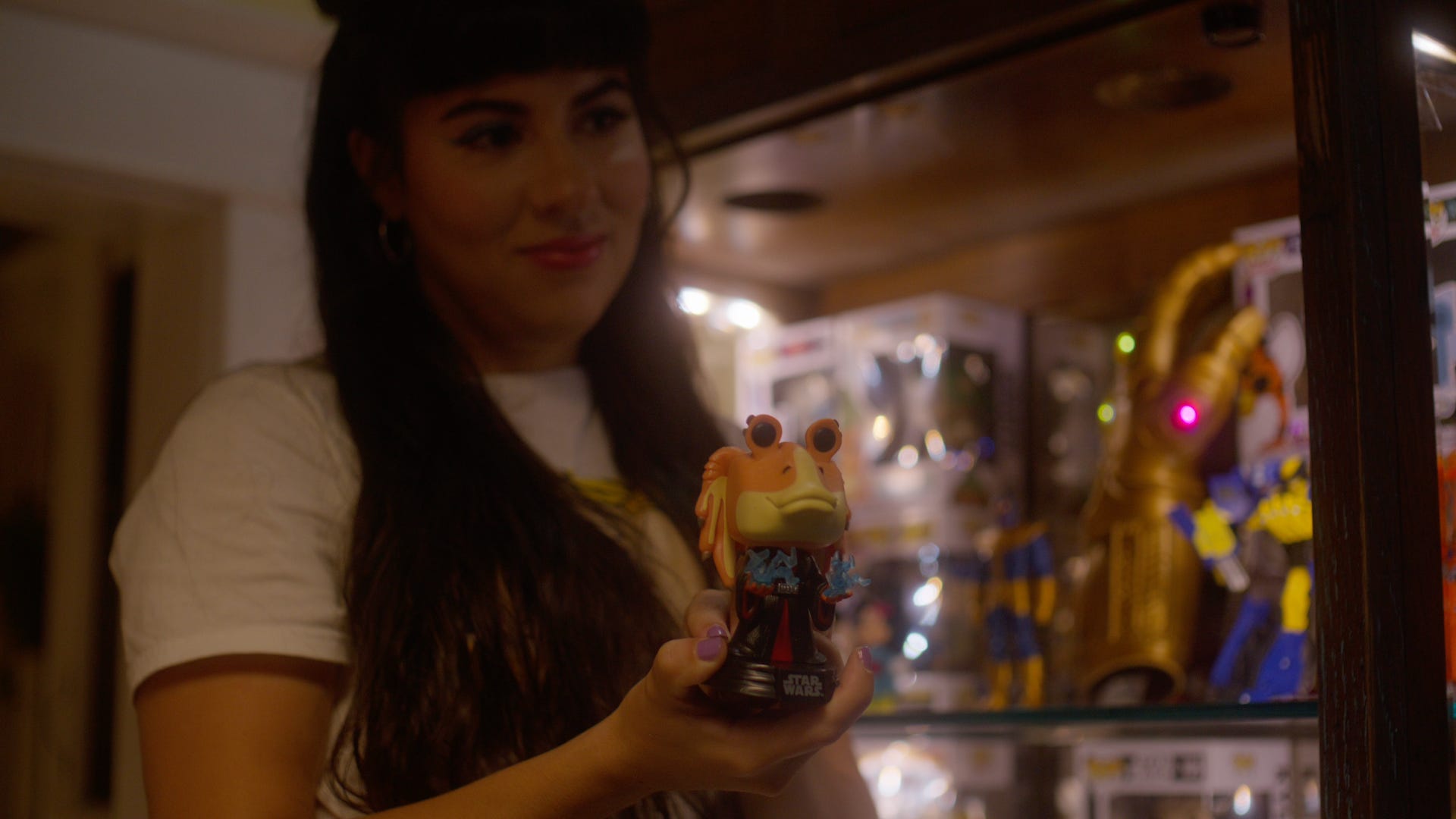
The story goes like this: the legend of Darth Jar Jar drifts through circuitry like a viral myth, a rumor mutating faster than it can be disproved. The galaxy’s fool (introduced in the first of many Star Wars reboots to entertain children and sell toys, despised by older fans) later reimagined as the saga’s hidden master. Jar Jar was meant to be revealed as a secret Sith Lord, but Lucas cut the plot in fear of his own audience. From that cut grew a thousand edits. Born from a single Reddit post and carried through the algorithm like rumor or prayer, the theory accelerated on contact, inverting ridicule into revelation, irony into faith. Message boards and Discord servers become factories of belief. The chat hums as chorus, its voices syncing, splitting, recombining, transforming mockery into devotion and loneliness into authorship. This is the power of fandom. Transformers: Terminal joins the stream mid-flow, a fan fiction about the fans themselves, built from the same haunted networks that feed it, forever rewriting the story of who gets to tell stories at all.
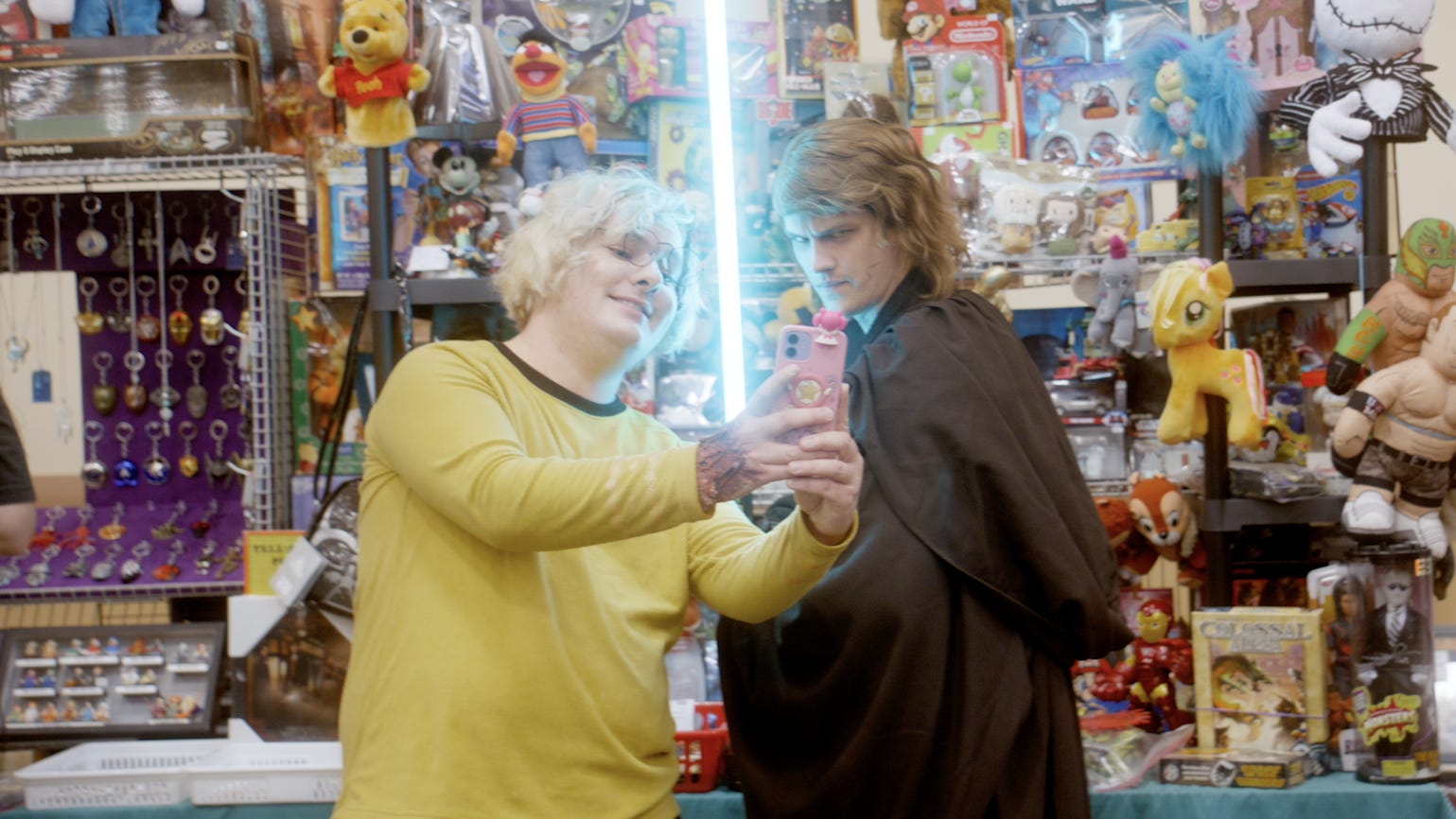
Nostalgia is the bloodstream here, bright and poisonous. It clings to every image, insisting that nothing loved may ever be allowed to die. Fandom becomes a kind of immortality cult, feeding on the past to keep its icons alive. To remember is to resurrect, and resurrection always smells faintly of rot. A generation raised on franchises now lives inside them, aging without growing up, sustaining the dream that the world might still be simple, safe, serialized. The body becomes interface, the interface becomes wound. Sierra and Aidan shimmer between flesh and franchise, between the warmth of affection and the cold persistence of myth. They are beautiful in their persistence, horrifying in their devotion, haunted by the futures they were told these stories would deliver. Star Wars never dies; it’s reanimated endlessly by the studios that sell its corpse back to the fans who beg to see it breathe.
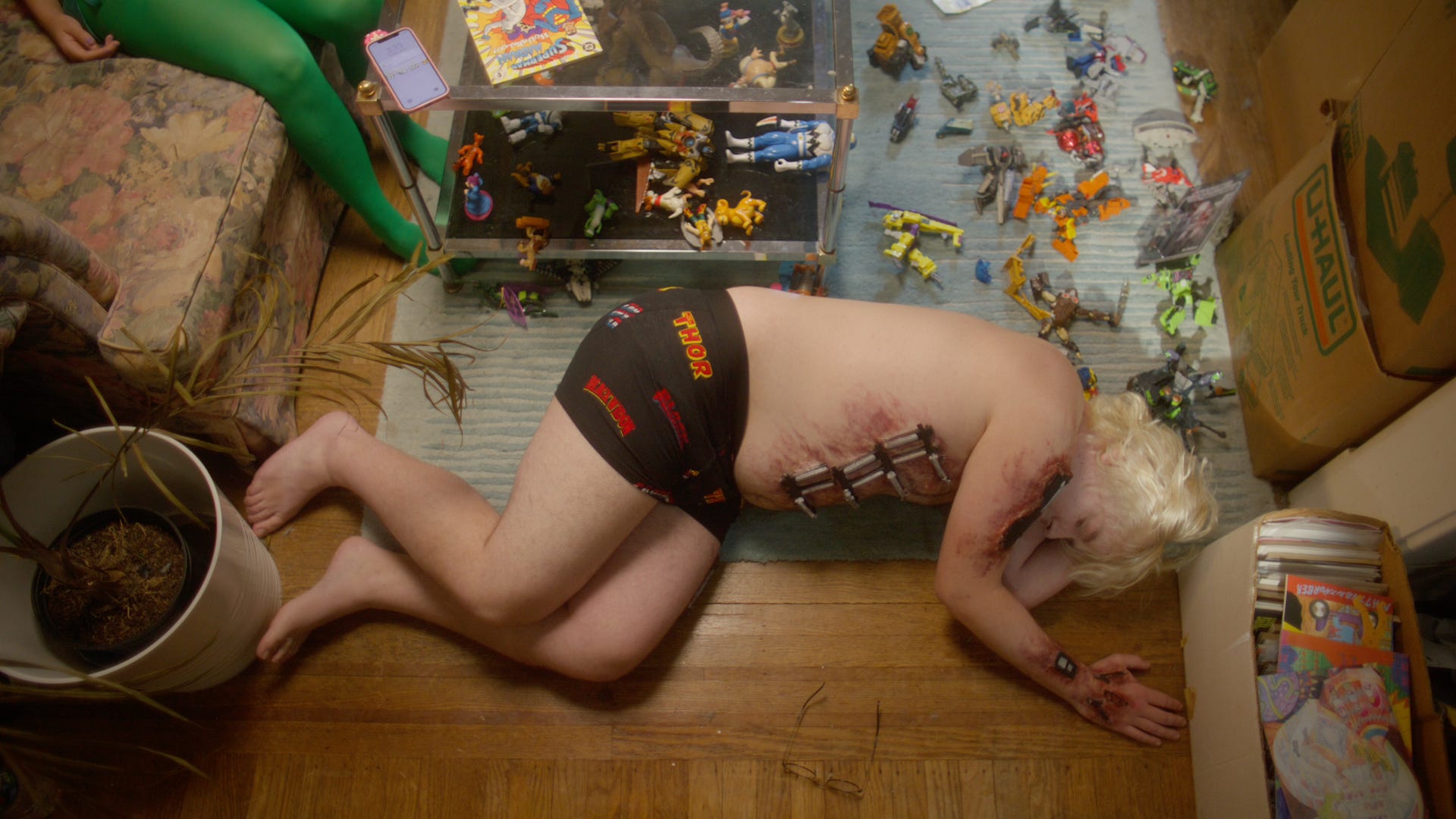
What once promised liberation through connection has congealed into repetition. Every platform offers the same endless dream, a world rebuilt from the debris of itself. The feed converts memory into content, feeling into currency, attention into labor. Within this economy, fandom becomes both symptom and cure, an engine that turns loneliness into work and love into archive. The film watches this process with fascination and grief, aware that the same devotion that sustains meaning also consumes it.
Beneath it all beats a single, fragile conviction: you don’t kill the part that’s cringe, you kill the part that cringes. Out of that refusal comes a kind of grace. The body sheds its softness and clicks into place, joints locking into the shape of its desire. The crowd and the screen merge, faces and pixels folding into one another, and the plastic dreams of being human, just as the human dreams of being saved.
Miles Engel-Hawbecker
Writer / Director
Theresa Tomi Faison
Producer / Editor
Full list of credits at TransformersTerminal.com
Watch the full film here. Premieres at 10am Eastern time today!