
The Veiled Prophet Fair


Longtime DNR contributor Devin Thomas O'Shea has a new book out today: The Veiled Prophet: Secret Societies, White Supremacy, and the Struggle for St. Louis.
This week in NYC, visit the live event: Devin O’Shea and TrueAnon hosts Brace Belden & Liz Franczak at The Bell House on June 25th.
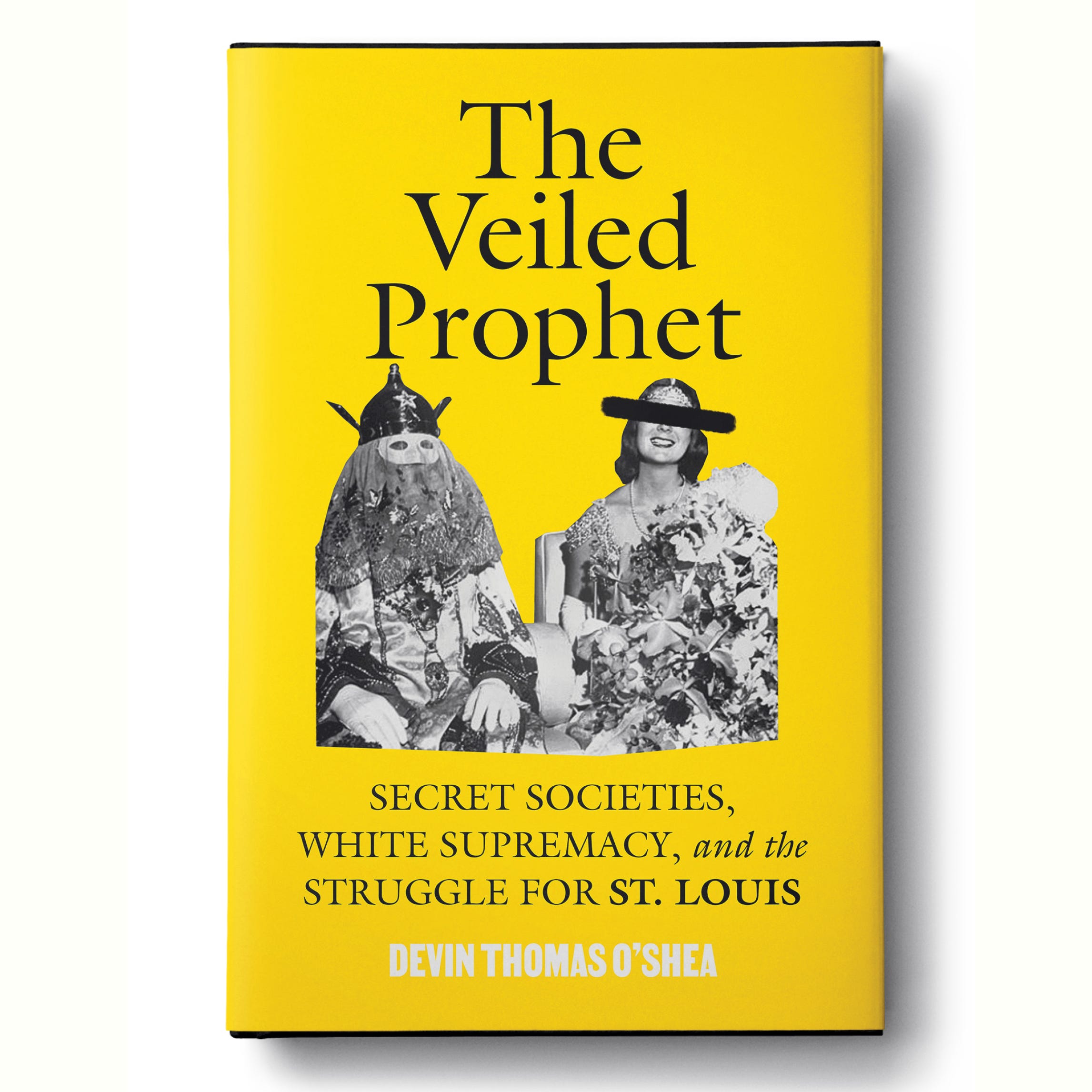
CHAPTER 16: The VP Fair
“This Veiled Prophet Fair’s the biggest farce,” said Big Daddy, correspondent for the local access program World Wide Magazine. Visiting the fair in July 1987, Big Daddy noted that the most popular downtown exhibit was the bathrooms. “A bunch of rich old men get their jollies off, taking money from the city,” he said. “You think this don’t cost you? You’re kidding me. Look at all the police down here walking around doing nothing. I’m telling you, this is costing you big money, and you think it’s big fun. You people that come to the VP Fair; you must be stupid.”
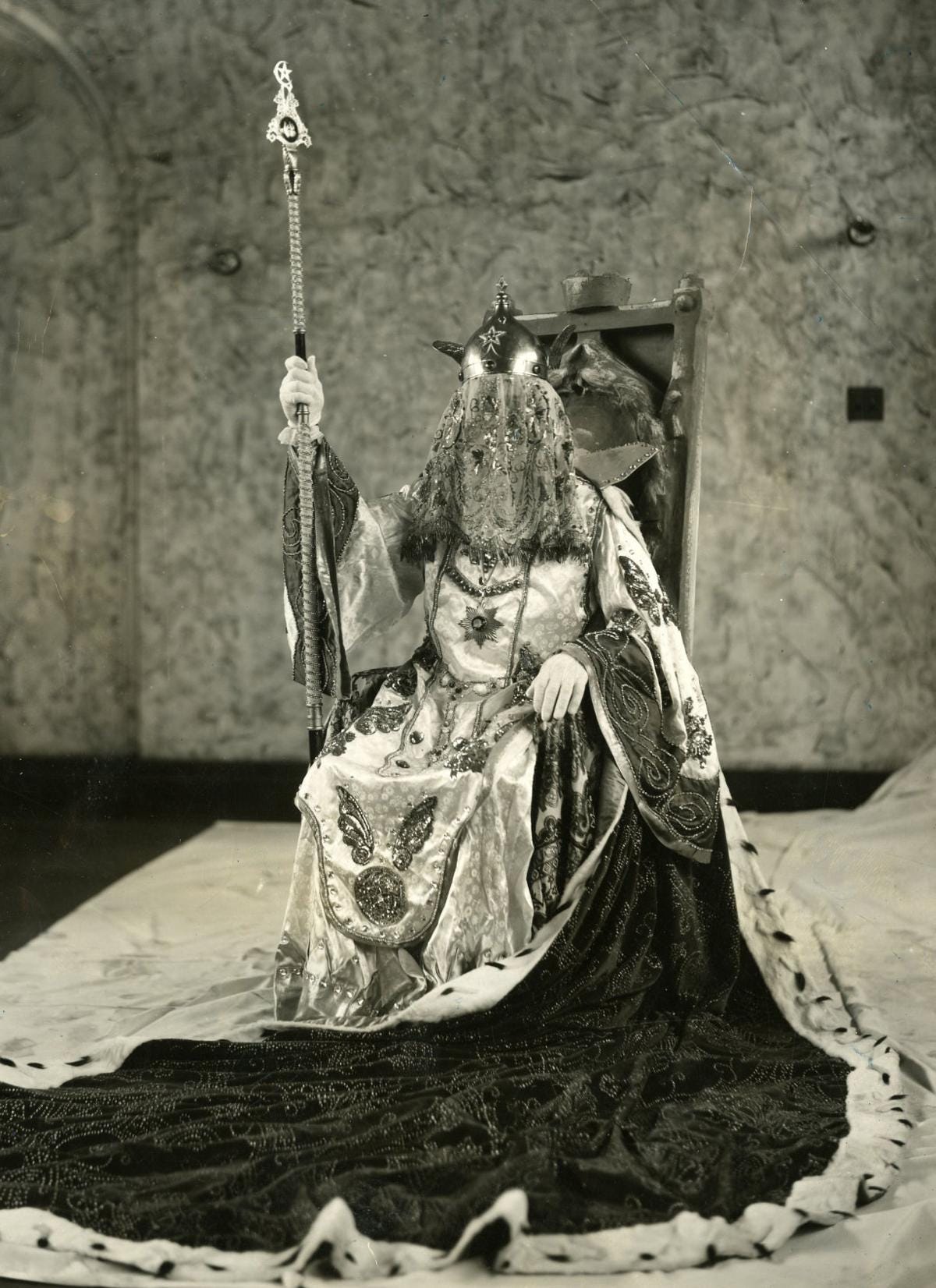
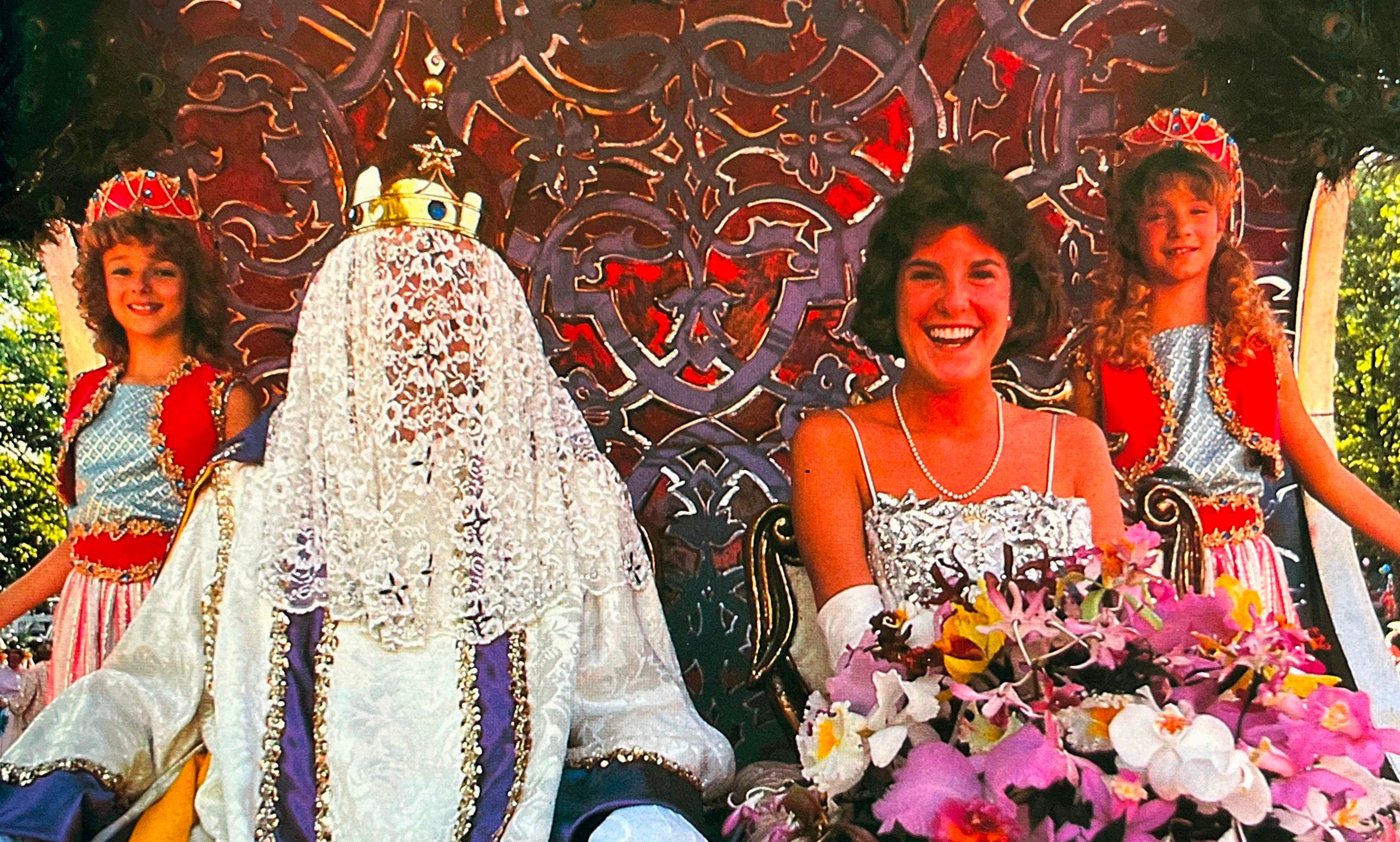
The Veiled Prophet Parade celebration morphed and rebranded in the 1980s. From 1981 to 1995, the VP Fair, “America’s Biggest Birthday Celebration,” became a major summer festival in downtown St. Louis. For a little over a decade, the VP meant a bonanza of red, white, and blue. It’s a coincidence of literature that the devil often appears in archways, and that this summer festival, presided over by our favorite Ku Klux character in the heart of downtown, was held directly under that big silver parabola.
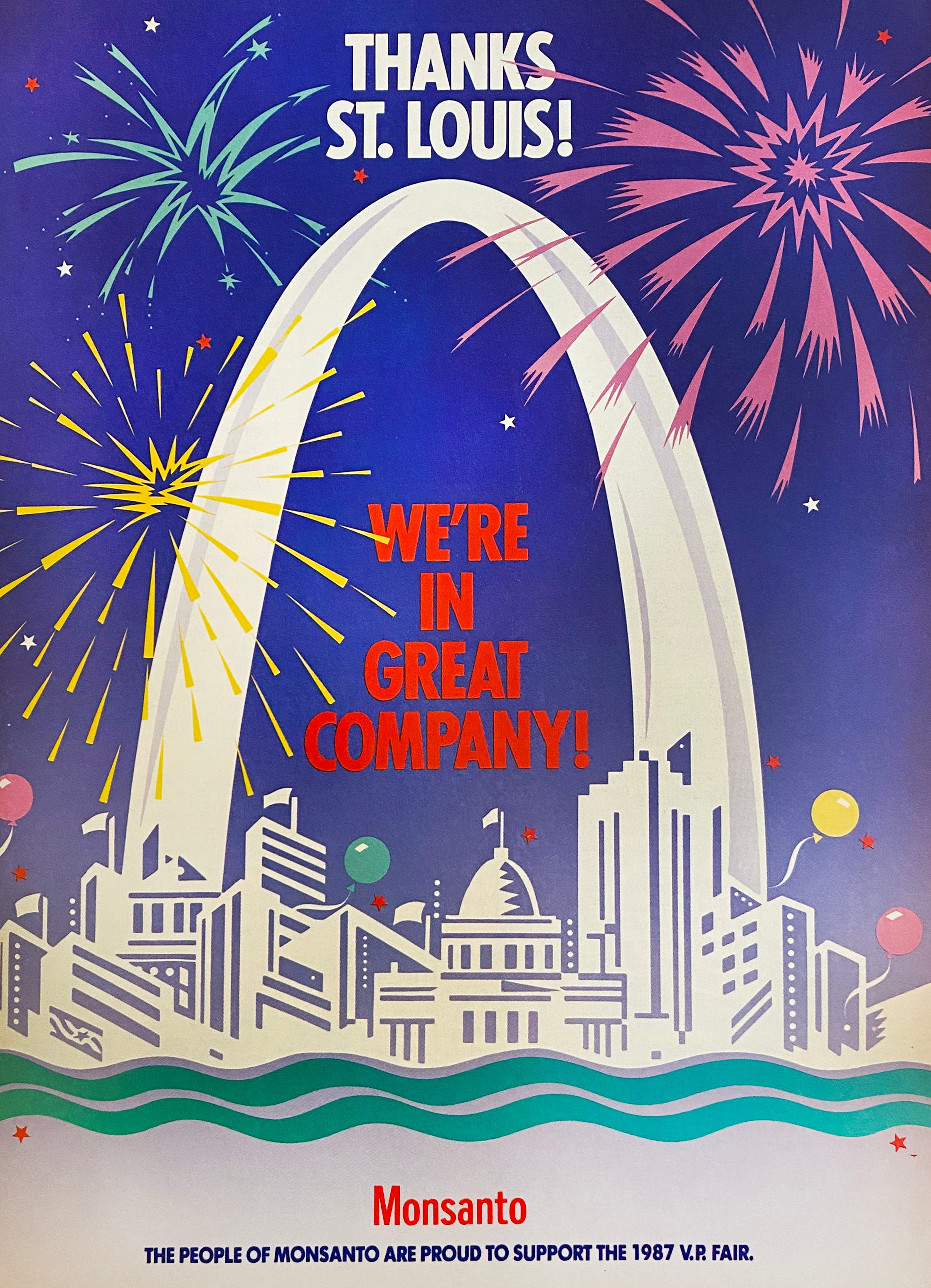
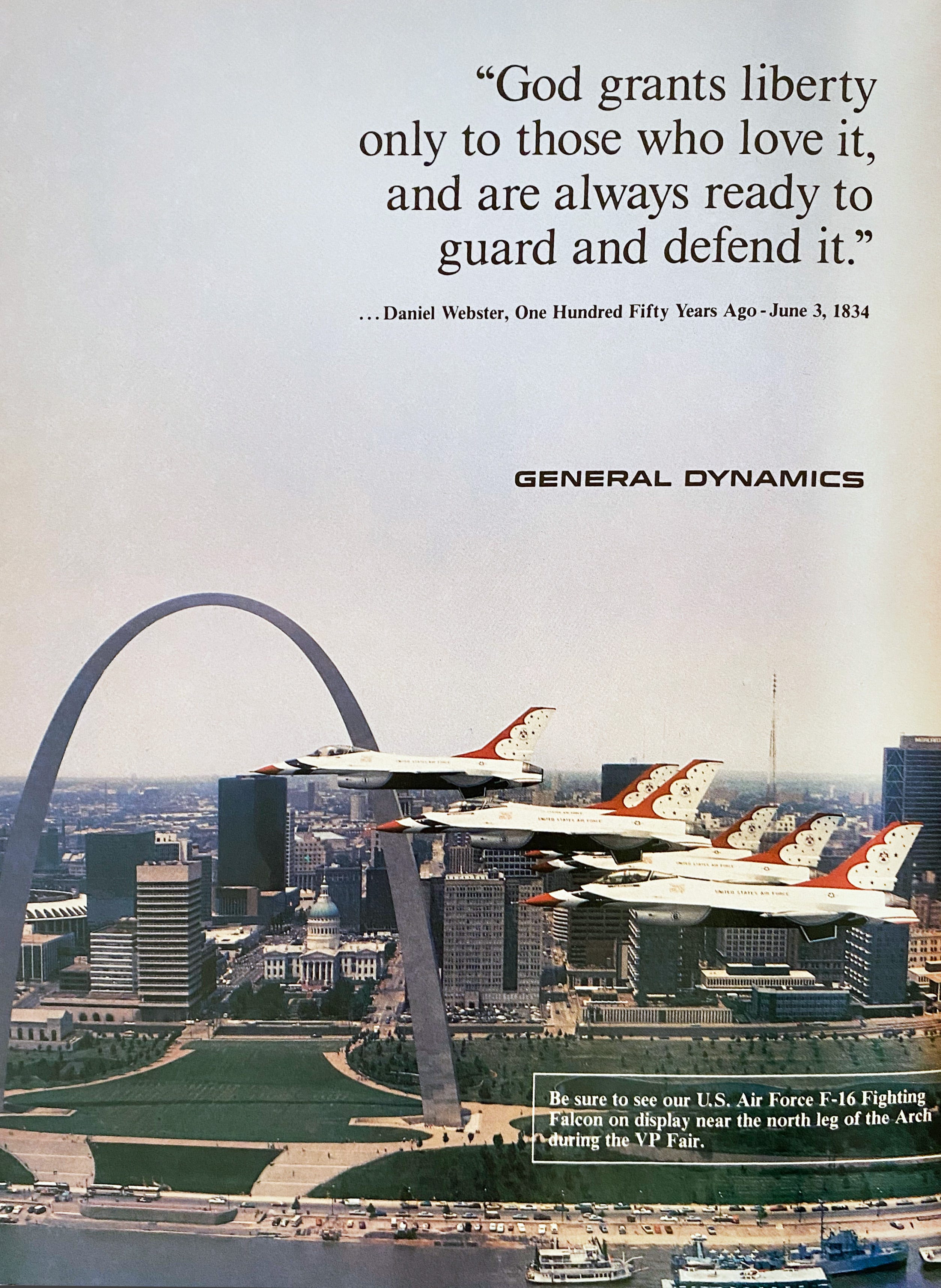
There were beers and brats; patriots and cheerleaders; women in bikinis cooling off in the spray of a fire hydrant turned fountain. Every summer, celebrities like Dolly Parton and the Goo Goo Dolls performed on the riverfront, and the McDonnell Douglas Air Show put on a deafening display of superior military airpower.
As a boy, I was lucky enough to attend. I can still remember the eardrum-splitting noise of a McDonnell Douglas AV-8B Harrier II Jump Jet, which wowed the audience by suspending itself over the waters of the Mississippi River. It was shockingly loud. The sound seemed to erupt from the cement pavement before bouncing off the metal exterior of a leg of the Arch. My sister, younger by a few years, stuck her fingers in her ears, but it was all-encompassing. There was no escape except to retreat down into the Arch’s subterranean museum.
Like future military targets in the Middle East, the festival crowd was meant to be shocked and awed by the 120-decibel power of these weapons. Jets demonstrated their capacity to strafe enemies at supersonic speed, with the crowd gathered under the Arch substituting for the people of Ho Chi Minh City or Stalingrad.
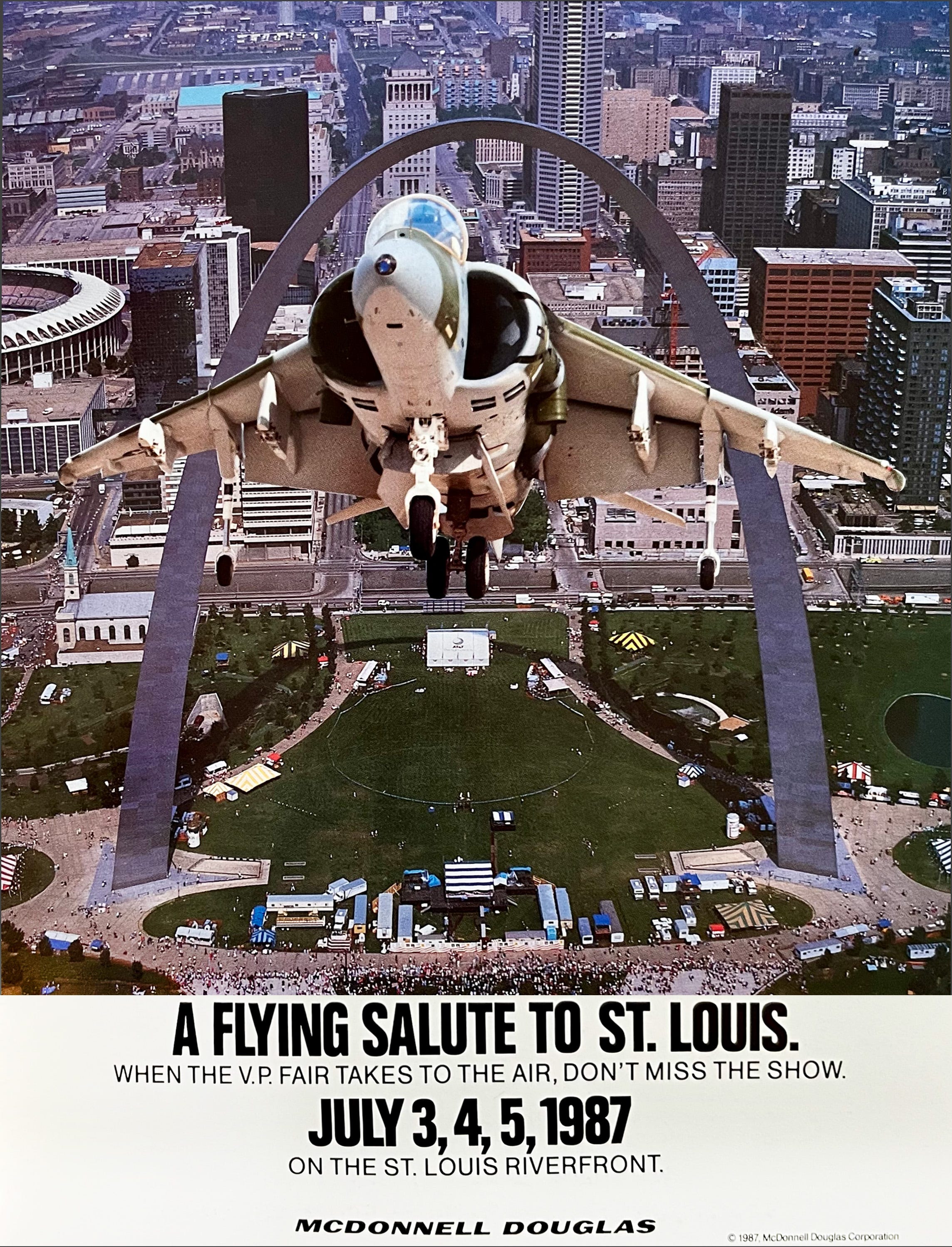
The planes’ godlike speed, their patterned formations, their total control over an ocean of sky above the Mississippi would translate into air superiority over Baghdad in the Gulf War. If US citizens were to appear in the streets, such as in the scenario of a general strike, in the blink of an eye, an F-4 Phantom II could deliver more than 18,000 tons of ordnance, wiping away whole city blocks with scientifically precise missiles, many of which were manufactured just north of downtown, in the military aircraft sector that developed around Lambert’s airport and Scott Air Force Base.
Since their founding, the Klansmen and the Veiled Prophet have both sought to authentically position themselves alongside the red, white, and blue, but in the 1980s, the shift to a downtown VP celebration was also meant to reinvent, and rejuvenate, not only St. Louis but the American soul. The city sought to shake its stagflation malaise and claim the birthday of the United States as its own.
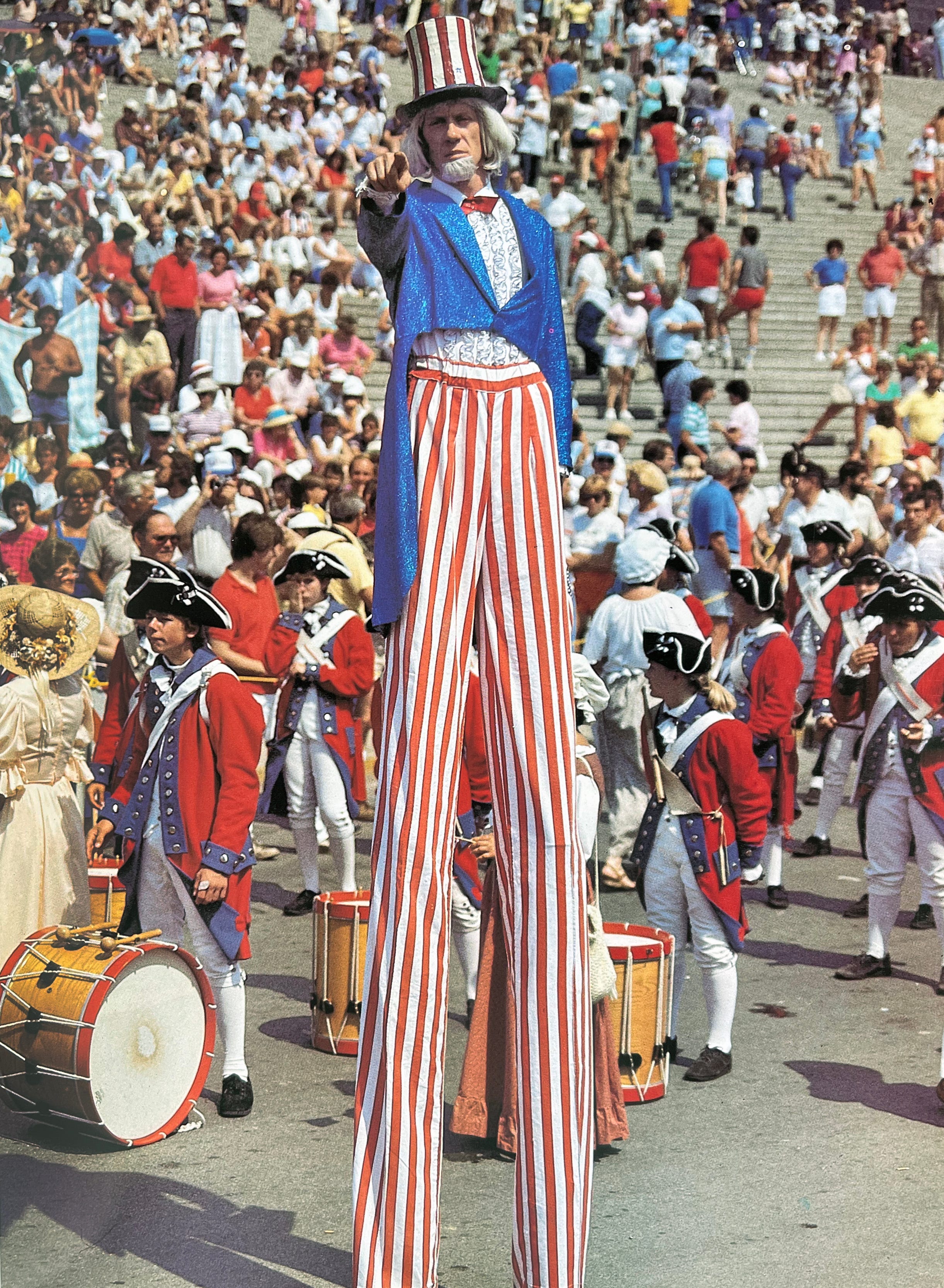
The VP Fair did so with a concentrated display of Reaganite Americana—funnel cake; Budweiser; a water-skiing Uncle Sam; riverboat races between the Delta and Mississippi Queen; a cosplay division of Revolutionary War minutemen sporting tricorn hats and muskets; Tom Sawyer stealing a pie off a windowsill; two hundred men and women with their right hands raised, wearing T-shirts that read “I enlisted at the 1985 VP Fair.”
THE EADS BRIDGE FIASCO
For most of the VP Fair’s history, Black St. Louisans stayed away in droves. Citizens objected to the July heat and showed a lack of interest in the performers as well as a generally cautious attitude toward the Veiled Prophet, who most understood as a nefarious white character if not an explicit Klansman. Criticism remained constant: “We were educating both Blacks and whites in the community about what a dud this VP thing was all along,” Percy Green said.
The VP Fair advertised itself as a summertime event for white people to drive in from the suburbs and spend a day downtown, which was surrounded by economic blight. Television cameras captured the early ’80s crowds, revealing a sea of wall-to-wall white faces in a city that was 45 percent Black. Fear of violence and of the other operated in the background. “In 1982,” Thomas Spencer notes, “two young white men were shot to death when they tried to stop a racially charged fight between groups of black and whites.”
In 1987, this racial inequity was pointed out in a series of articles by Eric Mink of the St. Louis Post-Dispatch, who also noticed some statistical incongruities in the VP Fair’s reporting. The group’s communications chairperson, Allyn Glaub, said that 3.75 million people attended the second fair in 1982. That number was much higher than the St. Louis metropolitan area’s entire population, which suggests the equivalent of every single person in the St. Louis region attended the fair on one of the three days of the event. Mink also noted the expensive cost of re-sodding the entire Arch grounds every year after the celebration, and that the fair leadership had accumulated huge salaries while resisting calls to diversify, failing to feature more Black musicians or vendors.
Despite the iron rule of laissez-faire economics, which was stripping St. Louis public schools bare, in 1987, the VP celebration received $650,000 from taxpayer funds, from both St. Louis City and County, in order to stay afloat. Bad weather had wreaked havoc on the organization’s checkbook. “It’s almost like there’s a curse on this thing,” Percy Green said in 1993. “That’s what I like to think.”
As Big Daddy of World Wide Magazine pointed out, taxpayer money became the table stakes for negotiation between the Veiled Prophet leadership and city officials. The VP Fair needed lots of public funding every year, not just in the bad times.
In 1987, the Veiled Prophets pressured the St. Louis police board to close the Eads Bridge to foot traffic during the VP Fair. They described this as a safety precaution to prevent “East Side street gangs” from “coming across the bridge to rob and mug.” It quickly turned into a public relations nightmare. The East St. Louis NAACP filed a complaint on July 4, and the bridge was reopened for the remaining days of the fair. “You can’t say the people from the East are more dangerous than people from St. Louis,” ruled Judge John Nangle.
For a civic organization attempting to rehabilitate its reputation—to prove to the world that “though we have a Klanish-looking mascot, we are not a bunch of racists”—the Eads Bridge fiasco was a huge embarrassment, but in the following days, it was made worse by the historical wound it ripped open. For many St. Louisans, the VP Fair incident was an uncomfortable echo of the East St. Louis “Race Riots” that took place in the summer of 1917.
As noted in chapter 9, the 1917 incident was not so much a riot as a pogrom—the open killing of Black people by their white neighbors, the police, and the National Guard. The only escape route from the violence was into the woods and fields farther east, or over the Mississippi bridges. The Eads and the Municipal “Free” Bridge had provided safe passage for thousands of traumatized refugees.
The event was not discussed much in public or taught in St. Louis schools, so by the 1980s it had been all but buried. In the middle of a red, white, and blue extravaganza, the Veiled Prophet inadvertently resurfaced this generations-old reminder of the way St. Louis leaders have historically treated their fellow citizens. To them, African Americans are a disposable labor force who are not invited to the party.
The local papers continued covering the debacle. Ron Henges, VP Fair chairman, claimed the organization of the most powerful people in the region was actually being bullied. “The Post was very critical of the fair because they felt it was an exercise by the fat cats,” Henges explained in an interview. “They felt there weren’t enough black people involved with the planning of the fair. . . . I think a lot of that was rhetoric on the part of a liberal newspaper.”
The libs were at it again, Ron thought, but instead of ignoring the criticism, the Veiled Prophet Society responded.
Over subsequent years, the fair became less of an educational and cultural celebration and more of a “big bash,” a time of “pure entertainment” and a symbol of summer in a broad sense, more inclusive and popular among all St. Louisans. In the late 1980s, the Veiled Prophet Society expanded its membership by establishing a minority relations committee headed by Steve Roberts Sr., a prominent African American businessman and alderman.
Roberts Sr. was put in charge of courting the Black community, increasing its participation in the fair. “These people [VP leadership] were clearly civic-minded,” said Roberts. “They had the best intentions but didn’t understand, not just black people’s, but other members of the community as well’s feelings—that the city was paying for the fair, but not all groups were welcomed to it.”
Percy Green criticized the minority relations initiative on the grounds that it forced leaders of the Black community to succumb to the white power structure’s rules. For Green, the integration of the Veiled Prophet’s membership was “more of a PR thing to protect the integrity of the VP’s name. Black people wanted to join because it would put them in an environment of powerful people, and they could get some profit out of it.”
1988, a year after the Eads Bridge fiasco, marked the celebration of the eighth annual VP Fair. At 9:07 a.m., on the river out in front of the Arch, the Delta Queen steamwheeler blasted its horn to announce victory in the annual riverboat race from New Orleans to St. Louis. A sizzling heat wave fried fairgoers throughout the day, and the venders rang up record food and beverage sales, sponsored by Veiled Prophet companies like Maull’s Barbeque Sauce and Budweiser. Good Morning America broadcast live from the grounds of that silver gateway, featuring presentations by Barbara Bush and Vice President George Herbert Walker Bush.
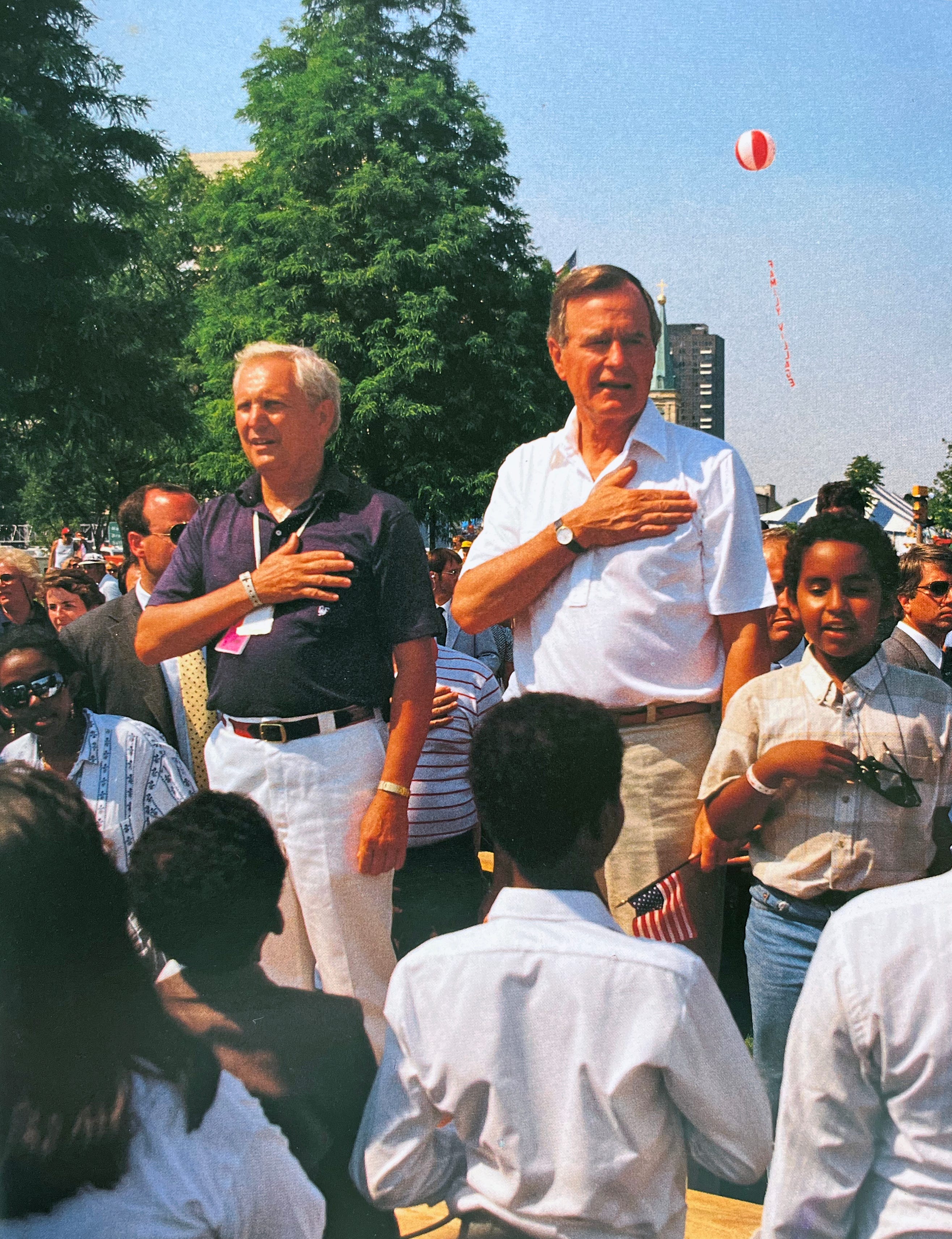
Publicly, the Bushes were in attendance to celebrate the naturalization of 175 new citizens. George H. W. “Poppy” Bush, standing alongside Missouri governor John Ashcroft, was photographed holding the two-year-old daughter of a native-born Somalian. Bush had served as director of the CIA in 1976, before Webster, and when Poppy became president in 1989, he announced that William H. Webster’s sober services were no longer required. As head of the agency, Webster had been unable or unwilling to overthrow General Manuel Noriega in Panama. “All of his training as a lawyer and a judge was that you didn’t do illegal things,” wrote Duane R. Clarridge, a senior CIA officer enmeshed in Iran–Contra, in his memoir. Webster “could never accept that this is exactly what the CIA does when it operates abroad. We break the laws of their countries.”
He was photographed reciting the Pledge of Allegiance with Ronald Henges, acting VP Fair general chairman. Poppy’s cousin was crowned Veiled Prophet Queen in 1941—“Barbara Wear One of the Most Beautiful V.P. Queens in History,” read a Globe-Democrat headline. Barbara’s father was James Wear of George Herbert Walker & Company, the “dry goods” store founded in 1900.
The 1988 VP Fair photo-op was a success, but reporters used the opportunity to question the vice president about the fact that US Navy ships in the Persian Gulf had downed an Iranian airliner the day before. It is possible Bush was also visiting St. Louis to check out the airshow, as well as keep an eye on McDonnell Douglas, which never fully recovered from the RICO scandal. St. Louis’s workers were the ones who suffered instead.
In 1993, to save McDonnell Douglas from financial tailspin, President Bush and Missouri Senator Donald Danforth announced that the US would sell seventy-two F-15 Eagle fighter jets to Saudi Arabia, causing an earnings surge of 145 percent. “The President’s decision is a grand slam home run for St. Louis,” Danforth said. A major VP, Senator Danforth was, famously, also one of Clarence Thomas’s greatest defenders against credible accusations of sexual assault during Thomas’s 1991 Supreme Court confirmation hearings.
As Henry Berger notes, the Saudi jets were a $5 billion “thank you” to the oil-rich kingdom that had helped in the Gulf War against Iraq’s invasion of Kuwait in 1990. A year later, in 1994, Israel purchased twenty of the same fighters in a $20 billion contract, cementing McDonnell Douglas as a leading player in the national security state despite the layoffs and market drop.
Still, declining trends would continue until the company merged with Boeing Aircraft in 1997. At the time, McDonnell Douglas was in the early stages of developing the A-12 Avenger, a stealth bomber that failed to materialize and led to the company’s sale to Boeing. Later, when Boeing missed out on the contract for the Joint Strike Fighter in 2001, it laid off seven thousand more St. Louis workers.
THAT AIN’T WHAT WE’RE GOING TO BE DOING IN AMERICA
Al Kerth, an ad executive at Fleishman-Hillard and the secretary of Civic Progress, took over the Veiled Prophet Society in the mid-1990s. The “VP” was cut from “VP Fair” and the regular summer bash changed its title to the more democratic-sounding “Fair Saint Louis.” The change was met with the approval of St. Louis’s first Black mayor, Freeman Bosley Jr. “You had some folks who thought the term ‘VP’ and ‘Veiled Prophet’ had exclusive connotations,” said Bosley. “This eliminates any concerns and perceptions about the VP Fair.”
The Veiled Prophet Society denied that the evolution of the fair had anything to do with a diversification in political leadership, and were callously indifferent to objections. “Either you come and have fun or you stay away,” Republican lobbyist Roy Pfautch told the Post-Dispatch.
As opposed to the various moral arguments surrounding the Prophet, money motivated progress. Rusty Hager, the 1995 Fair Saint Louis chairman, described the celebration’s name change as a way to avoid having to explain “VP” to people with cash to burn. “We decided to change the name to Fair St. Louis because it makes it all a lot simpler when we’re outside of St. Louis trying to elicit corporate sponsors.”
Ron Henges disagreed: “That’s all a bunch of bullshit.” Henges thought that the St. Louis Black community resented the name VP without cause, and that the branding shift was strictly the result of “bad feelings.” Henges seemed to channel the spirit of Alonzo in interviews with historian Thomas Spencer, admitting that he believed that a class system is “an inevitable part of American society and that poor people should understand as much and try to improve themselves through their own efforts.” He went on:
Many, many [of ACTION’s] protests had no foundation in fact, it’s just the publicity aspect of it. To try to rip the mask off the VP or to protest the VP ball is to say, “Hey, we don’t like it because they’re a bunch of rich fat cats that are having this big party.”
That’s never going to change. Rich fat cats are always going to have their big parties. If it’s not public, it’s going to be private. That’s their prerogative. Just as the poor working-class people are welcome to have their own party too—to do their own thing.
If you’re protesting because I’m rich and you’re poor then we’ve got a real big problem. Because that ain’t what we’re going to be doing in America.
For men like Henges, the origins of wealth lie in the workings of the free market. They never question how the market produces wealth, nor examine whether it guarantees people’s freedom. That the market is composed of billions of workers laboring day in and day out to facilitate Henges’s life—producing the food he eats, the car he drives, the house he lives in, the office he works in, the clothes he wears, the entertainment he consumes—is never considered. Nor are the numerous examples of Veiled Prophet men gaming the market, illegally and legally bending production and commerce to their will, or growing rich from anti-social commodities like weapons systems, coal, and Agent Orange. For Henges, being wealthy in America is a means to an end—part of gaining membership in the political club that protects its own interests, even to the detriment of the social fabric. As George Carlin said, it’s a big club, and you, and I, ain’t in it.
Get the book: The Veiled Prophet
 | A guest post by
|