
Soft Math (Cloud in the Eyes)


Jonah Freeman is an artist based in New York.
LagoAlgo presents “Soft Math (Cloud in the Eyes)”, the first solo exhibition in Latin America by New York-based artist Jonah Freeman, which opened to the public on September 6th, 2025.
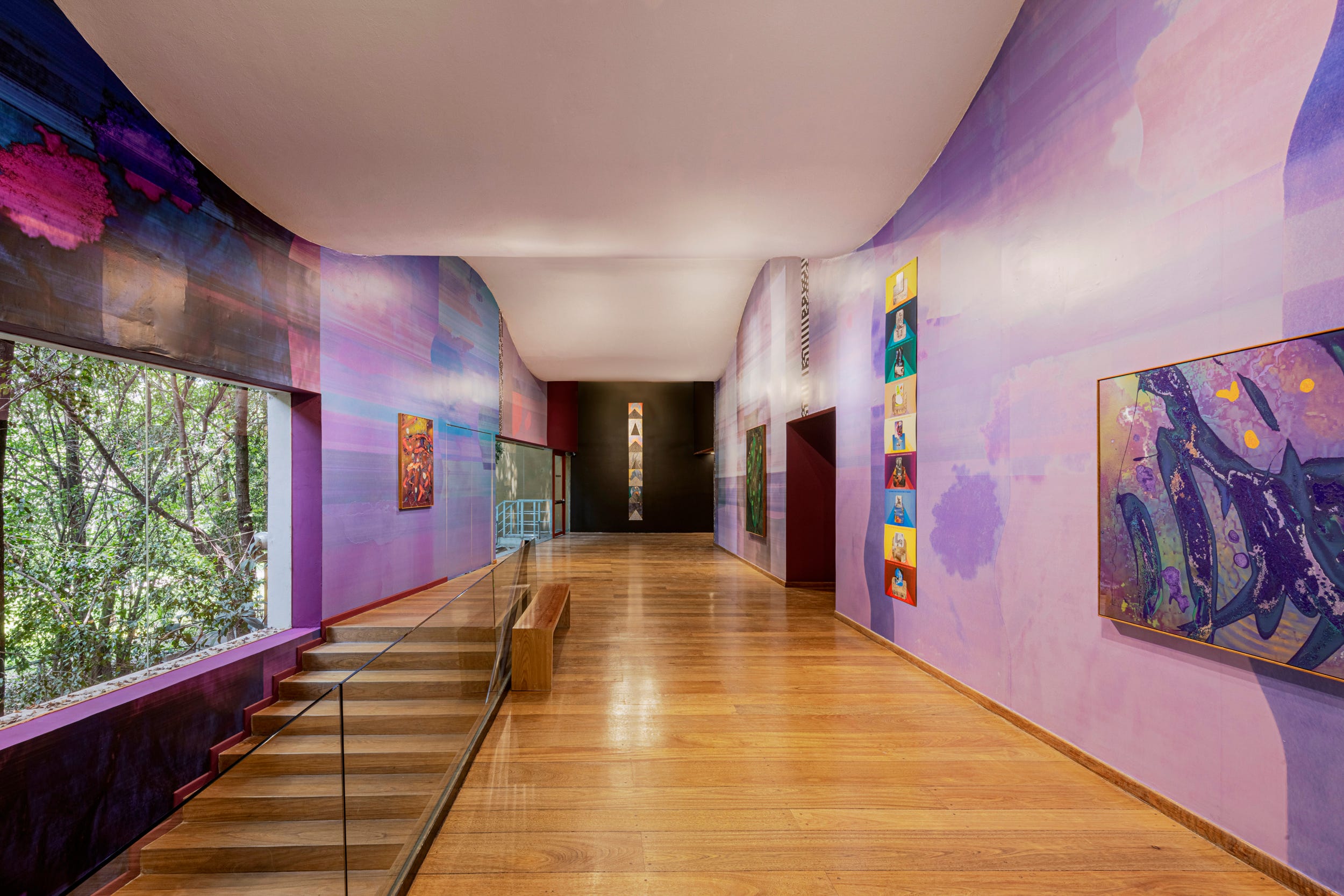
Artificial intelligence used to render smudgy and distorted reflections of the world. Today, it produces hyper-realistic 4k video with indiscernible fidelity. This newfound clarity of machinic vision seems to correspond to a deeper irrationality on behalf of human beings. We find ourselves shrouded in evermore conspiratorial and mystical ways of seeing the world. Machines now appear to think as men have lost the capacity for reason.
Questions of software and computation have long since spilled over into politics and philosophy. As we digitize the world in our own image, these transformative tools have begun to blur conventional western distinctions between man and nature. Old categories are starting to collapse. As Donald Trump famously said, “The whole age of computer has made it where nobody knows exactly what’s going on.”


In 2022, astronomers achieved the first recorded image of a black hole. The iconic picture is not a traditional photograph but a product of computation — an image assembled from vast amounts of data that are rendered into a visual form. To record objects that are extremely distant or dimly lit, one needs a camera with an incredibly large aperture. To accomplish this, researchers constructed a virtual telescope, composed of a series of interconnected radio observatories from across the world in which the surface of earth itself becomes a camera.
Planetary-scale computation, a term first coined by philosopher of technology Benjamin Bratton, describes our interconnected systems of software and hardware, from the natural to the built environment, that operate on a global, earth-wide scale. Through this historic act of image production, the technological revolution has become co-constitutive with ecology.
As stream beds patiently carve their path through wild terrain, they open up a space for local animals to traverse through dense foliage. This clearing of the brush makes way for human footpaths and later for herds of livestock. Over centuries, these farmers’ paths become trade routes. Soon, cobblestones give way to paved roads and eventually to urban super highways. Alongside these ancient stream beds we now bury miles of fiber optic cable that further increase the speed of our exchanges.
Cutting edge technologies are retracing primordial patterns forged over deep time. The further we speed up these cycles, the more apparent their underlying models become. The artist asks; Is the human mind itself a pattern? Can consciousness be replicated or similarly built upon? Like the stream that became the road that became the city that became the internet, we wonder; what might follow after us?



In Storyboard Collages, Freeman generates new and improbable scenarios that seek to cover a wide spread of future possibilities. Back in the 1950’s, Herman Kahn of the Rand Corporation, introduced the innovative technique of scenario planning, a strategic process by which researchers could derive multiple speculative outcomes. In our increasingly uncertain times, these forecast exercises help to prepare us for a range of complex and emergent cultural phenomena. We attempt to get ahead of an unfolding process and to anticipate where it might lead.
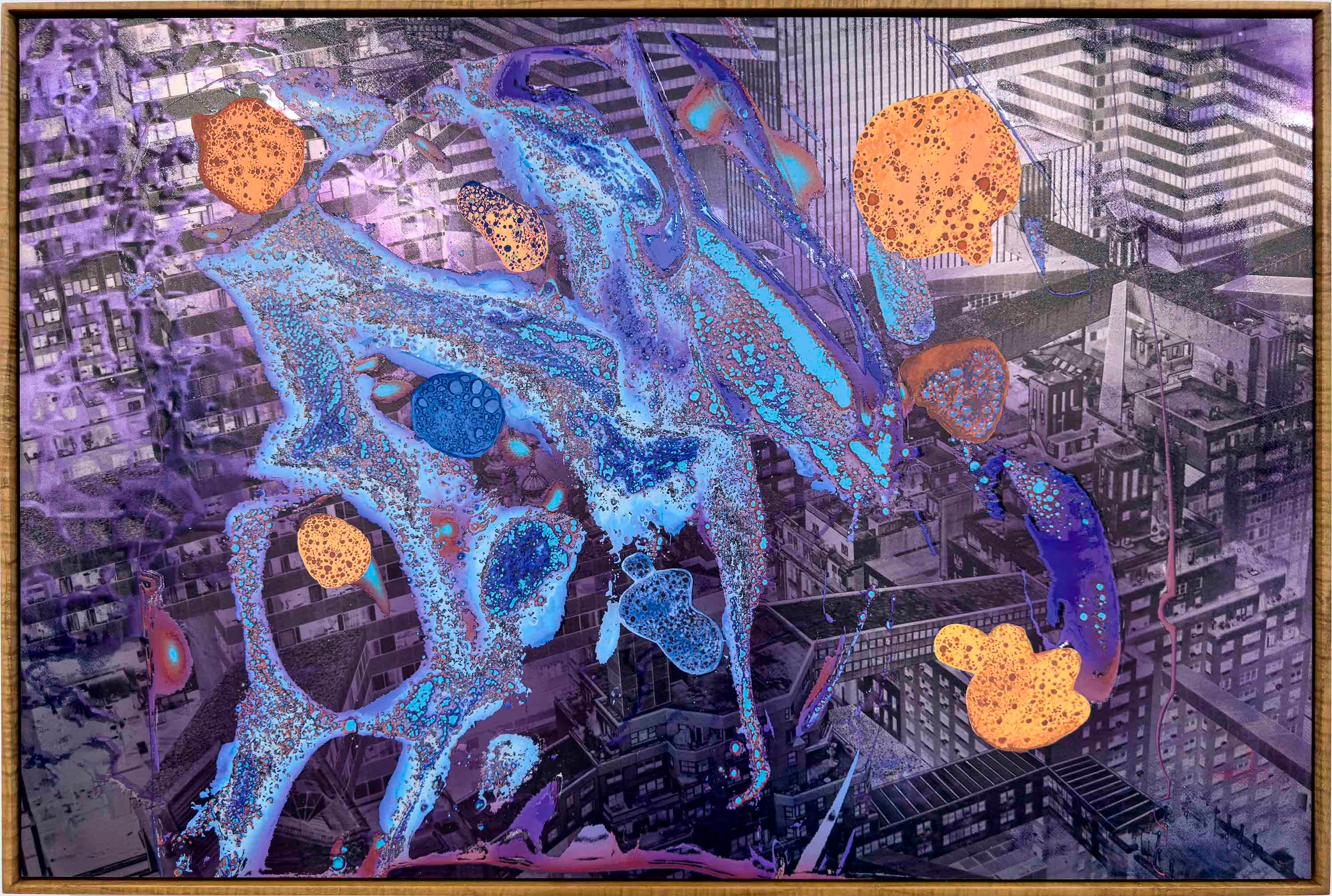
Brick Paintings utilize redundant methods of technical reproduction, from drone cameras, to film, to screens, to monoprints and more. These granular distortions are then layered with varnish or oil paint and juxtaposed with abstract chemical reactions to challenge our traditional notions of the technological and the natural. Their substrate, mirror-polished aluminum, reflects the viewer and fractures their visual field, turning the paintings into both object and lens.
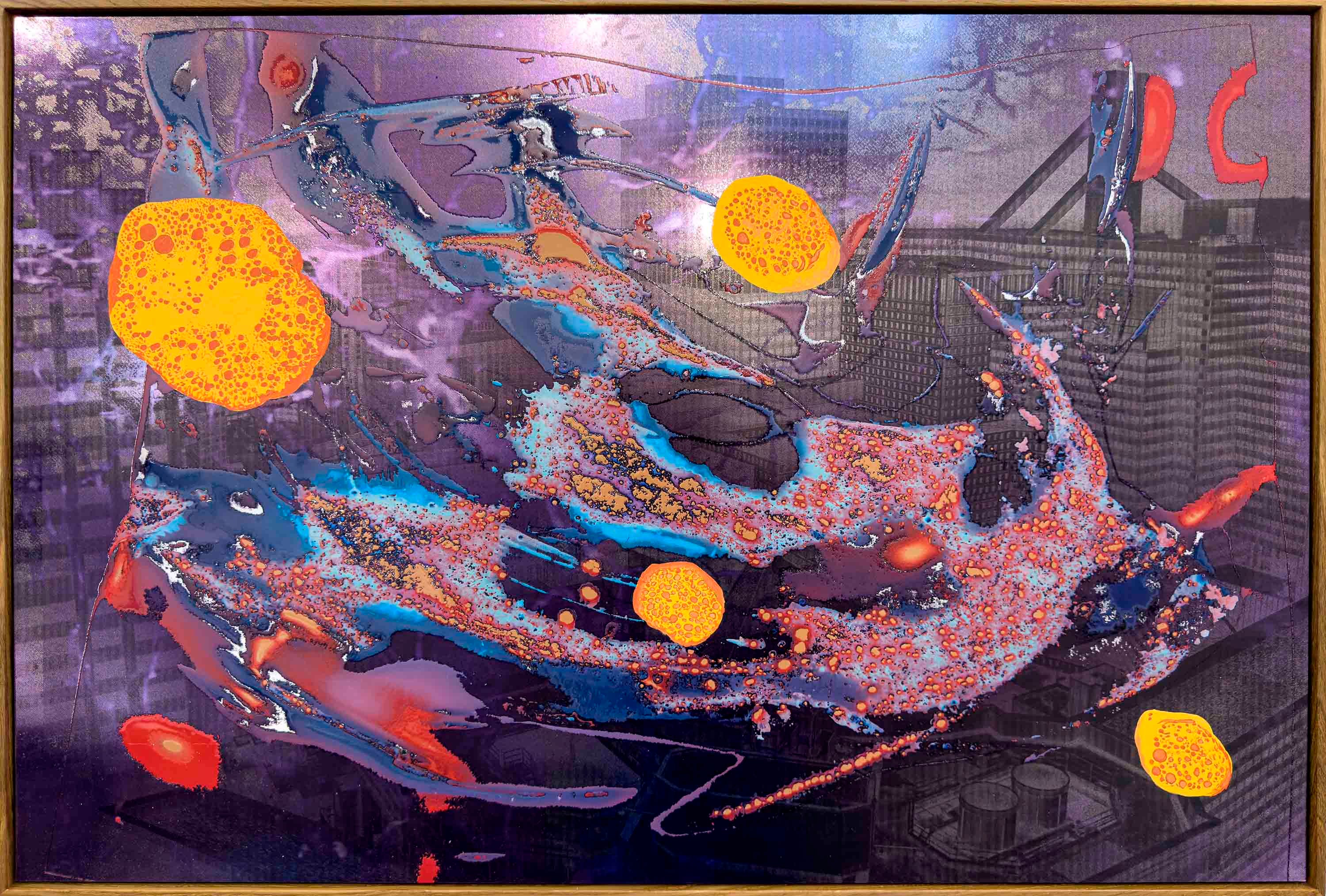
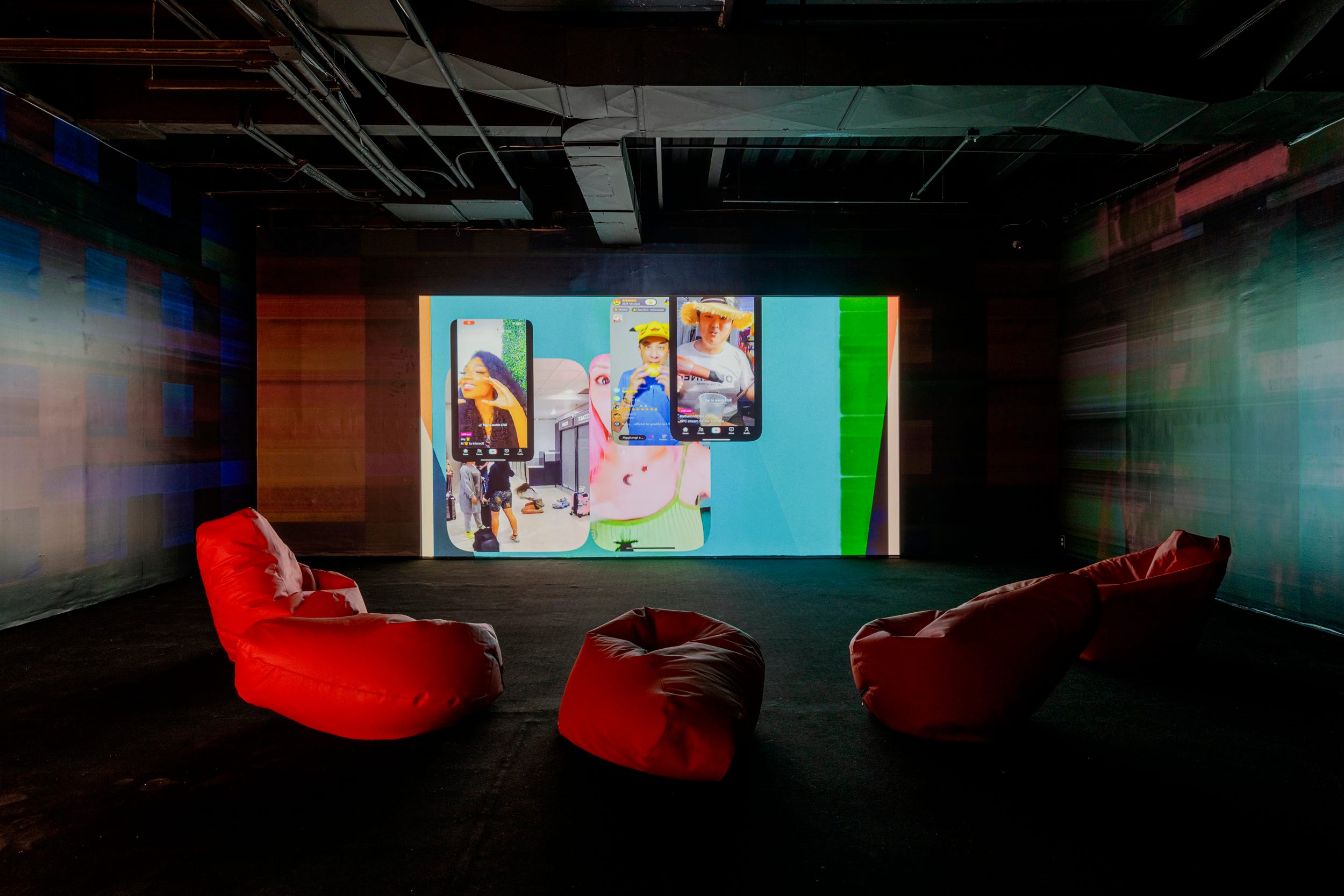
As early as 1983, media theorist and evolutionary philosopher, Vilem Flusser forewarned that mankind was encircled by a universe of technical images. Today, our tools stand between us and the natural world as we might have known it. Online roleplay has become political reality. Smart cities have grown into symbiotic sensing organisms that see, hear and feel like a living body. Urban planning has co-evolved to become a crisscrossed global grid of data centers. Cables wrap across the earth’s surface, running underground and beneath the sea. The planet itself has sprouted a technological exoskeleton of satellite relays that reflect signals back down to the inhabitants below. Across our digital communication networks, electronic surges of attention pulse and spike a metabolic network of image creators and consumers. From interlinked mobile devices, we perform choreographed rhythmic dance sequences where our physical bodies become animated by digital algorithms. Our hallucinatory fictions now reshape the material world to conform with its technical image. “Everything’s computer!”
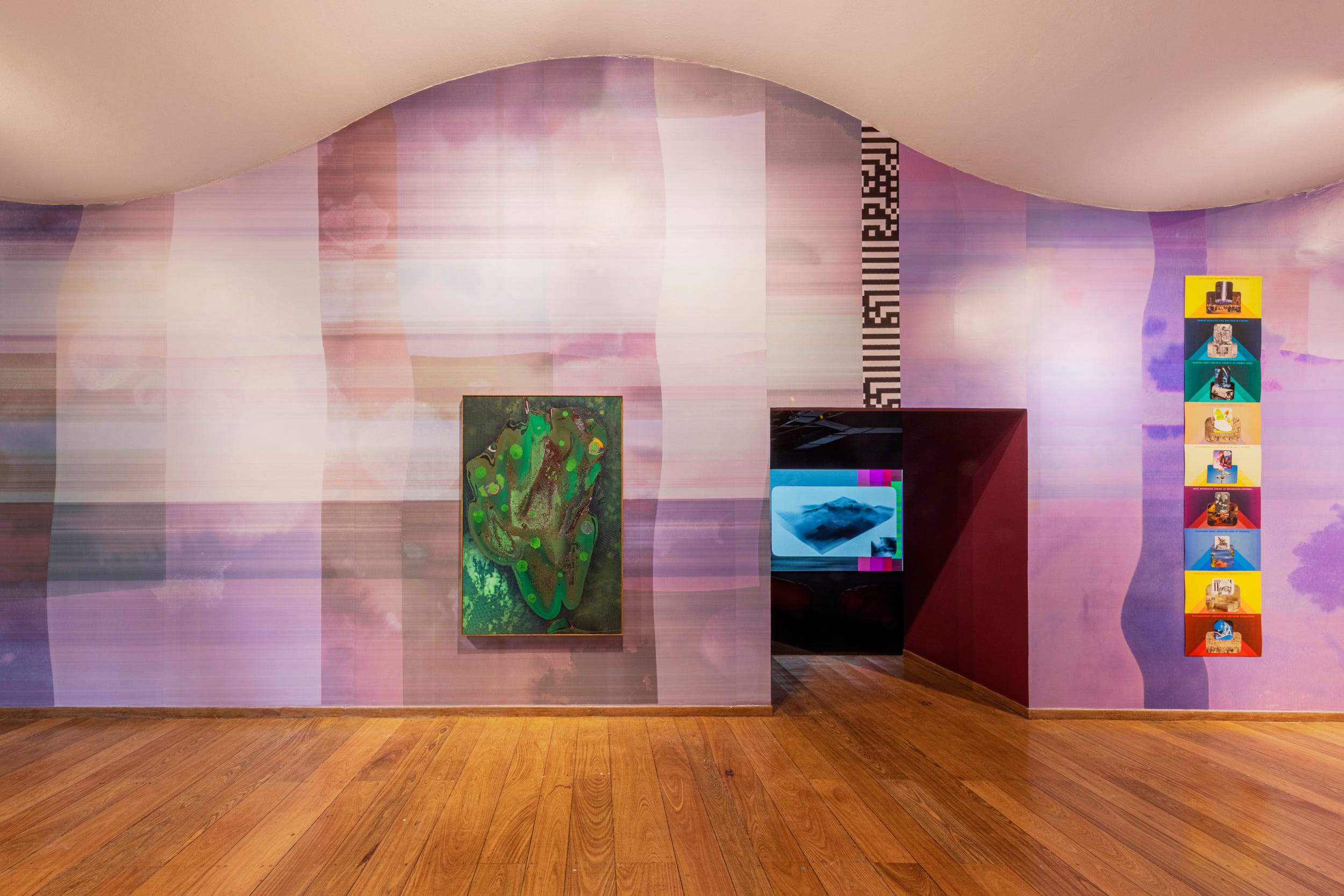
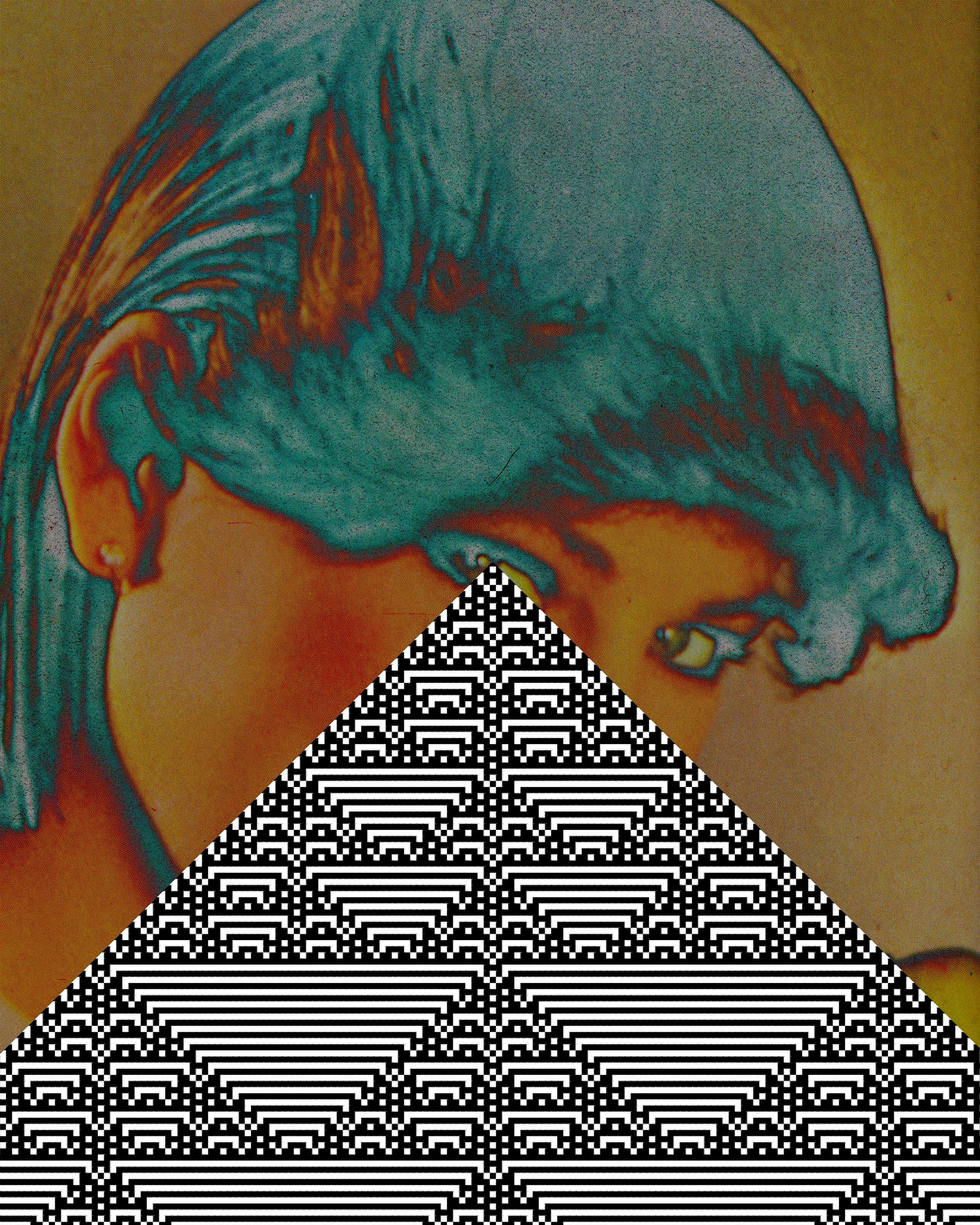
In Jonah Freeman: Soft Math (Cloud in the Eyes), the artist evokes a logic that is neither strictly computational nor purely organic. This pliable and generative order mirrors the ambiguous terrain of our hyperconnected world. It echoes the work of John Von Neumann’s Cellular Automata, in which complex, lifelike behaviors emerge from simple digital rules. Pixels flicker on and off, forming new structures that suggest evolution, and even intelligence. Freeman reveals a world where computation no longer imitates nature—it becomes indistinguishable from it.
text by Joshua Citarella
 | A guest post by
|
did you actually say anything at all
Was this text commissioned by the artist/gallery to accompany the exhibition?