
Geoengineering with Shovels
Mosquitoes, Megaprojects, and the New Deal's Least-Remembered Public Health Initiative


myles is a writer — follow his work at Myles Mode.
I’ve spent most of my life around salt marshes. They’re weird, smelly, beautiful ecosystems, teeming with hundreds of species of birds, frogs, fish, invertebrates and plants. By some definitions, their only rivals for sheer biological productivity are tropical rainforests1. But for all their natural wonders, their most interesting feature isn’t easily seen on foot. Not without the assistance of a cheap Chinese flying camera.
I got my first drone while living at home after college, in search of some distraction from the realities of living at home after college. While it still feels a little like cheating whenever I send it up to take a photo, it’s now one of my favorite hobbies: equal parts composition exercise and Call of Duty chopper gunner minigame. The only downside is that it’s tough to do in any populated area without feeling like the Jimmy Stewart character in a remake of Rear Window directed by a very checked-out Neil Blomkamp. This is what led me out to the marshes near my parents’ house back in 2018, after exhausting all the subject matter in their yard.
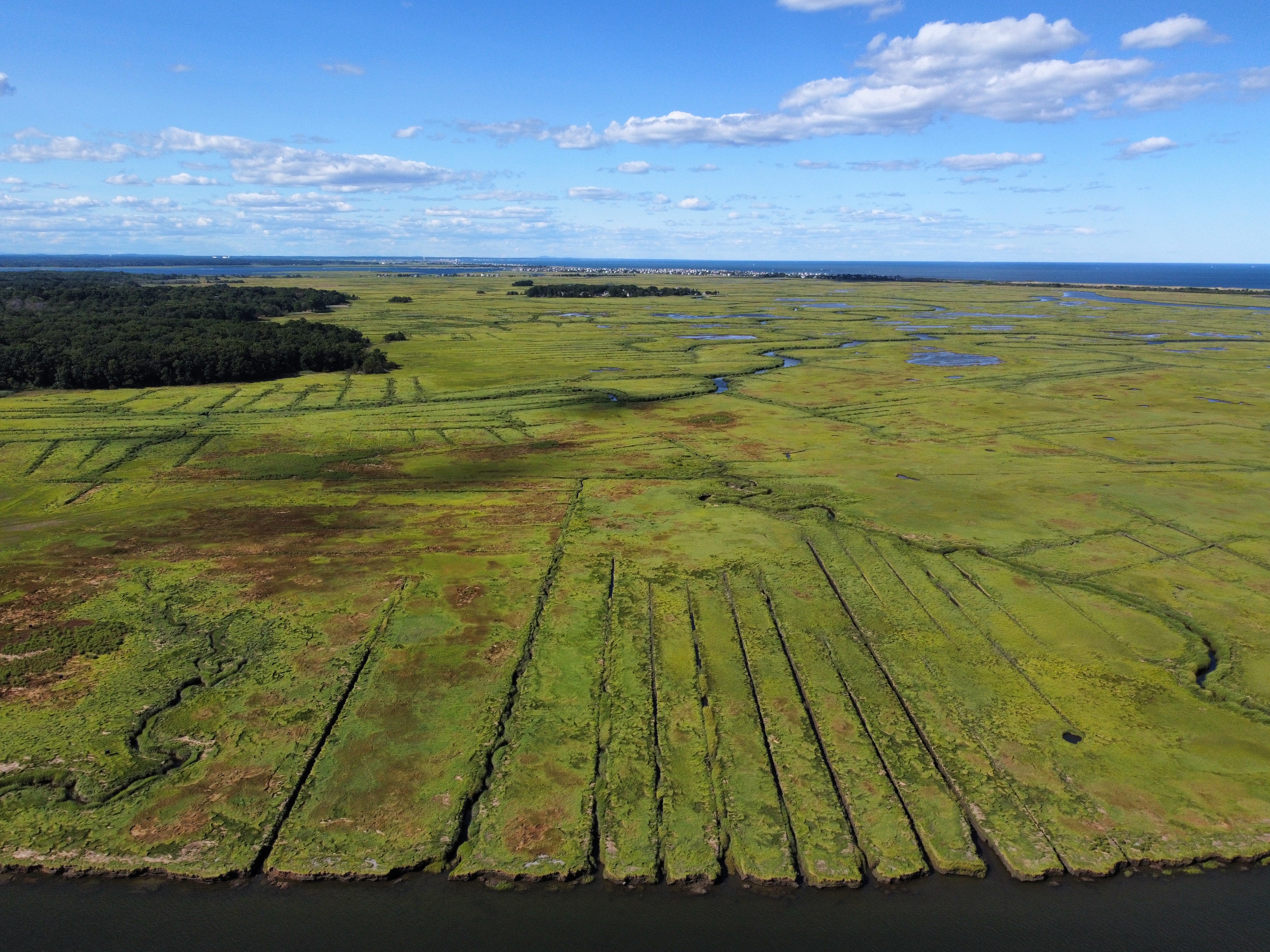
From the ground, the marshes look like untouched wilderness — at least, compared to the rest of highly urbanized Greater Boston — and from the air, they're downright alien. But the further off the ground you get, the harder it is not to notice all the oddly symmetrical lines running through the grass. The first time I saw them, I assumed I was looking at something organic; another instance of nature's boundless capacity for out-smoking human graphic designers. It wasn't until I got home and checked Google Maps that the truth came into view, revealing a story that begins with the dawn of the American Century and ends with the most physically monumental public health initiative of the New Deal era.
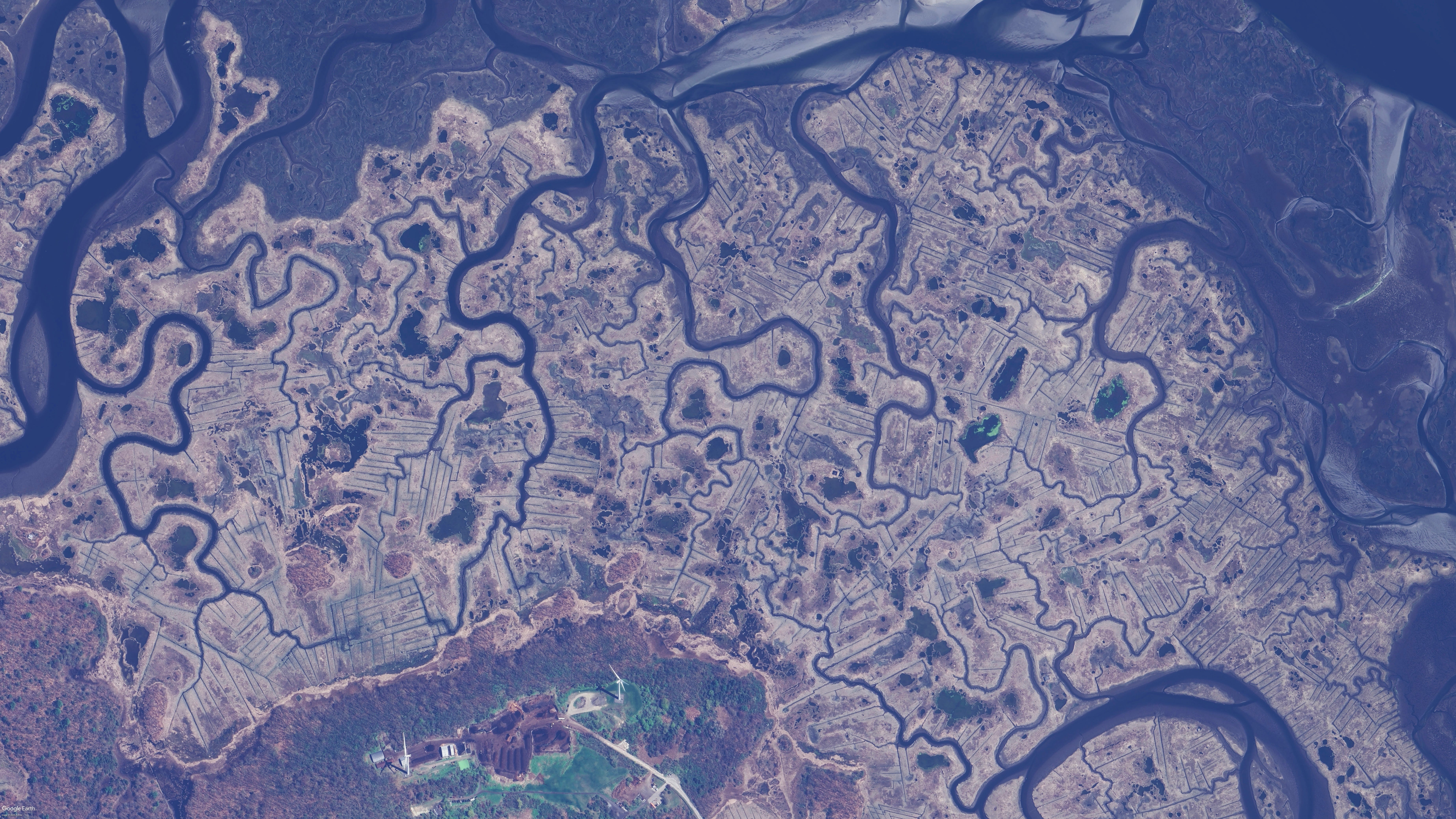
What I’d stumbled across is called grid ditching: a controversial pest control tactic where long trenches are dug into salt marshes to drain the standing water where mosquitoes breed. It has a long and curious history, originating as a tool for advancing America’s budding imperial interests in the late 19th century before being adopted as a force for social and medical good during the Great Depression and ultimately falling out of popularity by the 1970s. Many wetlands experts now view the widespread grid ditching of the early 20th century as a mistake, citing its unanticipated ecological consequences. Still, at a time when terms like “geoengineering” play a growing role in discussions about the future of our planet — and the continued place we may or may not have on it — the thousands of miles of ditches that line the Atlantic Coast offer a valuable perspective of their own.
A Tool for Empire
People have been digging ditches in salt marshes for hundreds of years to create grazing space for livestock and mark property lines, but it wasn’t widely embraced as a pest control tactic until the end of the Spanish-American War2. While some historians now frame the conflict as an ascendant settler-colonial republic facing off against a stagnant colonial empire, the actual death toll suggests that it was more of a struggle between the U.S., Spain, and the harsh biological realities of Spain’s tropical colonies. In the years leading up to the war, Spanish forces stationed on Cuba were decimated by yellow fever—with 16,000 deaths between 1895 and 1898, and another 175,000 incapacitated3. The Americans didn’t fare much better when they arrived, with roughly 2,000 disease-related casualties and only 400 combat deaths4. The war exposed serious gaps in military medical and sanitary preparedness—and led to a PR blunder that graces many U.S. history class textbooks to this day.
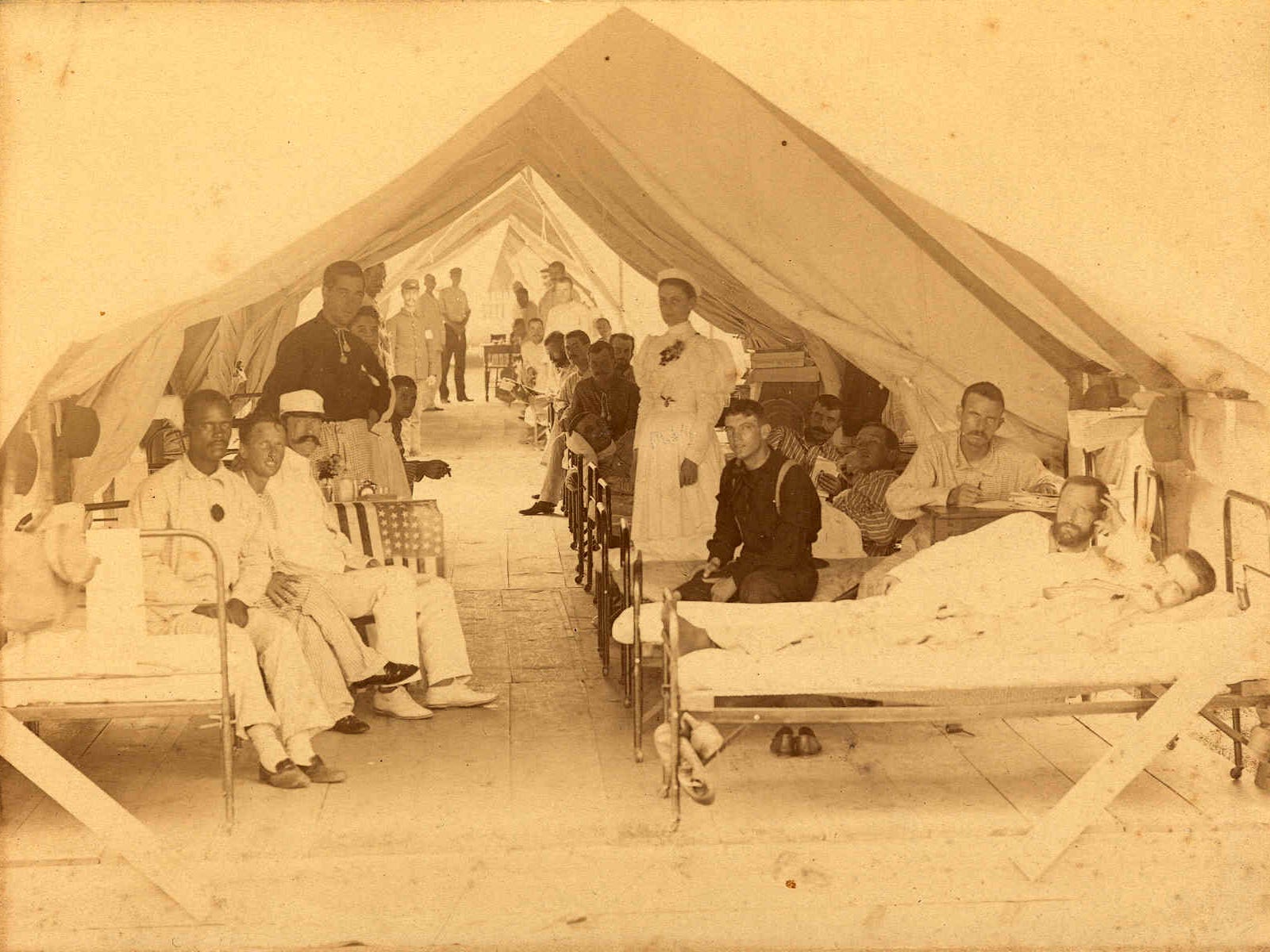
As the war was winding down in July 1898, thousands of American soldiers stationed near Santiago de Cuba were in especially critical condition. Faced with the very-real possibility of being wiped out by yellow fever and malaria before the war was even over, the unit's commanders — led by then-cavalry Colonel Theodore Roosevelt — drafted a letter begging Washington to bring them home early. Then, to ensure results, they leaked it to the press. The now-infamous "Round-Robin Letter" sparked nationwide outrage at the McKinley administration's callous attitude toward its soldiers—an attitude partially inspired by fears that the unit would trigger a full-blown pandemic if allowed to return home5. Only a few days before the peace talks that would cement America's place in the spotlight for the century to come, the scandal revealed that the War Department had no idea how to handle the territories it sought to control. Fortunately, they would never, ever, ever, ever, ever, ever make that kind of mistake again.
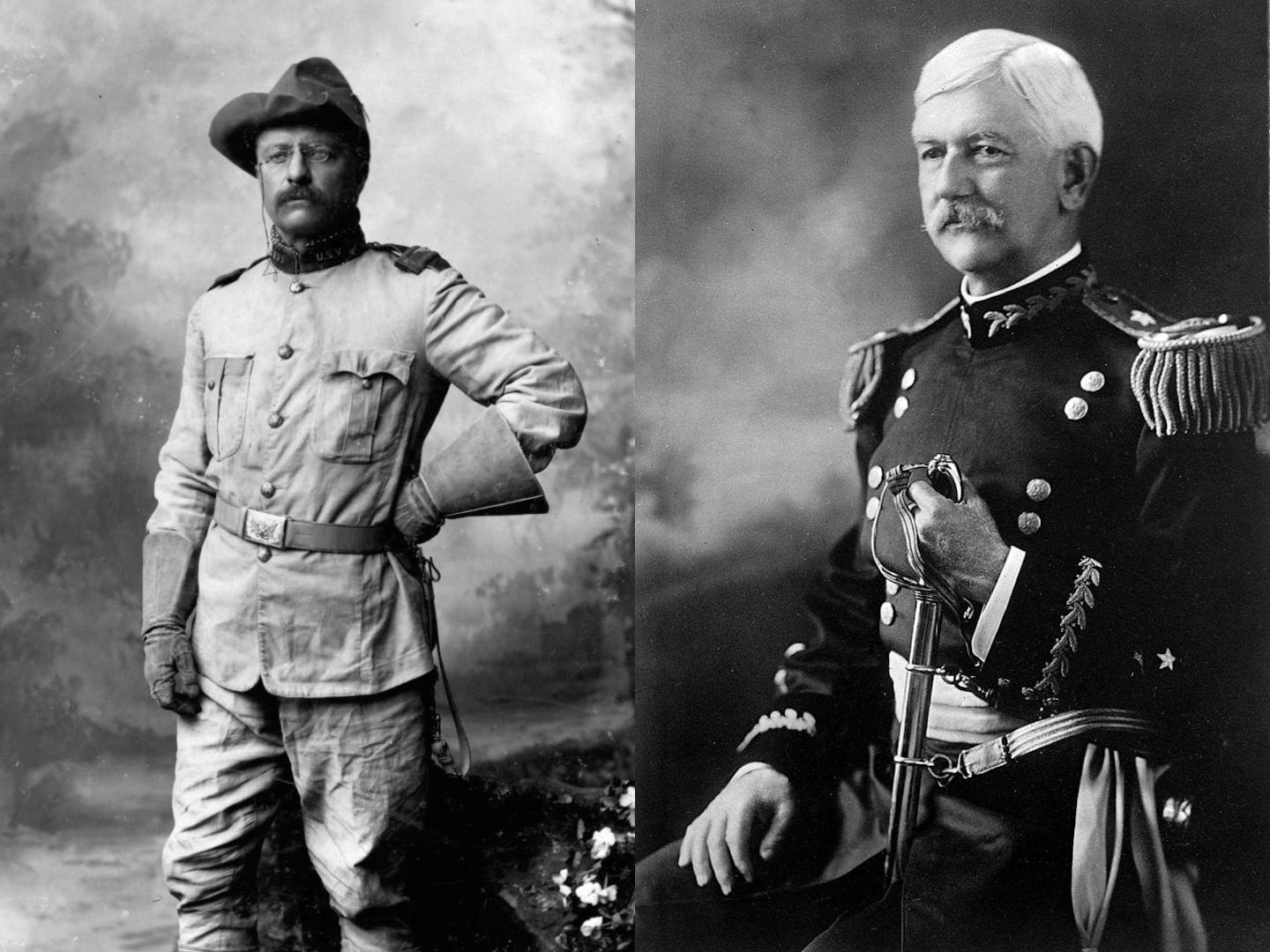
A year later, as the U.S. was creating a military government for Cuba, an army doctor named William Gorgas was appointed Chief Sanitary Officer for the city of Havana. Gorgas had served in Cuba during the war and had survived a bout with yellow fever, which gave him the experience and immunity necessary to carry out his mission: ridding Havana of its centuries-old yellow fever problem6. The disease had been first reported in the city as early as 1649, when a particularly intense outbreak killed a full third of the population—and between 1856 and 1879, it struck almost monthly7. Influenced by the work of mosquito-borne illness researchers like Carlos Finlay and Walter Reed — and, perhaps, incentivized to deliver for Washington in the wake of the Round-Robin scandal — Gorgas concluded that the best way to eliminate yellow fever would be to go after the mosquitos that carried it—specifically, by draining the ponds, swamps and marshes where the insects bred. The tactic proved successful; paired with the common-sense measure of quarantining patients in screened service rooms, Gorgas’s sanitation team successfully reduced the number of yellow fever cases in Havana from several hundred to zero in a single year8. This established Gorgas as a leading authority on tropical diseases and led him to be tapped for an even more consequential assignment.
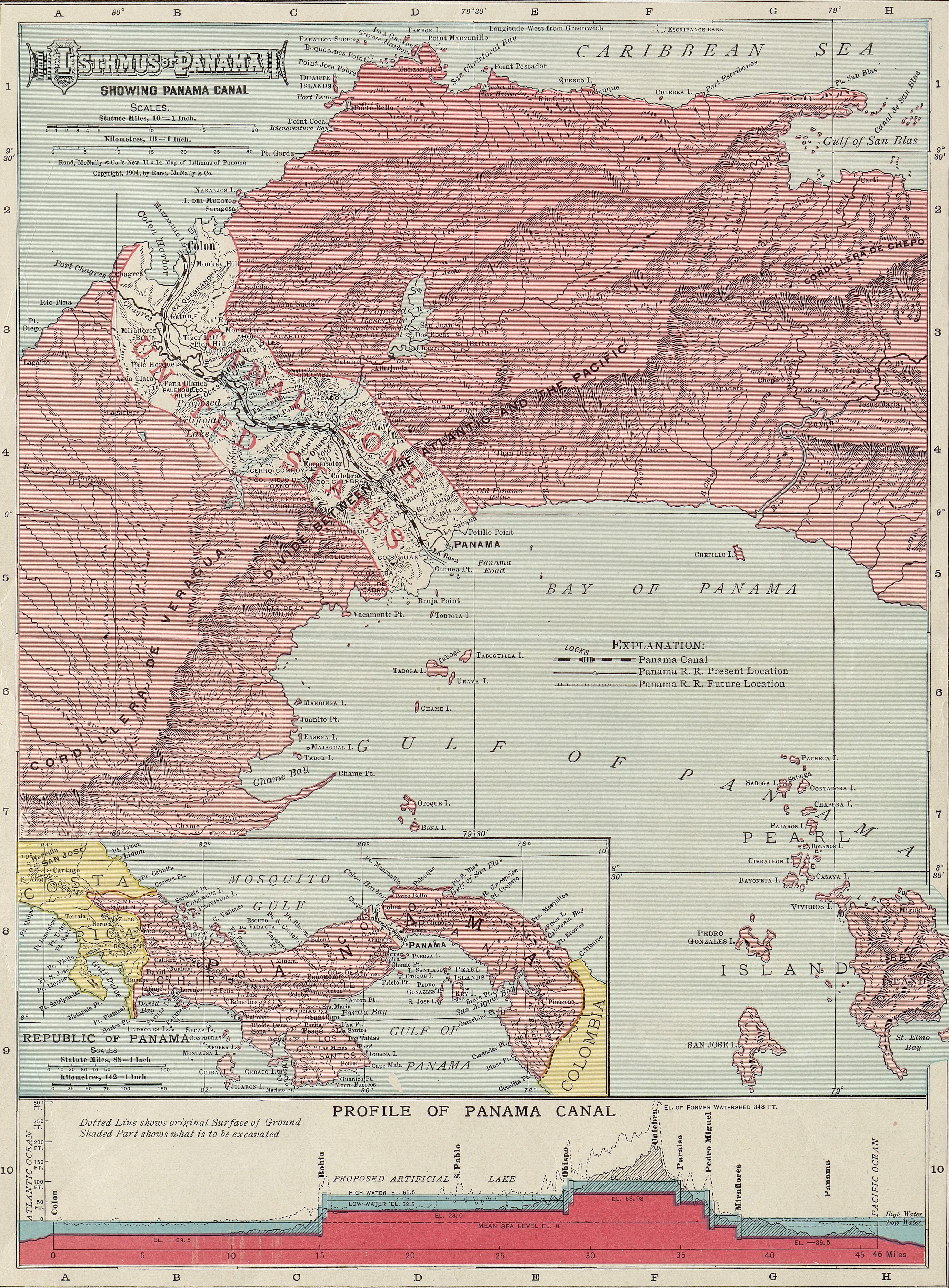
If the Spanish-American War was the United States's first step onto the world stage, the Panama Canal was an emphatic step 2—a megaproject that reshaped global trade routes and solidified the U.S. as the dominant power in the hemisphere. But when the U.S. government assumed control of the Canal Zone in 1904, they picked up where many other empires had left off. By the early 1900s, the idea of building a canal across the Isthmus of Panama was nearly 400 years old — first pursued by the Holy Roman Emperor Charles V in the 1530s — and all the wonders of modern technology hadn't made it any less daunting9. The first serious attempt to build the canal back in 1881, led by the same French team that had built the Suez Canal, had ended in disaster. Before the project was abandoned in 1889, over 22,000 workers died, many from mosquito-borne yellow fever and malaria10.
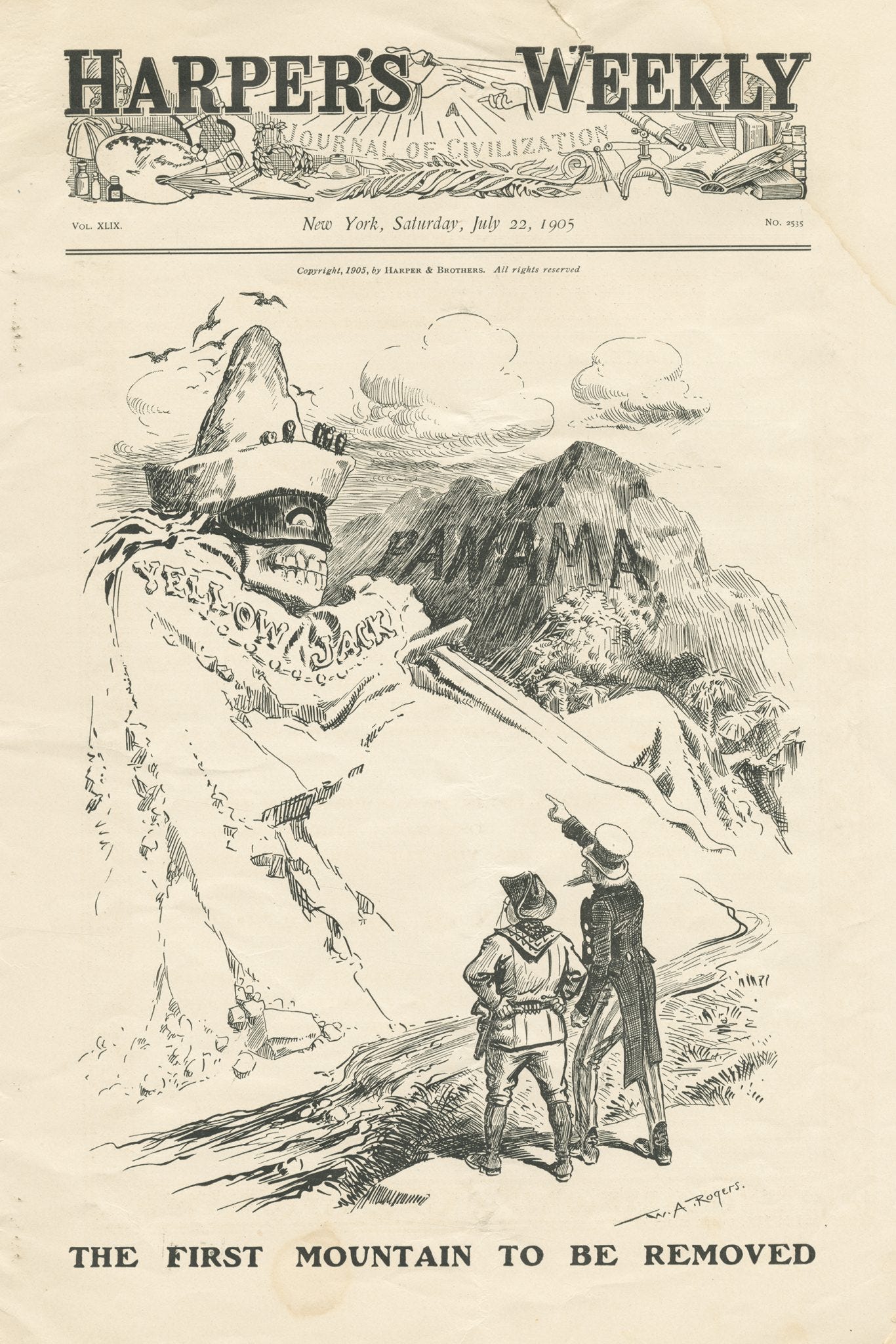
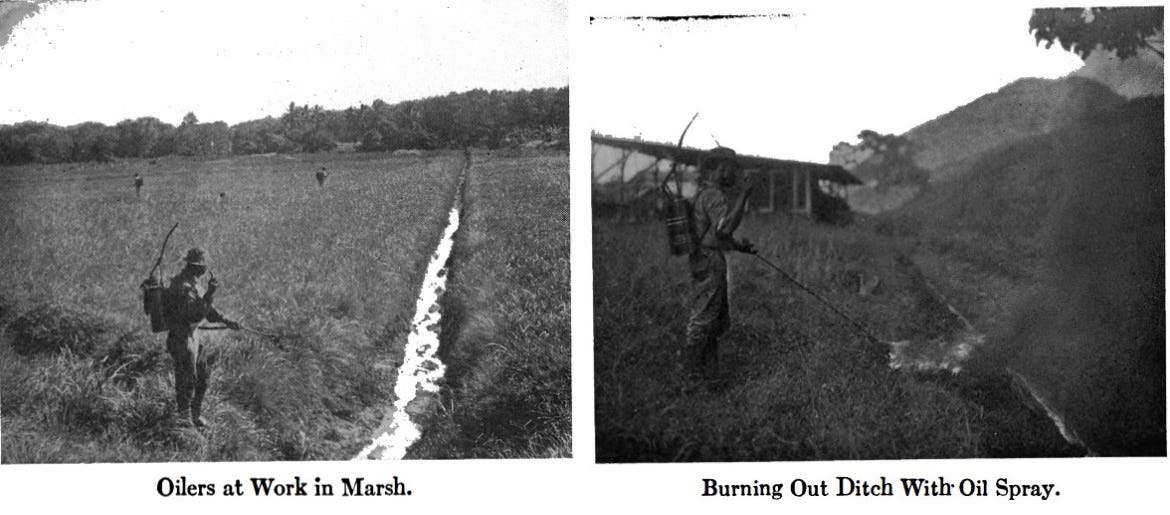
This grisly record — and the scrutiny it inspired among the American public, wary of another Round-Robin situation — prompted the newly formed Panama Canal Commission to bring in Gorgas. Over the next two years, with a budget that eventually totaled over $20 million (and that's in 1900s money), the project's new Sanitary Officer set to work in the Canal Zone—again prioritizing the elimination of standing water through the use of oil, pesticides and drainage. Despite his record in Havana, not everyone was sold right away: at one point, the head of the Canal Commission petitioned President Roosevelt to remove Gorgas, citing his costly obsession with mosquitoes. Roosevelt, who hadn't forgotten his experiences in Cuba, declined the request11. Over 5,000 workers still died before the canal was completed in 1914, but the measures imposed by Gorgas's sanitation team — which also included distributing mosquito netting and constructing public water supplies — likely saved countless others12.
Of course, even by turn-of-the-century standards, the colonial overtones of Gorgas's work in Cuba and Panama were never subtle. For Gorgas, the son of a staunch anti-abolitionist Confederate General, pest control wasn't just about making certain ecosystems better suited for human habitation—it was explicitly about making them better suited for white people. He frequently spoke and wrote of his intention to bring "civilization" to the "rude corner[s] of the world" where he worked, and once gave an address to the American Medical Association about his work in Panama titled "The Conquest of the Tropics for the White Race."13 His 1915 book Sanitation in Panama lays out his views even less ambiguously, predicting a mass migration of whites into South America and Africa in the centuries to come and suggesting that future generations would look back on the sanitation of the canal as "the first great demonstration that the white man could live as well in the tropics as in the temperate zone"14. While few people still view his work in those terms, the Canal Zone remains largely free from yellow fever and malaria to this day.
A Force for Good
Like all successful tools of empire, Gorgas’s drainage techniques eventually found their way home from the frontier—where they were welcomed by a curious American public. As Linda Nash writes in her book Inescapable Ecologies, “America’s tropical colonies [served] as a kind of field experiment for new methods in public health, and the perceived successes of the campaigns in Cuba and Panama were instrumental in elevating the strategy of insect elimination to the position of gospel within American public health work. Moreover, the success of the Panama campaign raised expectations of the North American landscape. As one California newspaper editor wrote, “The Panama Canal Zone was cleared of mosquitoes and yellow fever. . . . Why should [such measures] not be employed here?”“15 As work on the canal continued, many states began their own experiments with drainage, starting in the Northeast and soon spreading nationwide.
While the workers who relied on Gorgas’s sanitation measures in Panama may have had incentives to view pest control as a way of taming a hostile wilderness, the average 1900s New Yorker or Bostonian probably saw things differently. In the most “civilized” areas of early-20th-century America, there was little wilderness left to tame — one article describing pest control efforts in Panama claimed the Canal Zone had become “as healthy as Massachusetts”16 — and mosquitoes were primarily viewed as a nuisance17. Still, even a thousand miles north of the tropics, diseases like malaria and yellow fever had plenty of deadly potential for coastal Americans. In 1913, an outbreak of malaria caused hundreds of deaths in Greenwich, Connecticut—then, as now, an enclave of wealth and power. At a time when people were still struggling to accept that a disease could be spread by mosquitoes, the idea that the outbreak didn’t discriminate between rich and poor was more than enough to frighten the ritzy exurb’s town council into ordering all marshes within a mile of the coast to be filled or drained18. Stories like these represent a noticeable shift away from the approach exemplified by Gorgas—not advocating drainage as a way to render an area better suited for future colonial projects, but as a public health measure for the betterment of current inhabitants. As Progressive local governments were swept into office across America, more and more communities would follow suit19. But it would take a worldwide economic downturn for Gorgas’s techniques to reach the height of their popularity.
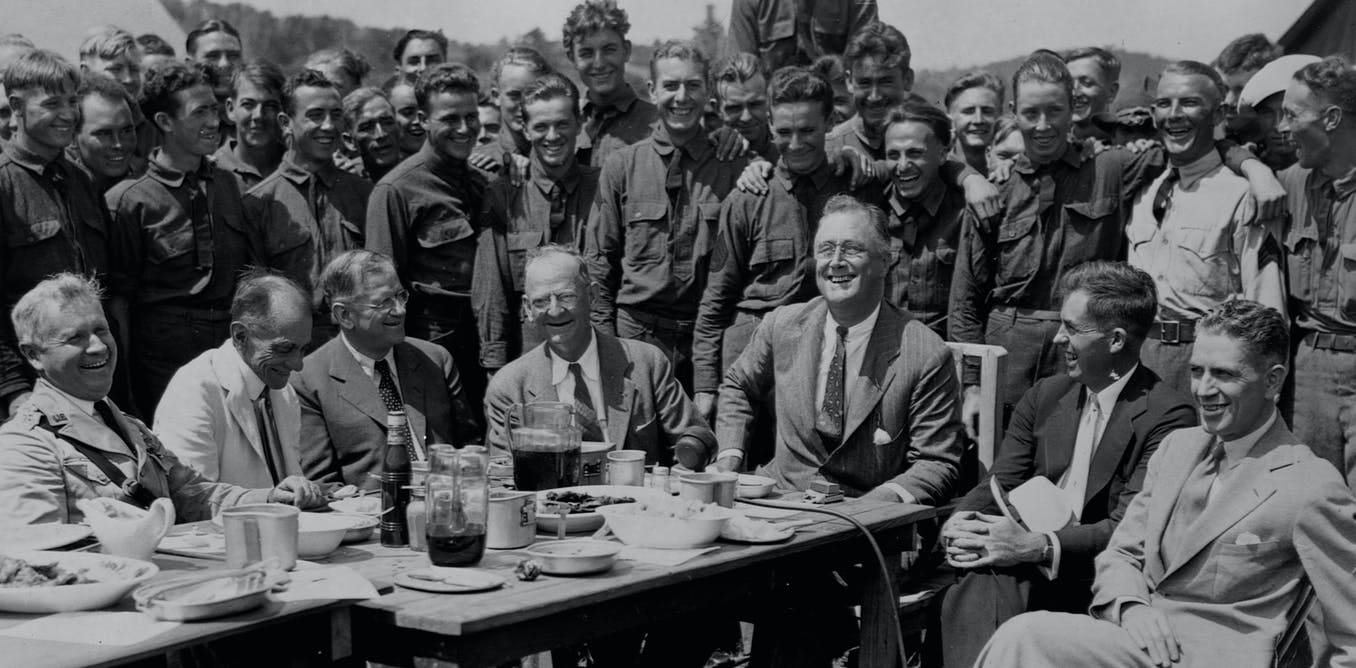
In the early 1930s, amid surging unemployment, the FDR administration created a robust set of social programs to help revitalize the country and put millions of Americans back to work. One such program, proposed by FDR himself, was the Civilian Conservation Corps (CCC)—a voluntary work relief program for unemployed, unmarried men ages 18-25 (eventually expanded to 17-28) that supplied manual labor jobs related to the conservation and development of natural resources on federal, state and local government-owned land20. Between 1933 and 1942, three million young men participated in the program, which provided them with shelter, clothing, education, and three daily meals, together with a monthly wage of $3021. Living at camps run by Army officers, CCC enrollees worked 8-hour days, received instruction in vocational skills and furthered their education, with many earning their high school diplomas. On the weekends, they were free to visit home or stick around to participate in camp-run theater productions, concerts, and dances22. The CCC was one of the most popular programs of its time, with one 1936 Gallup poll finding that 82% of Americans (including 92% of Democrats and 67% of Republicans) supported it23, and at least one representative brought a bill to Congress to try and make it a permanent part of the government24.
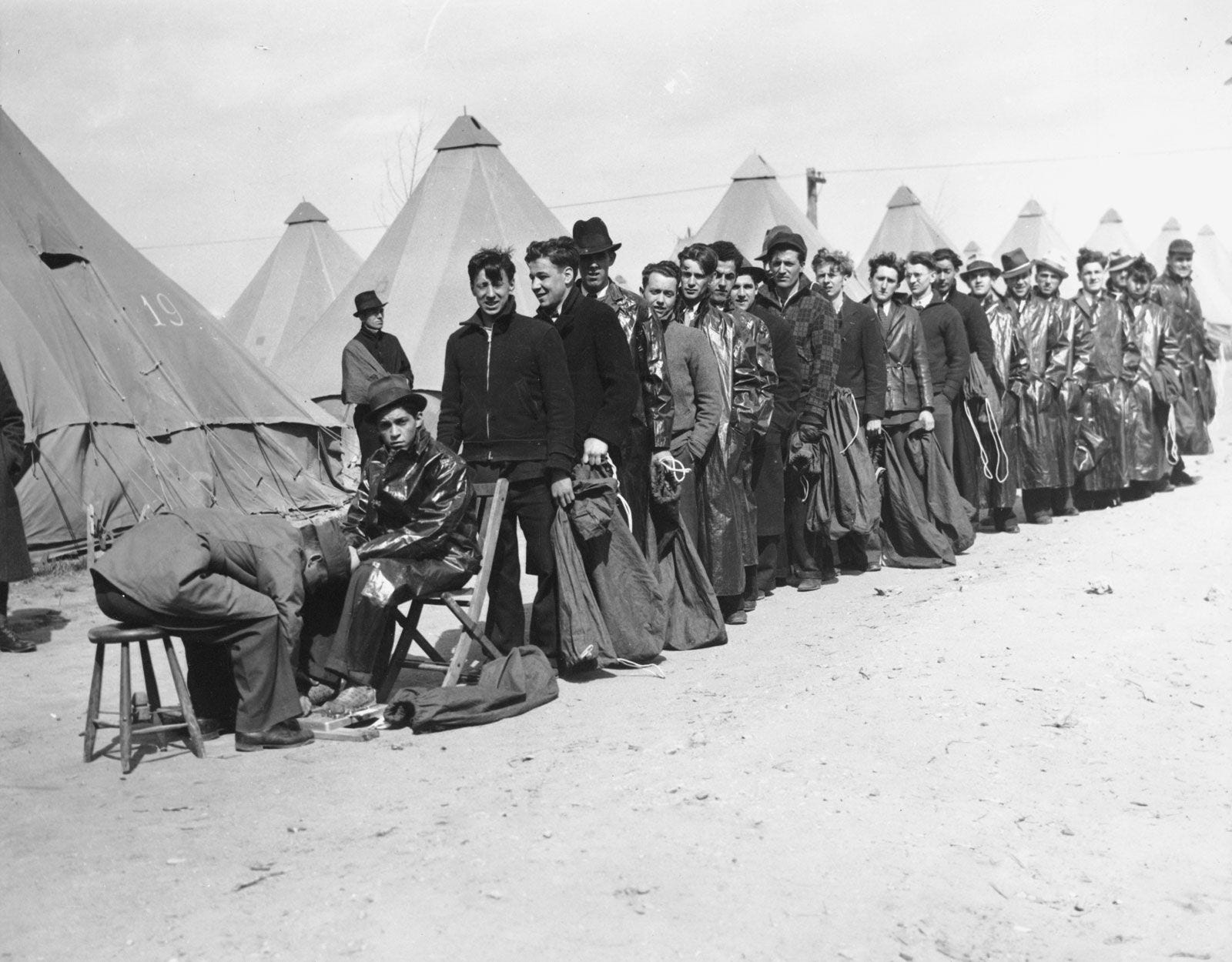
While America's entrance into World War II diverted a significant amount of spending and political energy away from initiatives like the CCC, the program's results speak for themselves. Between 1933 and 1942, CCC enrollees built 126,000 miles of roads and trails, 100,000 miles of telephone lines, 45,000 bridges and public buildings, and hundreds of state parks25. What most people don't know is that they also moved 6.9 billion cubic feet of earth in what newspapers described as a "war on mosquitoes." Together with the Works Progress Administration, the CCC took the drainage techniques pioneered by Gorgas to unprecedented heights, covering roughly 90% of the salt marshes from Maine to Virginia in over 15,000 miles of new mosquito control ditches, and reconstructing another 18,900 miles previously dug by state and local governments26. Most of these ditches were between 2-8 feet wide, 9 feet deep, and 100-300 feet long—and because mechanized digging equipment was largely reserved for other projects at the time, almost all were dug by hand27.
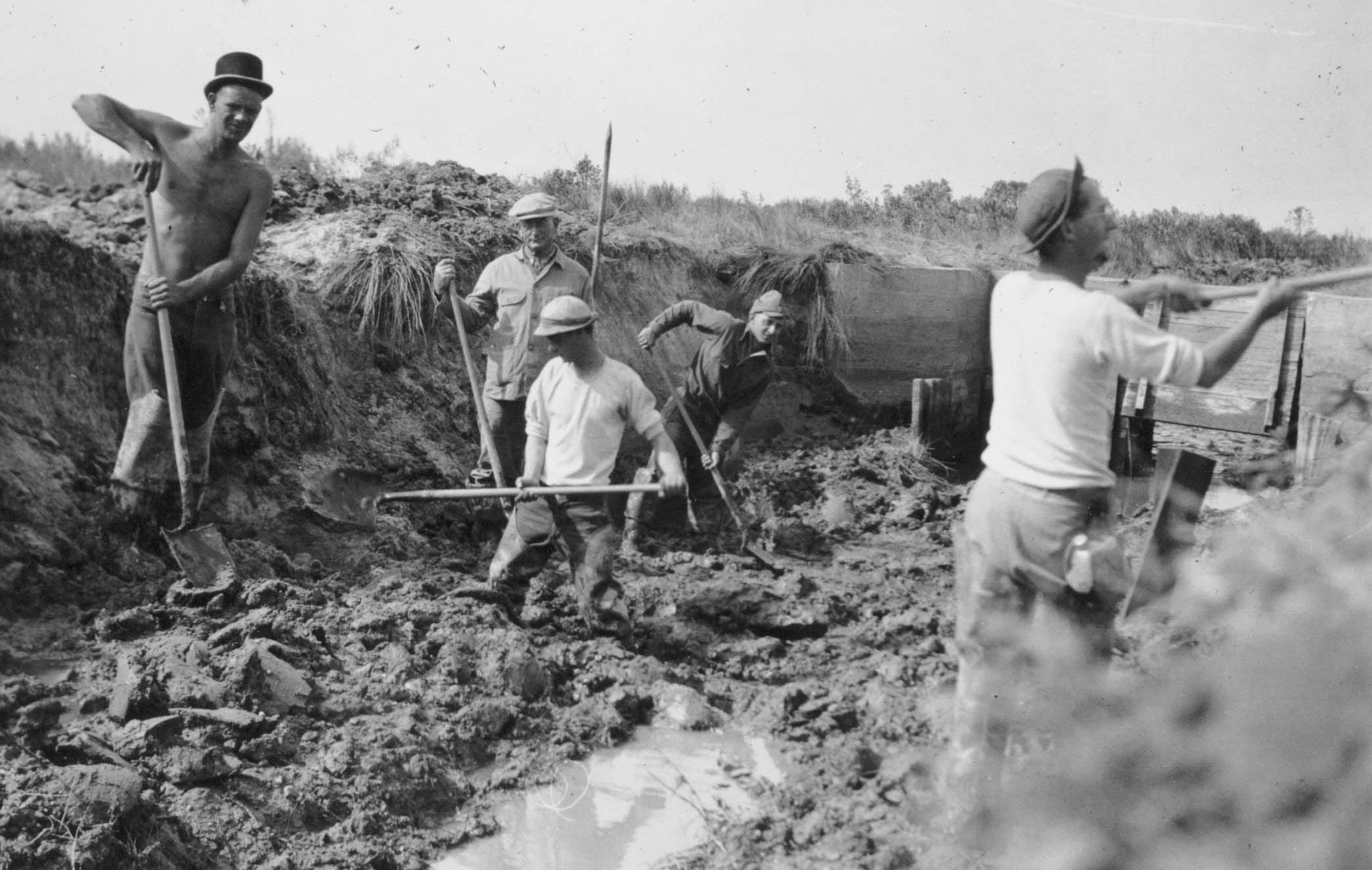
In terms of raw physical scale, it was one of the most ambitious public health initiatives in American history. But it wasn't without consequences. Long-term studies have found that grid ditching is only moderately effective at controlling mosquito populations and often does more ecological harm than good28. The same marshes that mosquitoes use as breeding grounds also provide food for many forms of wildlife—including killifish, which eat mosquito eggs29. Others, like the endangered Saltmarsh Sparrow, have seen their usual habitats inundated by the sudden influx of seawater that the ditches bring in at high tide—and over the last few decades, many communities have taken steps to fill their ditches back in30. With all of this in mind, it's tempting to look back on the ditches as an example of big government run amok—a slightly less catastrophic version of something like China's 'Four Pests' campaign, where the systematic extermination of another kind of sparrow contributed to ecological collapse and widespread famine. But to dismiss the ditches as a failure is to dismiss all the collective energy that went into their construction. In 21st-century America, projects like these are an endangered species, too.
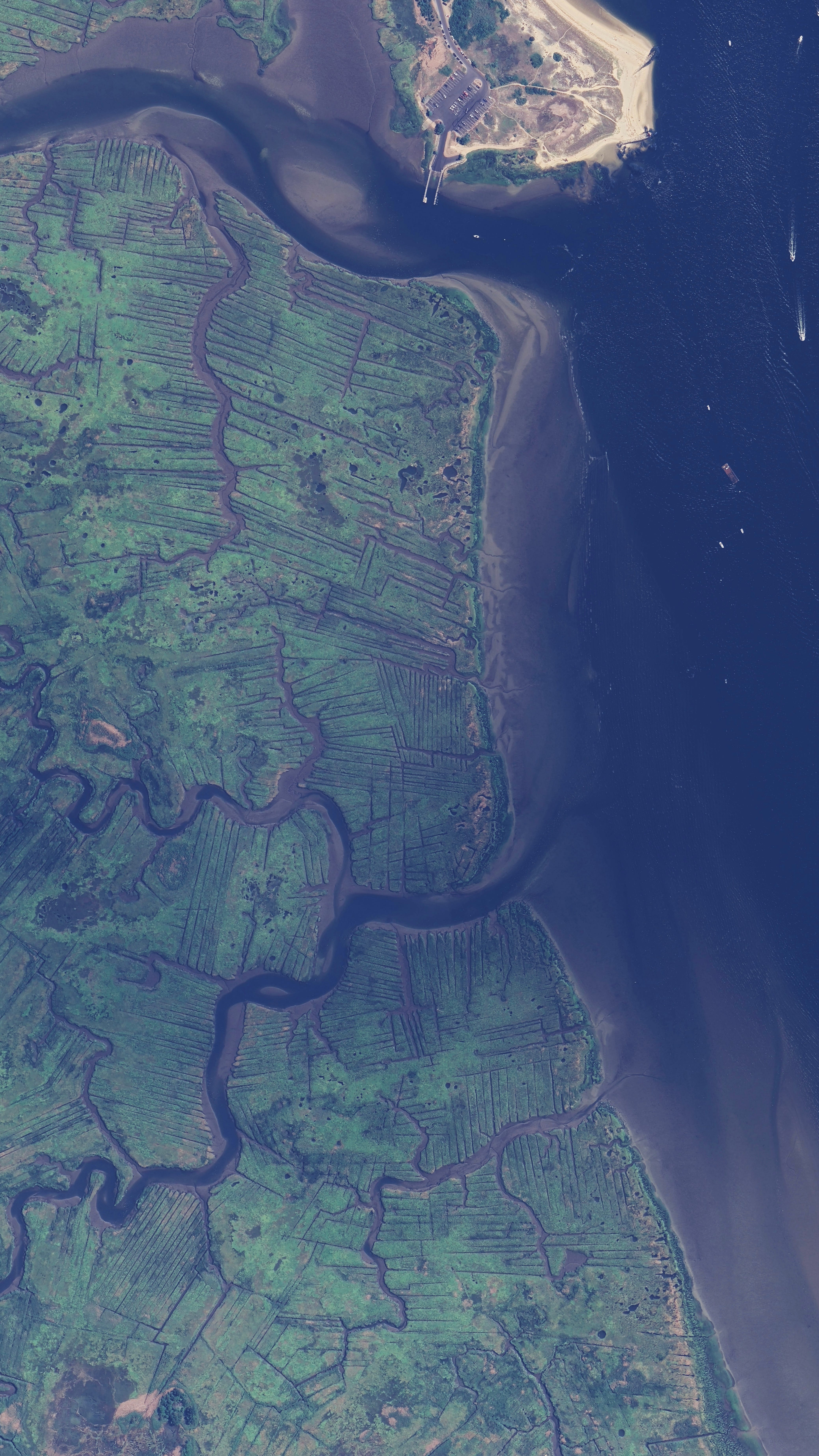
Perhaps, then, it’s more useful to think of the ditches as something more like land art. They certainly beat out Spiral Jetty, Rodin Crater and the Nazca lines for pure monumentality — a dense, abstract pattern imposed over the sprawl of nature, one trench at a time — not just for what they are, but what they represent. Tens of thousands of miles, dug by hand in the name of public health. Hundreds of thousands of young men kept fed, clothed, sheltered and purposefully employed at a time when the entire world felt like it was falling apart. If you put all of the earth they moved in one place, counting the existing ditches they rebuilt, you’d have enough building material to make about 75 1:1 scale replicas of the Great Pyramid of Giza—and if all those ditches had worked as intended with no ecological consequences, they would have had a whole lot more day-to-day functionality for the people who built them. They weren’t meant to commemorate a single human being, and they’re certainly not an intentional work of art. But they endure as a monument to human potential — misguided, imperfect, and undeniably awe-inspiring.
A Blueprint for the Future
Geoengineering is a loaded term. If you know what it is, your associations probably begin with movies like Snowpiercer, or unintentionally ominous keynote speeches by unaccountably wealthy tech guys. But as that term becomes an increasingly significant part of our lives (and I have a feeling it will), it’s worth remembering that we’ve done things like this before. The grid ditching of the New Deal may not resemble today’s high-tech proposals for combating climate change, but it shares many similarities with modern geoengineering at its core: a deliberate, large-scale intervention in an ecological system for the sake of human well-being. And unlike most contemporary proposals for that kind of project, it wasn’t carried out by trillion-dollar corporations or “public-private partnerships.” Statistically, it was mostly modern-day NEETs.
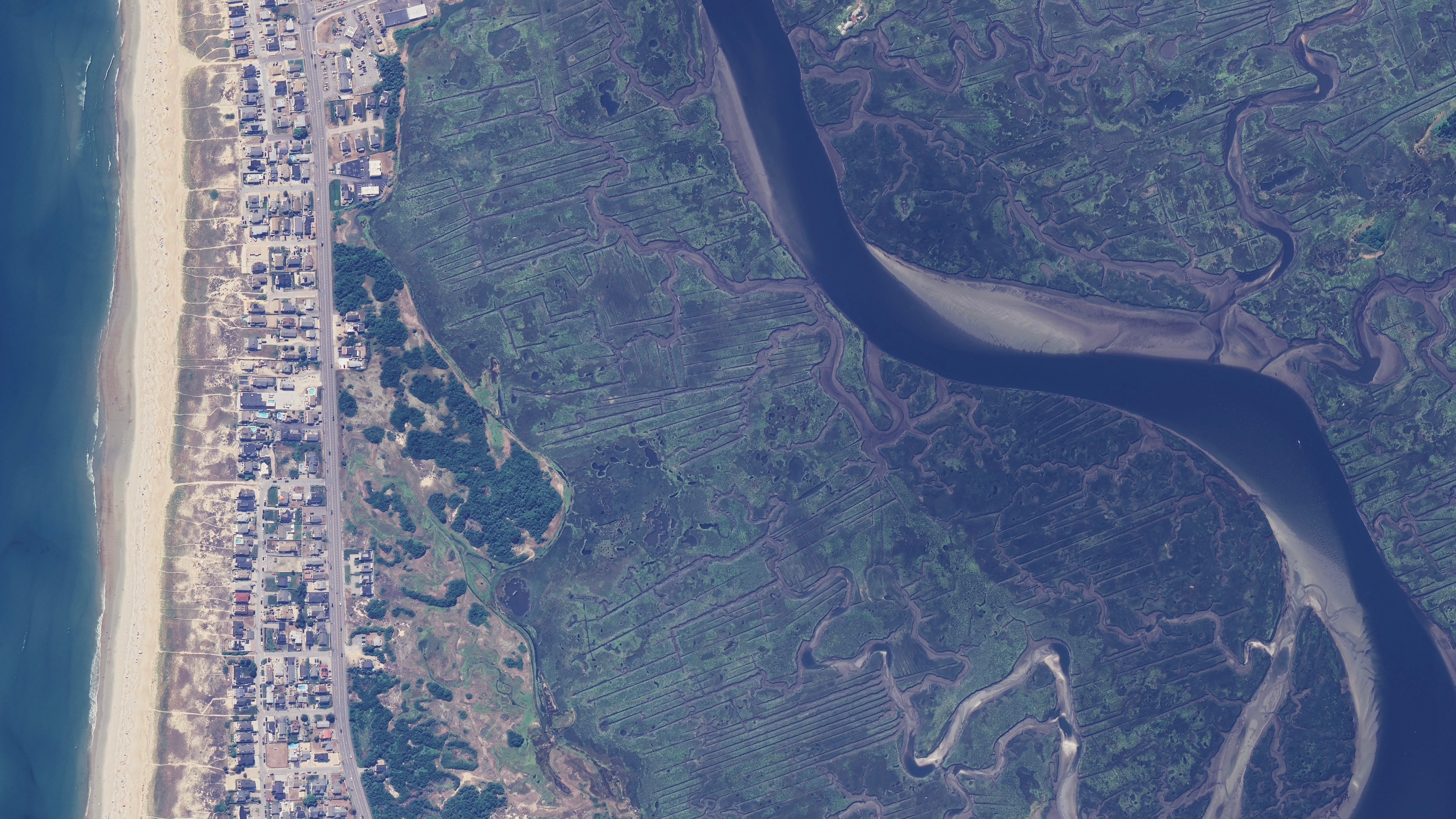
In her book After Geoengineering, writer and researcher Holly Jean Buck argues that we’ve lost the capacity to imagine such collective technological action in nuanced terms. On one side of any climate debate are the techno-futurists: people who treat climate change as an engineering problem detached from history or politics. On the other is a historically and politically grounded left that views technological solutions with suspicion or outright hostility31. What’s missing is a political imagination that can reclaim large-scale ecological projects, not as technocratic gambles but as democratic tools—things that we can shape together, transparently and with care, which can go on to endure as powerful statements of our shared intent.
New Deal grid ditching was not democratic in any idealized sense. It was top-down, experimental, and driven by a questionable understanding of ecology. But it was also publicly funded, publicly organized, and executed by thousands of working-class young people. If the future of successful geoengineering depends on reimagining vast technological megaprojects for collective ends, the initiative offers a flawed but compelling prototype. “[M]egaprojects are planned and executed for a symbolic value that can be more stunning than their fiscal value,” Buck writes, exploring how geoengineering might relate to contemporary megaprojects like the Three Gorges Dam (which reinforced the People’s Republic of China’s place on the world stage in much the same way the Panama Canal did for America). “Infrastructure inscribes cultural messages in the landscape; it expresses both authorship and authority.”32 This perfectly describes the way I felt when I first saw the ditches with my drone back in 2018—taking in messages from a time when bigger things were possible, and being reminded that they still are.
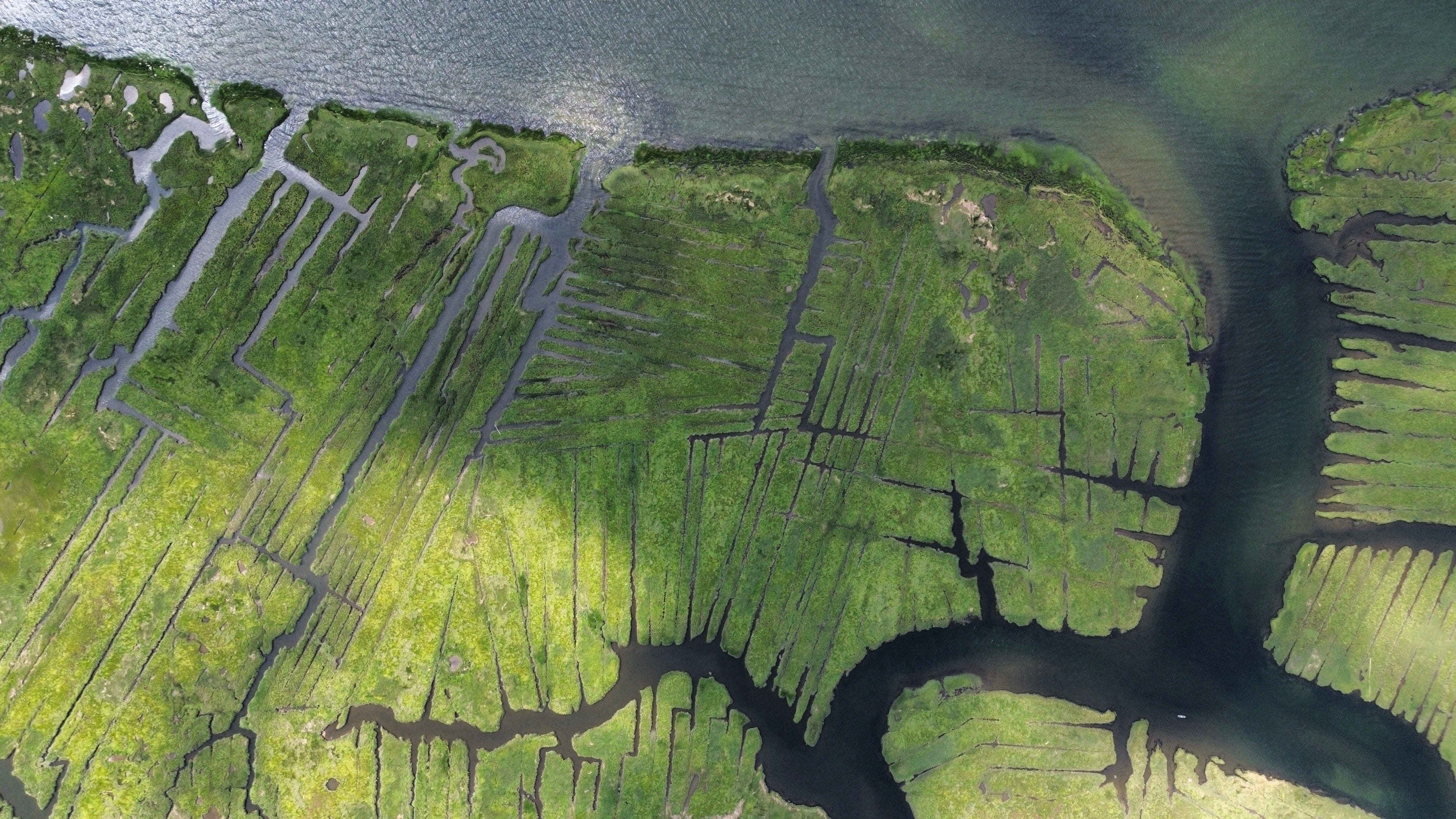
It's not lost on me that I wouldn’t have noticed any of this without another piece of technology that began as a tool for imperial power projection. We wouldn't have cheap consumer-grade drones if it weren't for previous generations of unmanned aerial vehicles built for tasks that make my earlier Call of Duty comparison a lot less figurative. I can only hope that this technology, too, can be repurposed for more positive ends with time.
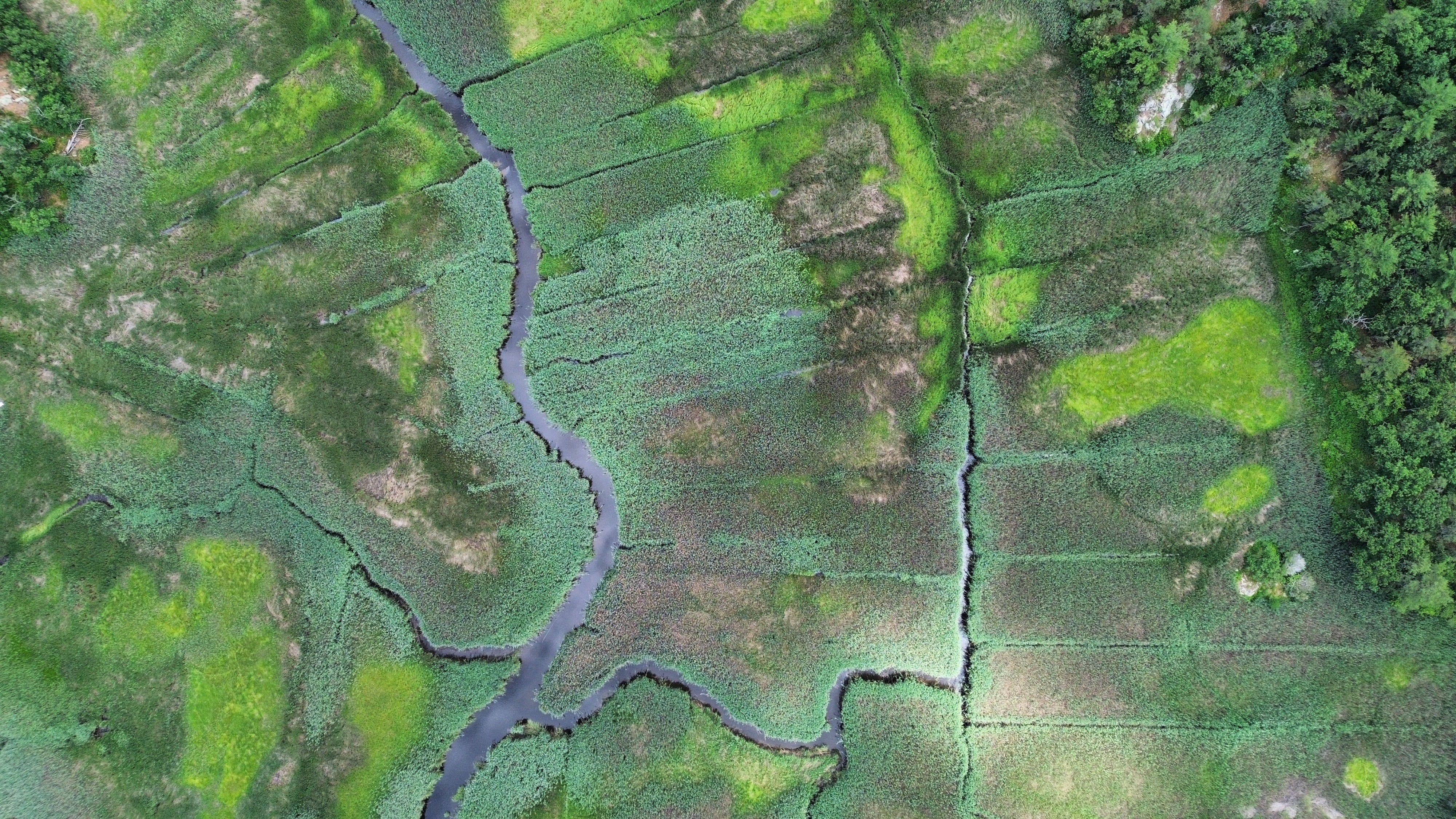
The challenges of the 21st century call for bigger, more organized, more ambitious thinking. That’s why I keep going back to these ditches. Once, an army of unemployed, unmarried young men reshaped a continent with nothing but shovels and government funding. What if next time, we do it right?
“It is not the critic who counts, not the man who points out how the strong man stumbled, or where the doer of deeds could have done them better. The credit belongs to the man who is actually in the arena; whose face is marred by dust and sweat and blood; who strives valiantly, who errs and comes short again and again; who knows the great enthusiasms, the great devotions, and spends himself in a worthy cause; who, at the best, knows in the end the triumph of high achievement; and who, at the worst, if he fails, at least fails while daring greatly, so that his place shall never be with those cold and timid souls who know neither victory nor defeat.” -Theodore Roosevelt
1 Long, S. P., and C. F. Mason, Saltmarsh Ecology (Glasgow, NY: Blackie ; Distributed in the USA by Chapman and Hall, 1983)
2 Glinski, Jim, “Salt Marsh Ditches of the South Shore - Part 1.” North and South Rivers Watershed Association, November 10, 2022. https://www.nsrwa.org/salt-marsh-ditches-of-the-south-shore-part-1-1/.
3 “Scourge of the Spanish American War.” PBS. https://www.pbs.org/wgbh/americanexperience/features/fever-scourge-spanish-american-war/.
4 Pestano, Andrew V., “Cost of War: U.S. Death Tolls in Major Conflicts since the American Revolution.” NBC4 Washington, May 23, 2025. https://www.nbcwashington.com/news/national-international/cost-of-war-us-death-tolls-major-conflicts-american-revolution/3920356/.
5 McCarthy, Erin, “History vs. Bonus Episode: Theodore Roosevelt and the Round-Robin Letter Incident.” Mental Floss, April 16, 2020. https://www.mentalfloss.com/columns/history-vs/history-vs-podcast-theodore-roosevelt-round-robin-letter-incident.
6 “William Crawford Gorgas.” AMEDD Center of History & Heritage. Accessed July 5, 2025. https://achh.army.mil/history/surgeongenerals-w-gorgas.
7 “Scourge of the Spanish American War.” PBS. https://www.pbs.org/wgbh/americanexperience/features/fever-scourge-spanish-american-war/.
8 McCullough, David, The Path Between the Seas: The Creation of the Panama Canal, 1870-1914 (New York: Simon and Schuster, 1977) p. 415
9 “Early Plans.” Autoridad del Canal de Panamá, October 27, 2021. https://pancanal.com/en/early-plans/.
10 McCullough, David, pp. 131–180
11 McCullough, David, pp. 467–468
12 McCullough, David, p. 610
13 Moore, Sarah J. “Mosquitoes, Malaria, and Cold Butter: Discourses of Hygiene and Health in the Panama Canal Zone in the Early Twentieth Century.” Panorama, March 13, 2025. https://journalpanorama.org/article/mosquitoes-malaria-and-cold-butter/.
14 Gorgas, William Crawford. Sanitation in Panama. New York & London: Appleton, 1916. pp. 287-292
15 Nash, Linda. Inescapable Ecologies: A History of Environment, Disease, and Knowledge (Berkeley, CA: University of California Press, 2006) p. 107
16 Moore, Sarah J.
17 Tonjes, David J. “Impacts from Ditching Salt Marshes in the Mid-Atlantic and Northeastern United States.” Academic Commons, 2013. https://commons.library.stonybrook.edu/techsoc-articles/19/.
18 Anderson, John F. “History of Public Health Entomology at the Connecticut Agricultural Experiment Station.” CT.gov, 2011. https://portal.ct.gov/.
19 Allen, Davis. “Conservation Competition: Perspectives on Agricultural Drainage During the New Deal Era.” Master’s thesis, Case Western Reserve University, 2016. http://rave.ohiolink.edu/etdc/view?acc_num=case1465488868
20 “Timeline: The Evolution of the CCC.” American Experience, 2010. https://web.archive.org/web/20161225041953/https://www.pbs.org/wgbh/americanexperience/features/timeline/ccc/.
21 “Civilian Conservation Corps.” Encyclopædia Britannica, June 27, 2025. https://www.britannica.com/topic/Civilian-Conservation-Corps.
22 Salmond, John A. The Civilian Conservation Corps, 1933-1942: A New Deal Case Study (Durham, North Carolina: Duke University Press, 1967) Chapter 8
23 Cantril, Hadley, and Mildred Strunk. Public opinion, 1935-1946. Westport, Conn: Greenwood Press, 1978.
24 Salmond, John A. Chapter 9
25 “Civilian Conservation Corps.” Encyclopædia Britannica, June 27, 2025. https://www.britannica.com/topic/Civilian-Conservation-Corps.
26 Vileisis, Ann. Discovering the Unknown Landscape: A History of America’s Wetlands (Washington, D.C: Island Press, 1999) pp 173-174
27 Tonjes, David J.
28 Tonjes, David J.
29 Upp, Megan L. “Habitat Selection of the Spotfin Killifish in Coastal Connecticut.” Digital Commons @ UConn, December 15, 2019. https://digitalcommons.lib.uconn.edu/gs_theses/1455.
30 Gurudev, Sruthi, and Lauren Owens Lambert. “This Little Bird Tells the Story of the East Coast’s Disappearing Marshes.” Environment, September 6, 2024. https://www.nationalgeographic.com/environment/article/saltmarsh-sparrow-east-coast-sea-level-rise.
31 Buck, Holly Jean. After Geoengineering: Climate Tragedy, Repair, and Restoration (Verso, 2021) p. 26
32 Buck, Holly Jean. p. 33
 | A guest post by
|
This is great!