


Sean J Patrick Carney is a writer and artist in Portland, Oregon. He is the creator and host of time zero, a podcast about the nuclearized world.
Coyote Time is available to play on desktop at coyotetime.world.
Follow @alicebucknell to stay in the loop.
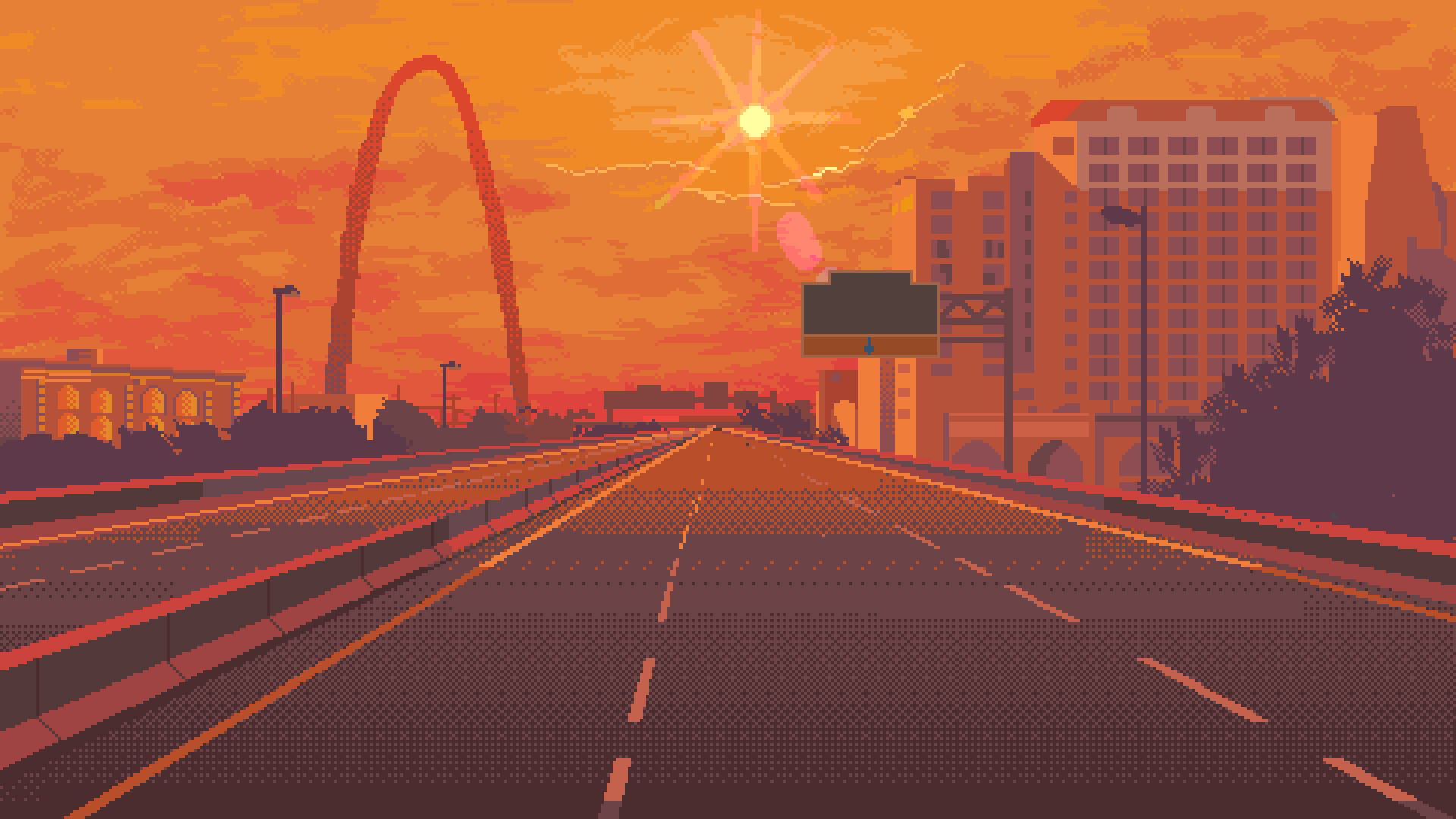
“Coyote time,” a term derived from Looney Tunes logic, describes a forgiveness mechanic in video games that gives players a few extra frames to jump after their character has stepped off a ledge. Coyote Time is also the title of Los Angeles-based artist Alice Bucknell’s latest game, a pixelated, text-based adventure that unfolds over one bizarre night in St. Louis.
Games have long been central to Bucknell’s practice, from the speculative, game-engaging ecologies of The Alluvials (2023)—the first video game acquired by SFMoMA—to Nightcrawlers (2025), a cooperative multiplayer game about interspecies pollination. Coyote Time continues Bucknell’s experimental practice through a mechanic built around delayed consequence, taking the suspended moment between action and outcome as a way to consider the economic, social, technological, and ecological effects of extractive capitalism already underway but not yet fully registered.
Commissioned for the 2026 St. Louis Counterpublic Triennial by Nora N. Khan, one of five curators organizing the citywide program, the game proved resonant enough to give the entire exhibition its title. Khan and her co-curators expanded Bucknell’s suspended time into a framework for confronting overlapping uncertainties. Clearly, our species has stepped off a precipice. What maneuvers remain before gravity comes to collect?
As Counterpublic opened in September, Bucknell and I connected to talk through post-industrial St. Louis, programmed obsolescence both technological and municipal, and ghosting a gaming industry that’s hyperfixated on fidelity and spectacle.
Coyote Time is available to play on desktop at coyotetime.world.
Follow @alicebucknell to stay in the loop.

SJPC: Games have innumerous mechanics and quirks. What was it about coyote time that captured your attention?
AB: I’m often drawn to video game mechanics and terminology that are obsolete, because they capture a certain ambition or ideology of where gaming was at a specific point in time. In addition to coyote time, I’ve been thinking about “overworld,” which was a playable version of a game map, before open-world was possible. And I am always thinking about the “walking simulator,” first coined as an insult to describe games with simple mechanics. Reinterpreting these frameworks has influenced my practice in recent and ongoing projects. With the coyote time mechanic, specifically, I like how it increases the pleasure of gameplay at the expense of true physics.
SJPC: How did you extrapolate that moment of forgiveness into a game-scale principle?
AB: In a way, it felt pretty natural, asking the question: what if the feeling of the collision bug, glitch, or suspension could be stretched across the whole game? Take noclip mode—the ability to walk through walls or other obstacles—but mold it into a narrative tactic. For Coyote Time, we dilated the dilation, scaling this mechanic upwards into a quantum-adjacent, time-traveling adventure game, where multiple past and future versions of St. Louis collide across the gameplay experience of one long night of adventure.
SJPC: Contemporary art can sometimes feel caught between two extremes: work so withholding that it risks alienating its audience, and work so didactic that it leaves little room for interpretation. Your games seem to operate somewhere between those poles. I wonder whether designing for what you’ve called the “pleasure of gameplay” is liberating in that respect.
AB: Totally! And, importantly, games are amazing because they can stretch the meaning of pleasure into so many other affective territories beyond simply feeling good. Some of my favorite game theorists—Bo Ruberg, Aubrey Anable, and Alenda Y. Chang, who merge the field with queer and ecological theory—talk about no fun gaming, or difficult gaming. This includes experiences of play that make us feel confusion, anger, frustration, sadness, hurt, rumination, or pining. I love games that subvert the idea of pleasure as a necessarily positive feeling. So, in my own games, I try to create space for a broader range of affective impact.
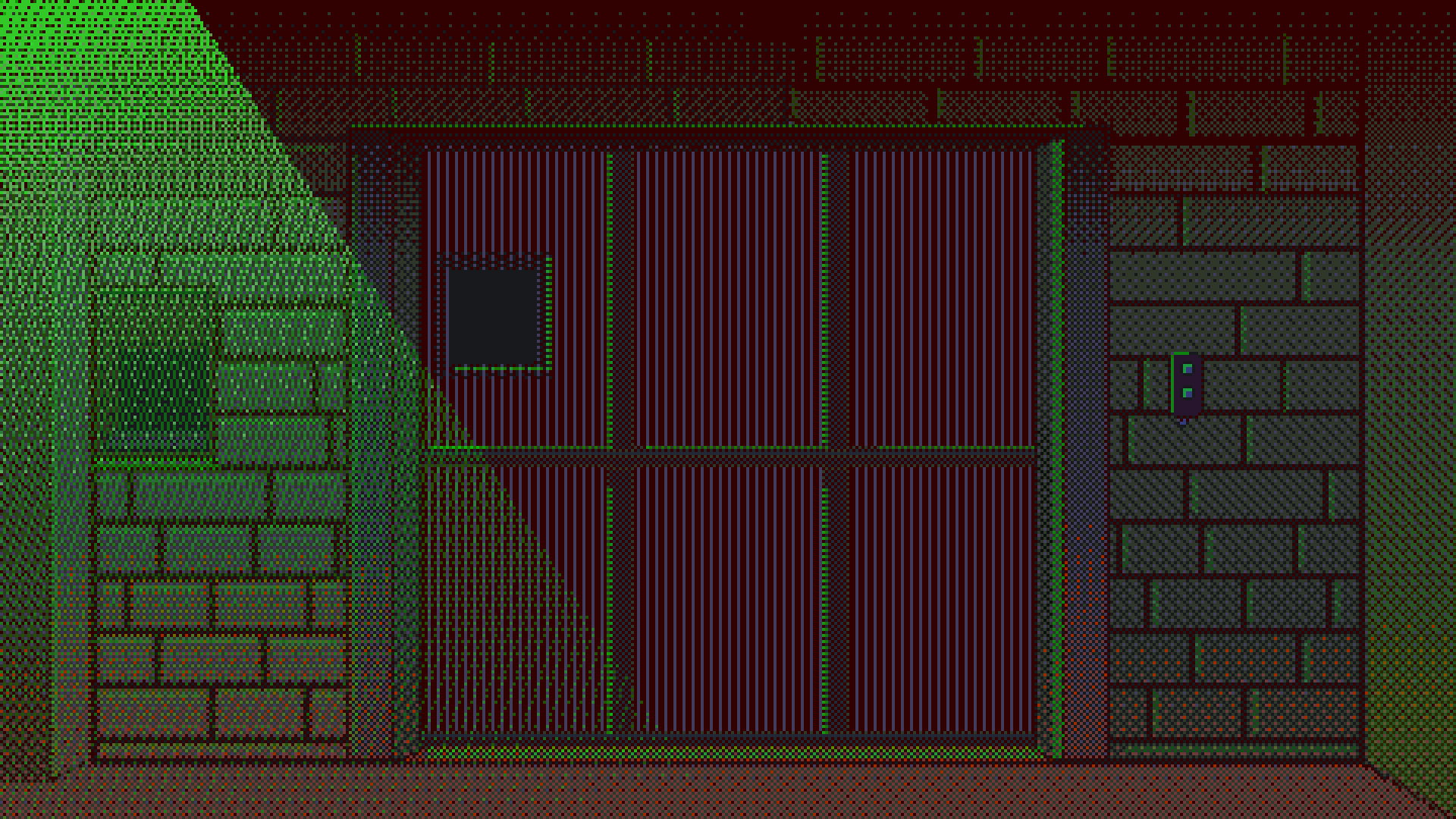
SJPC: You’ve definitely created that with Coyote Time. As I’ve been playing the game, I’ve experienced a complexity of emotions, from nostalgia to genuine anxiety to bliss. This results, in part, to its formal and mechanical aspects, which subvert the hyperreal trajectory of contemporary game design. It’s pixelated, 2D, browser-based, and, at times, relatively frictional.
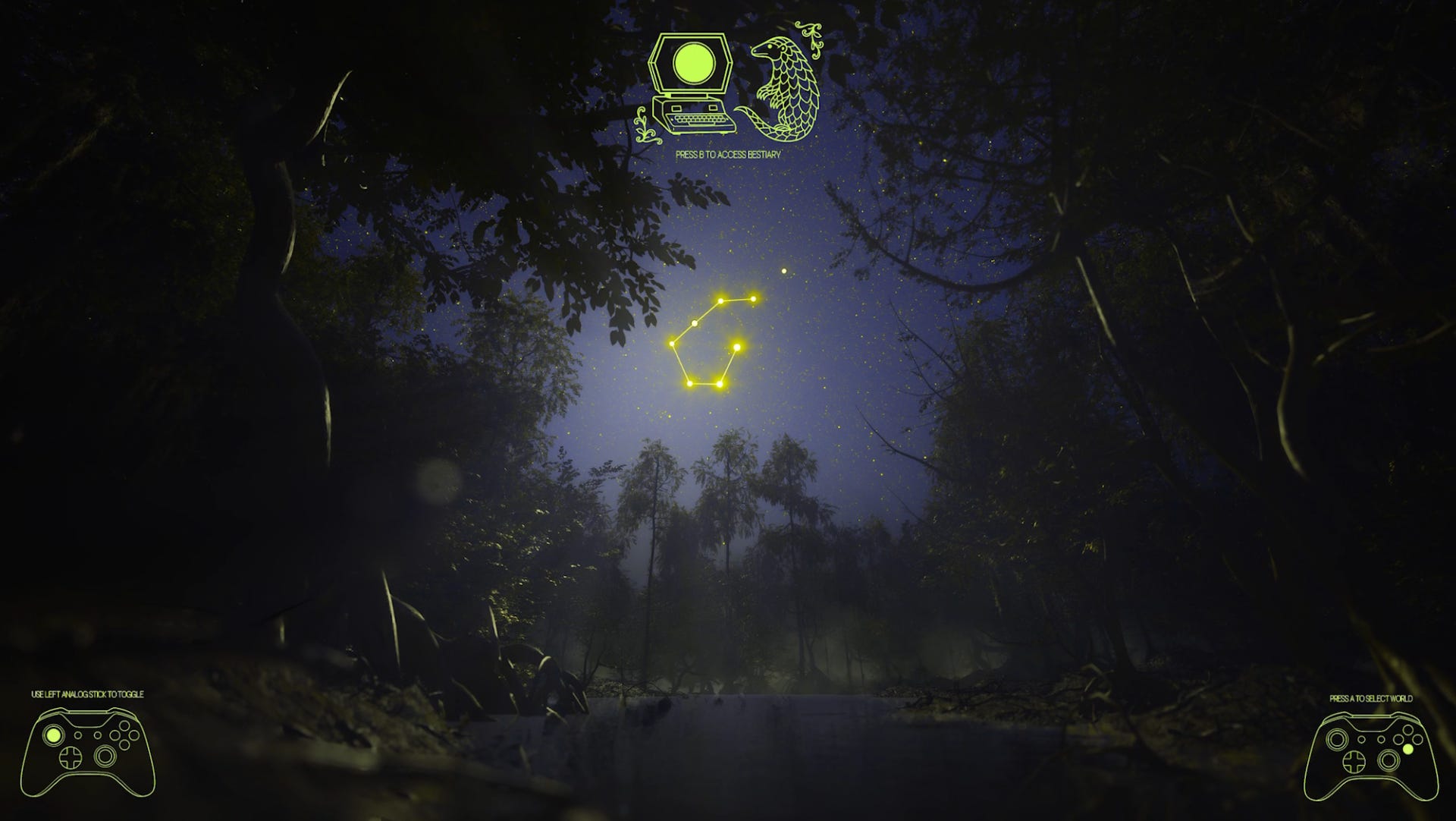
AB: Well, for the last few years, I have actually been making games with the larger engines, pursuing photorealism and increasingly conglomerated workflows. This includes Small Void (2025), a two-player black hole dating simulator developed during my residency at CERN, and Earth Engine (2026), a single-player exploration game that integrates real-time climate data and real-scale geospatial models of the Earth. Still, Earth Engine has moments where the muscle of realer-than-real terrain scans and gargantuan atmospheric datasets break down and melt into a 2D pixelated aesthetic that centers loss and confusion. Coyote Time is a leap into that space of lossiness and what else emerges in the gaps between the simulated and the real.
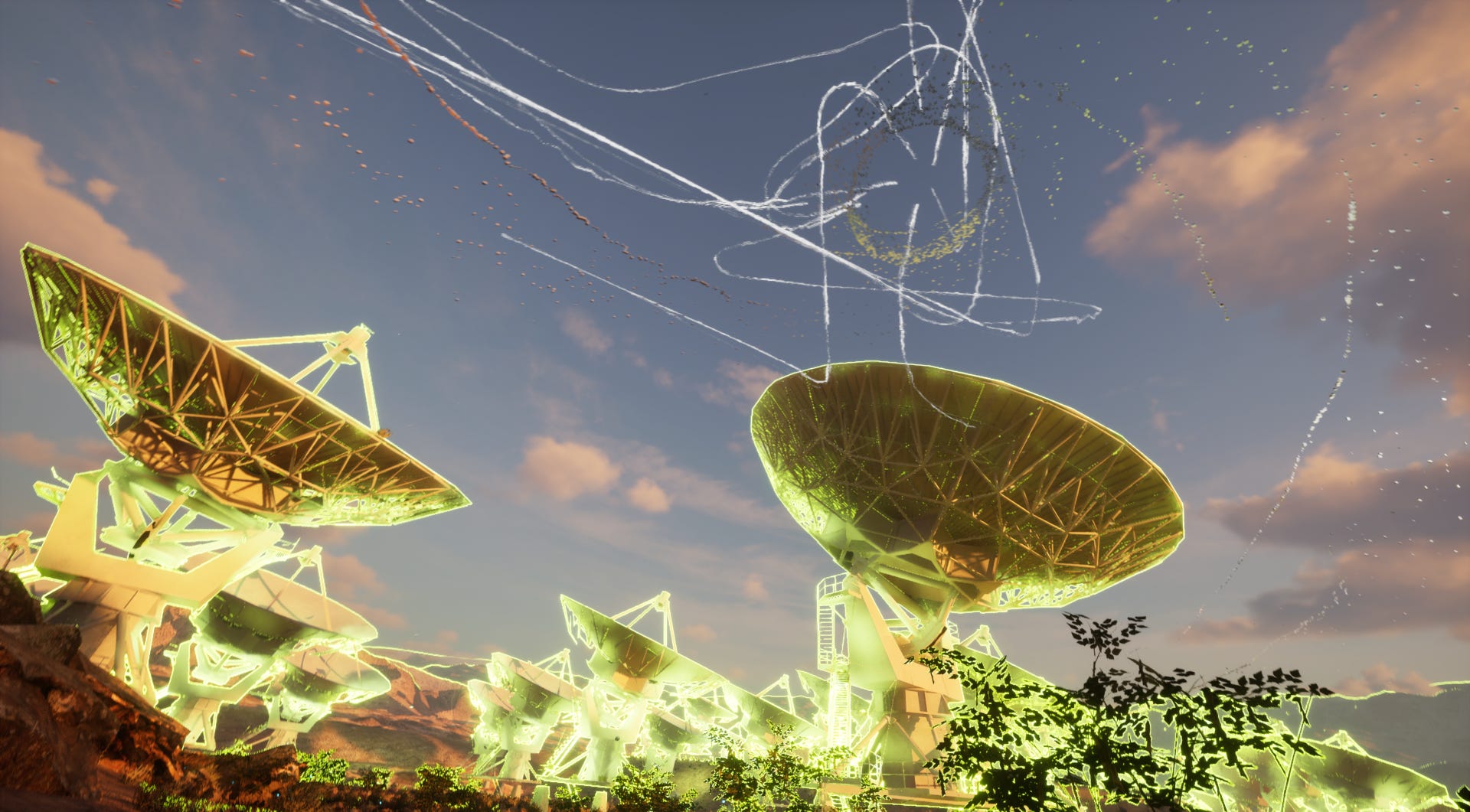
SJPC: So, what prompted the full-game pivot? It’s pretty substantial.
AB: With Coyote Time, the decision was as much personal intrigue as it was an attempt to ghost on the progress-obsessed arc of the gaming industry. I wanted to step outside of the 8K-resolution spiral and explore a gamefeel and typology that nods to gaming history while catching a new updraft of interest from the artist-made and indie game scenes. Many artist-made games are intentionally ditching photorealism, moving into more stylized aesthetic terrains to explore complex topics like ecological grief, systemic injustice, climate disaster.
SJPC: Which ones were you playing the most?
AB: I’m really moved by the nuance, poetry and feeling of recent eco-fiction adventure games like Firewatch, Norco, Kentucky Route Zero, and 1000x Resist.
SJPC: What makes them pleasurable, for you as a player?
Interestingly, many of these games are labeled “walking simulators.” But what I think they all have in common is this need to ambulate—to move constantly, but not necessarily with full understanding, across both personal and planetary scales. Norco, a southern gothic petrocapitalist pixel art game set in Louisiana, is particularly influential for this project. And in Firewatch and 1000x Resist, the grief of losing loved ones maps onto anticipatory ecological grief over the loss of a world, revealing this wormhole-type relationship where everything maps onto everything else. As an art form, games can provide this complexity of experience because their immersion is continuous, multisensory, and interconnected.
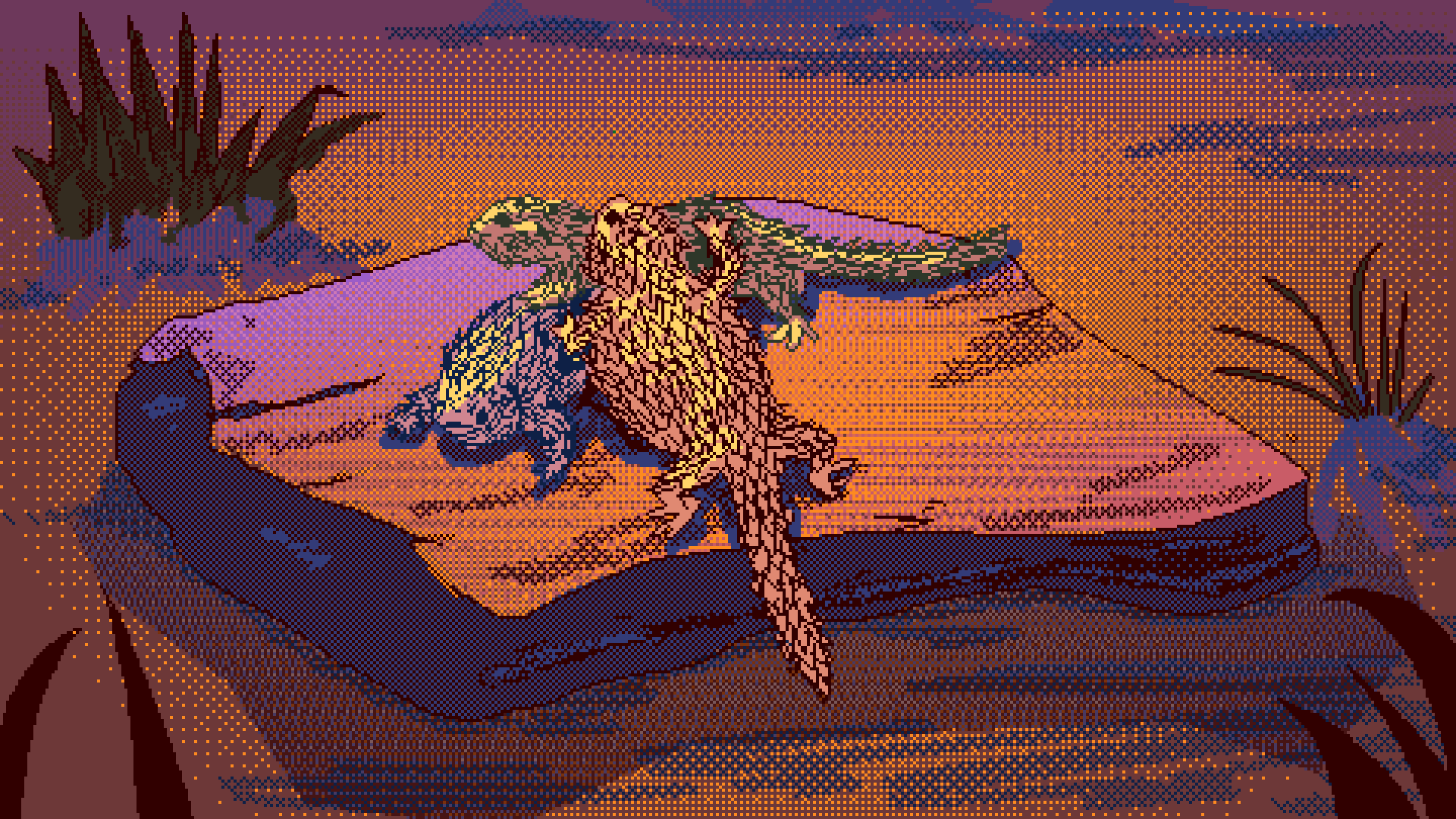
SJPC: After dropping the pursuit of powerful graphics, where did you direct your design attention?
AB: Because I had been playing so many walking simulators, I realized that once a game’s visuals and mechanics are pared back, its other features come into focus. Suddenly, sound design, UI (user interface) and HUD (heads-up display), narrative, and scriptwriting carry new weight. As a result, Coyote Time features some really unique visuals programming, storyline, and sonic elements that wouldn’t otherwise feel so central. It’s easier to hold and feel their affective impact in a slower, quieter, more ambient game world. Pixel art is also agoraphilic; the medium handles the melancholia of vast post-industrial vistas, empty midnight highways, or a museum after hours exceptionally well. The fixed camera and hand-painted details generate a rich psychic image of the world that’s perennially just beyond-screen. All of this allows the mind to move inwards and within the world simultaneously.
Nina Keith. “River Time (Demo)” from Coyote Time (2026).
SJPC: The game’s sound caught my attention immediately. You worked with Los Angeles composer Nina Keith, whose score is this spiraling tapestry of reverse tape loops, synth swells, and warm percussive bits.
AB: I have been a fan of her music for years, both as an independent artist, and her work with Rachika Nayar as Disiniblud. When she accepted the invite to collaborate, I was over the moon. Nina’s score and sound design gives the game so much emotional texture and depth.
SJPC: Right, it is super-textural and cinematic in a way that would support an open-world fantasy RPG, but instead accompanies this technically much simpler game. What was the collaboration with Nina Keith like?
AB: Working with Nina was incredible, and it is impossible to imagine the world of Coyote Time without her contribution. She also happens to live about five minutes away so we got to do a lot of IRL jam sessions pretty early on. Watching her take rough sketch stills from the game’s different locations and expand them into full, heady, layered compositions was like magic. And that ended up influencing the script, visuals, and programming, too. It’s always a great feeling when all the different parts of a game start talking to each other.
Nina Keith. “Always Coming Home” from Coyote Time (2026).
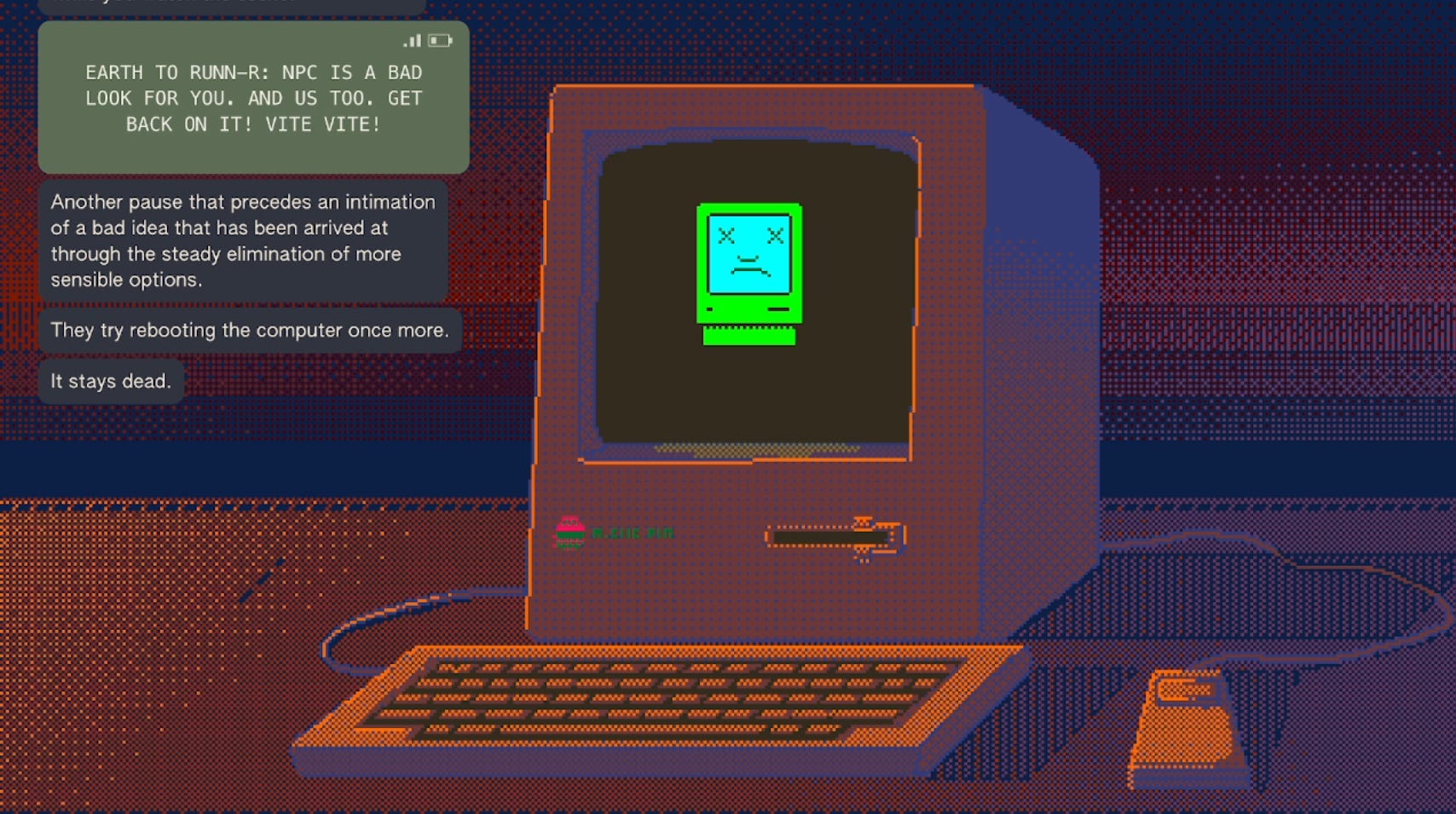
SJPC: That’s a kind of feedback loop that probably isn’t common in larger productions.
AB: Exactly! We were a small team. I am Coyote Time’s writer and game designer. Nina was our musician and sound artist, with Joseph Pleass and Ben West as developers, and Khaled Makshoush and Omar Khouri creating and coloring the pixel game art. We’re spread across ten time zones, so an infinitely active Discord server was our asynchronous bread and butter.
SJPC: Besides the Counterpublic installations, how else is Coyote Time finding its way into the world?
AB: The game orbits many circles. It’s been playtested at experimental game events in Amsterdam and on the shores of Geneva at La Becque, where I was artist-in-residence this year. And during the Counterpublic opening, the St. Louis Symphony Orchestra is performing a live version of the game’s score with Nina! Then, moving beyond art world circuits, we’re planning a Steam launch for the game this year and Nina will be releasing the score as a standalone album.
SJPC: That activation with the St. Louis Symphony Orchestra feels really special. What else distinguishes Counterpublic from other large exhibitions that you’ve been a part of?
AB: Counterpublic’s approach to a city-wide art exhibition is really granular. Structurally, it unfurls through five appointed curators. Each curator works closely with their own roster of artists, and is overseen by Counterpublic’s director, James McAnally, a longtime resident who’s been active in the St. Louis art scene for two decades. Every commissioned project is anchored and informed by a physical site—or, in my case, two sites—and the three-year lead-up involves multiple visits, field research, and building connections with the city’s residents. This system means the projects emerge through an intimate and localized relationship to St. Louis, during which you also get a strong sense of the larger systems shaping the city.
SJPC: I imagine that had a significant influence on your game.
AB: It was essential. Coyote Time takes place all over St. Louis and involves a lot of city history, infrastructure, characters, and lore. It’s packed with local Easter eggs. And it operates in a multiscalar way; it’s a first-person POV game that’s connected to, shaping, and being shaped by, broader social, economic, political and ecological systems.
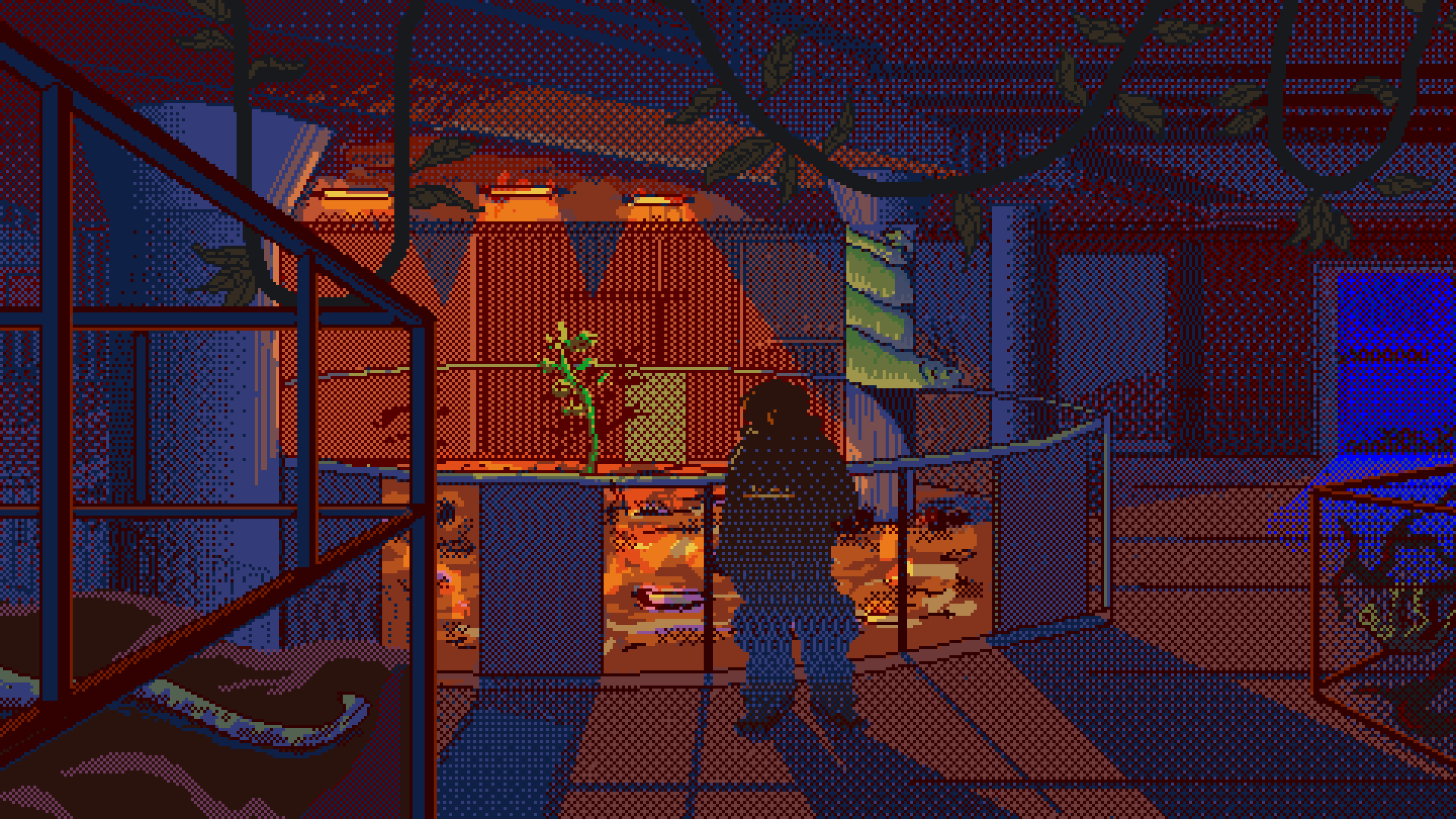
SJPC: What happens to those macro systems when you encounter them at the scale of a single player moving through the city?
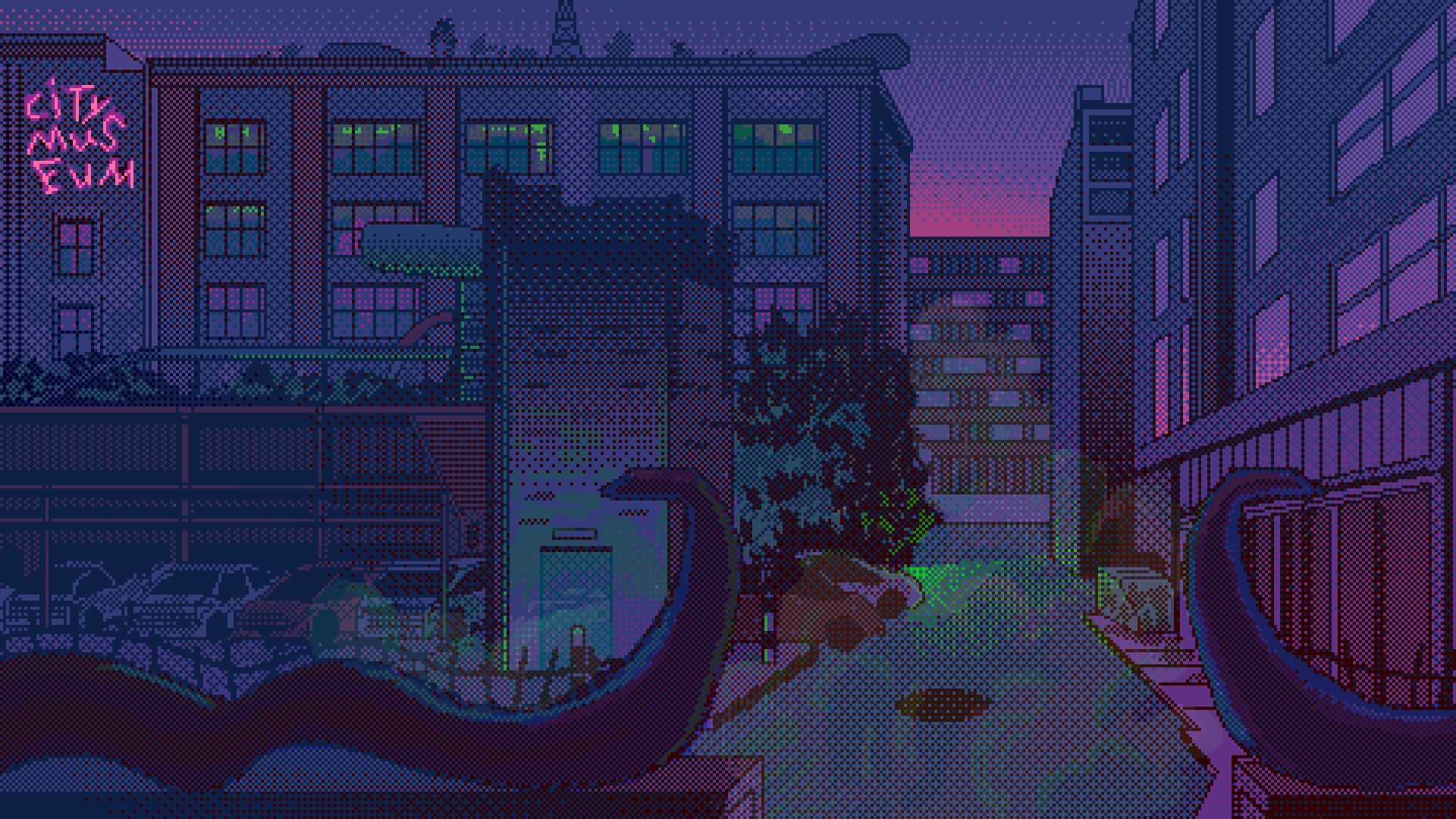
AB: Video games are exceptionally good at handling multiscalar POVs. In Coyote Time, local landmarks like City Museum, the National Building Art Center, Mosenthein Island, Kenny’s Upstairs—formerly the Upstairs Lounge—and the SS Admiral riverboat casino are hotspots for uncovering the many histories and possible futures of St. Louis. But these places also map onto larger national and global concerns about the privatization of natural resources, economic and ecological chaos induced by AI and other tech booms, political corruption, and the eating away of social infrastructures. Games allow us to experience a story across the micro and macro scales at once, where close-range sensory data and ludic agency feeds into an understanding of multiple converging systems.
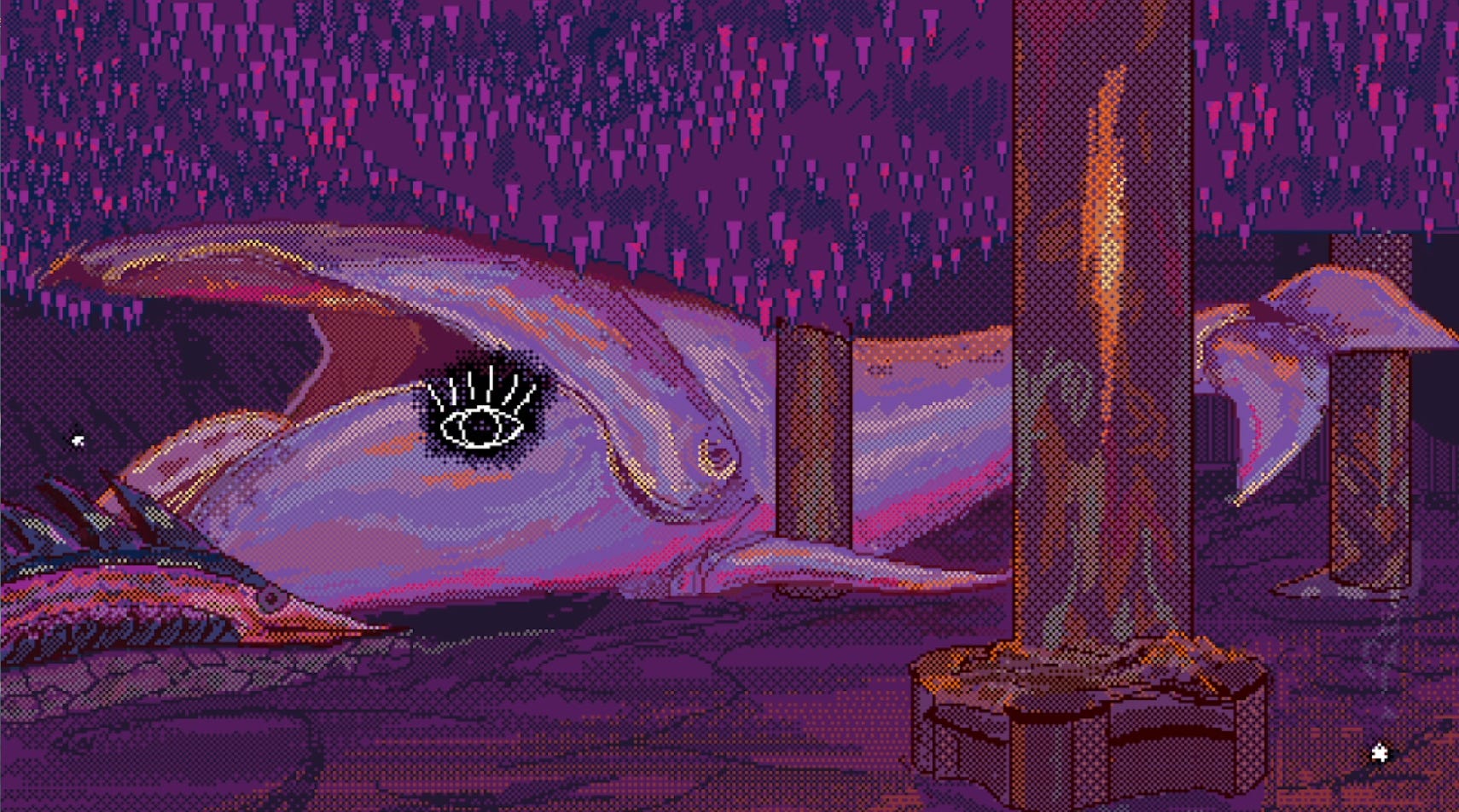
SJPC: You mentioned earlier that your project will be staged at not just one but two physical sites. This includes Laclede’s Landing on the Mississippi River, as well as the City Museum, which features prominently in the game and is far stranger than its name might suggest.
AB: Yes, the multiple lives of Coyote Time! The installation at Laclede’s Landing is more art world-coded. There is a big projector screen, minimalist warehouse-y vibe washed in orange neon, and two stunning hand-made textile banners by Missouri-based artist Janie Stamm that feature scenes and characters from the game. The City Museum installation feels cozier. We’re using furniture pieces from the Museum’s collection and a TV set-up. It’s a bit like a living room set inside the chaosmaxxing Museum, which counts among its accolades a life-size whale sculpture, 10-story-tall spiral slides, a rooftop ferris wheel, and a cave system—all of which appear in the game. Showcasing Coyote Time in City Museum makes the game available to a broader cross-section of the city’s residents and visitors, which feels true to what artist-made video games do best: open up conversations around complex topics, systems and relationships using the medium of play. And a fun fact is that the installation shares a wall with the slides. So, every so often, while playing the game in situ, you’ll hear the rumble and screams of passengers shuttling by in the real slide. Talk about immersion.
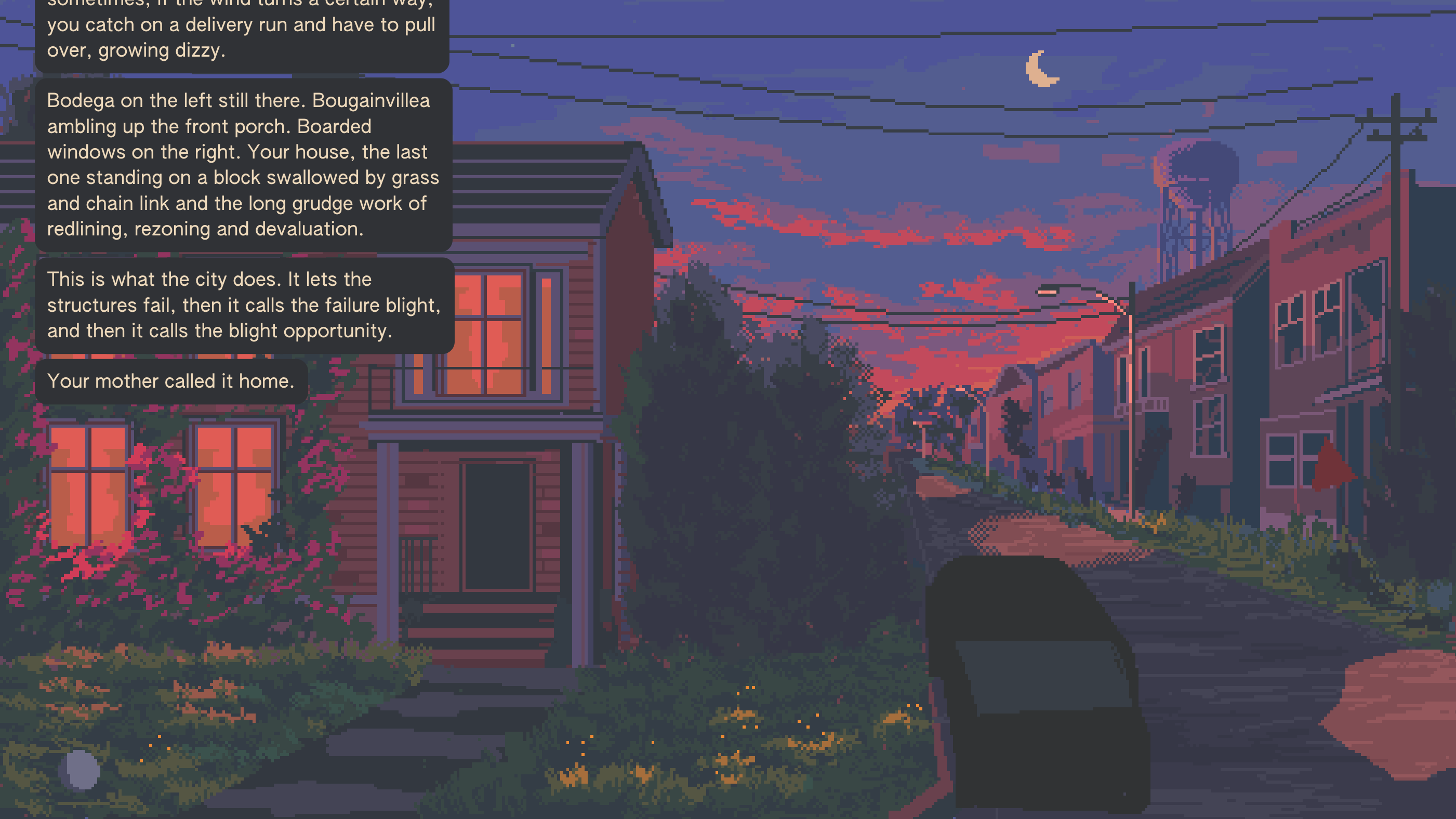
SJPC: Early in the game, there is the line: This is what the city does. It lets the structures fail, then it calls the failure blight, then it calls the blight opportunity. It’s talking about St. Louis, but it could be referencing any post-industrial city in Middle America, where total transition toward a service and technology economy is pitched as the rational—and inevitable—future. How do you see text-based adventure games engaging with the fait accompli we’re fed by municipal leaders and techno-solutionists?
AB: Adventure games often scramble time. Take Kentucky Route Zero, where time stretches out over the course of a single hallucinogenic night, inside of which a decades-long tale of systemic debt, displacement, and Rust Belt decay is constellated. Or, a game allows you to inhabit, play, and replay multiple timelines and perspectives, like in 1000x Resist, which addresses intergenerational trauma, the Hong Kong protests, and planetary extinction through a time-travel narrative structure. You could also read into site-specific adventure games a scrambling of space. In Coyote Time, the challenges facing St. Louis—corporate tech takeovers, environmental disaster, political bloating, resource mismanagement, and the economic cycles tying these together—will carry echoes of familiarity with players living in other post-industrial cities nationally and beyond. Globalization’s effects are both amnesiac and omnipresent. Importantly, games introduce agency and the permission to imagine other futures.
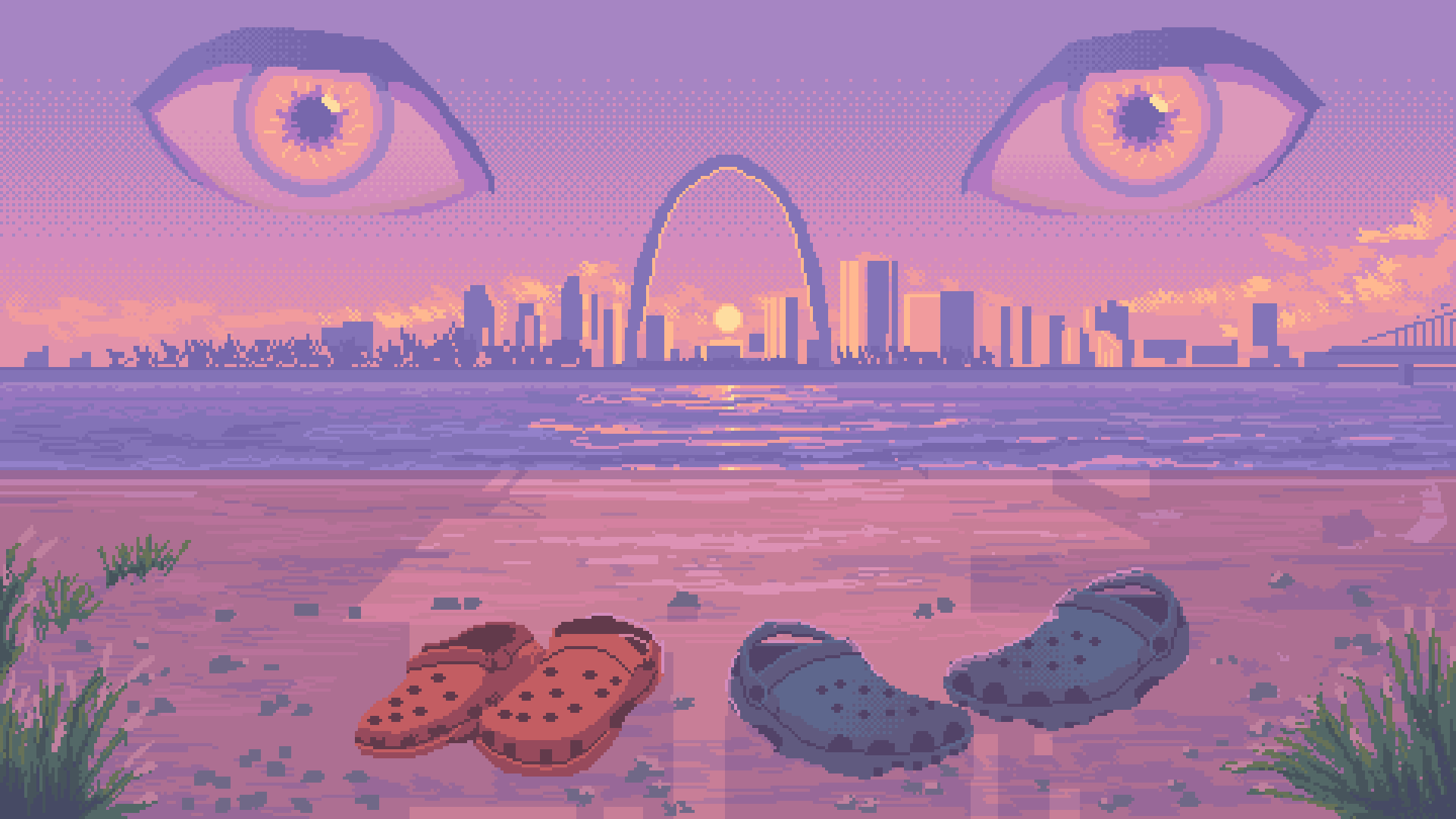
SJPC: With Coyote Time, you’ve repurposed supposedly obsolete mechanics and aesthetics to suggest that contemporary games don’t need to be chasing ever-greater fidelity and spectacle. Could that same logic apply to a post-industrial city like St. Louis?
AB: Definitely. I think an issue facing all cities today—but one that’s particularly endemic to post-industrial U.S. urbanism—is that we’re so deep in the neoliberal downward spiral that the hardship created by a failing system is often displaced onto the individuals who call these cities home. On the flip side, communities are incredibly resilient. Organized resistance works, and people rally hard to protect and look out for each other. In my experience, this kind of collective determination for a different future is perhaps nowhere more strongly felt than in St. Louis. Their refusal to fall to the next pecking order of post-industrial zombie development is powerful precisely because it is a refusal born from love and community. That line from the game you referenced earlier—This is what the city does. It lets the structures fail, then it calls the failure blight, then it calls the blight opportunity—includes an important coda: But your mother called it home. In a way, the game contests the very idea of obsolescence itself through its time-traveling subgenre. History pops up onto the game map constantly and uncontrollably, groundhog-like, erupting into the present in order to shape the future.
SJPC: The games that you enjoy as a player and the games that you design might be characterized as either science fiction or speculative fiction. When they are at their best, what do you think is the sociocultural power of these genres?
AB: I like to think of science fiction and speculative fiction as two-way streets: the past shapes the future, but the future can also touch the past. Reading Ursula K. Le Guin, Octavia E. Butler, and Cixin Liu, we get this sense of time as a spiral. With Saidiya Hartman, world-making is achieved through both the archive and the future, which are equally significant. Science fiction and speculative fiction let us zoom out on the map to see how larger systems dominate by flattening and condensing reality into a singular plane. These genres allow us to experience an expanded field where we might conceive of other systems and other futures. When I close a book, or leave a game, and return to the world, these spaces of possibility feel more real, closer, and urgent.
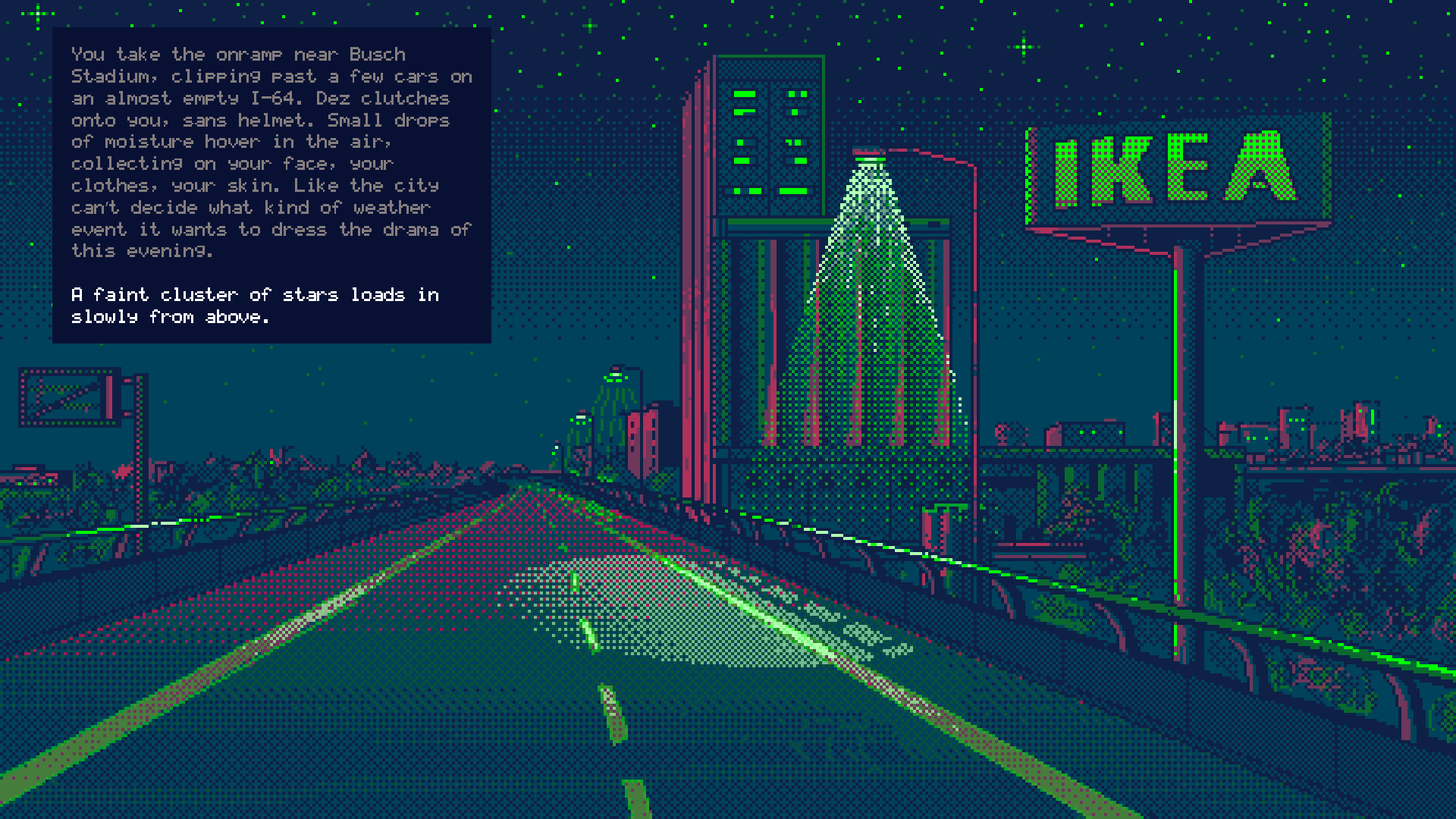
What interests me most here is the movement between the intimate scale of one person walking through a city and the enormous systems shaping that city. Geography often works in exactly this way: the local street contains traces of economics, history, technology, environment and politics far beyond itself. Art can make those invisible connections perceptible in ways that explanation alone cannot.
there were 3 coyotes late one night last month here on my street in the middle of San Francisco. it was time.