


Josh Kline is an artist based in New York.
An excerpt of this text was published in the 2026 Whitney Biennial Catalog.
This interview was conducted in June of 2025. We discuss themes explored in an article later published by Kline in October #195: “New York Real Estate and the Ruin of American Art”.
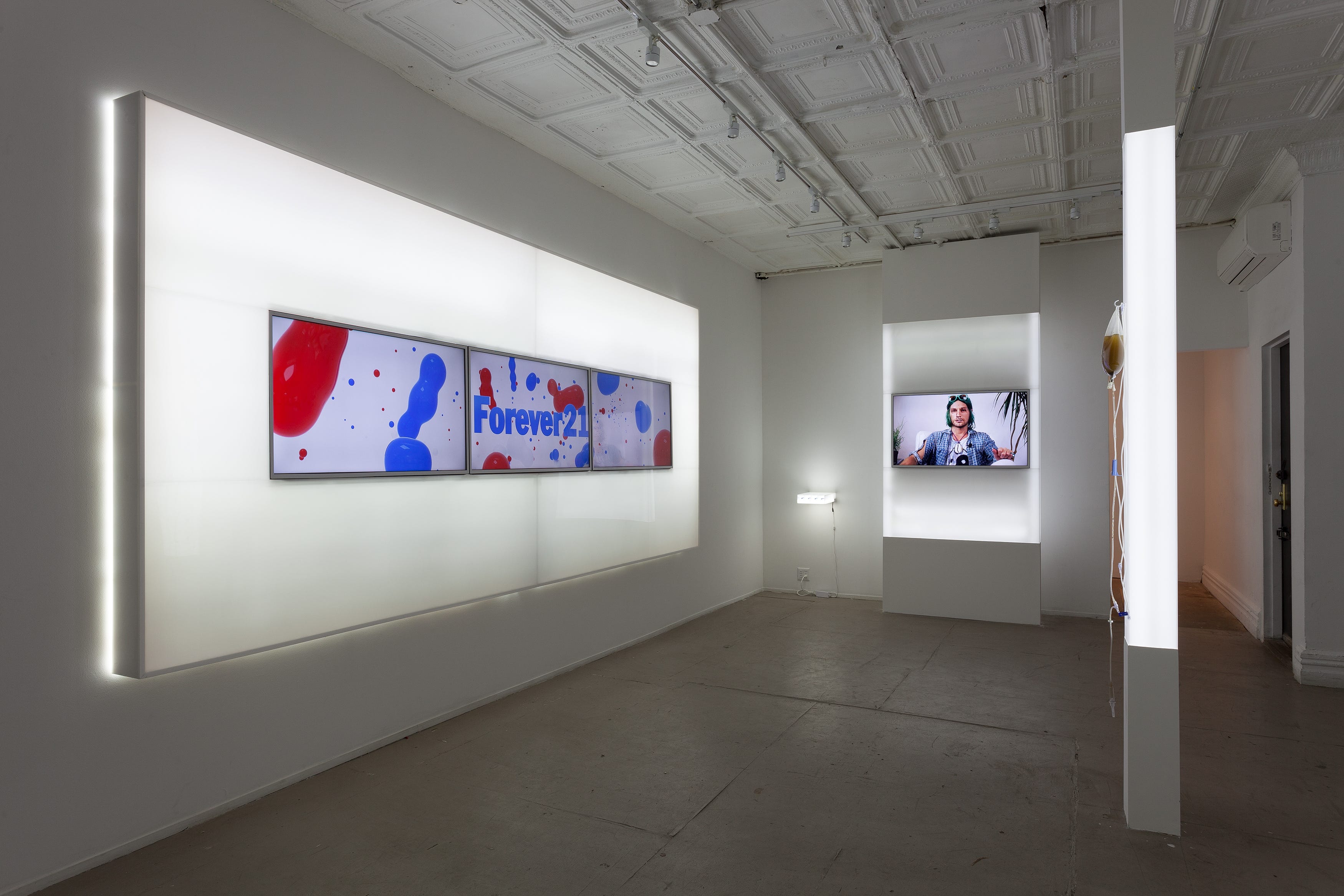
Joshua Citarella: In September of 2013, you [Josh Kline] opened a solo exhibition at the lower east side gallery 47 Canal titled “Quality of Life”. That same week, I had my first solo show on view at Higher Pictures on the upper east side. We spent the day visiting each other’s shows, talking about art and that strange moment of creative life in New York city.
My young peer group of post-internet artists were very much inspired by the ‘older classmen’ around 47 Canal, artists like Michele Abeles, Anicka Yi, Stewart Uoo, Alisa Baremboym and others. This generation of artists rejected the “post-internet” label and so it felt like there was a clear distinction of age and media paradigm. Influential exhibitions like “ProBio” at MoMA PS1, which you curated earlier that year, gave my generation something to aspire to, with important works by Dis, Tabor Robak, Antoine Catala, Ajay Kurian, Shanzhai Biennial, Georgia Sagri, Carissa Rodriguez, Ian Cheng and more.
In “ProBio”, Dis showed a video titled “Emerging Artist”, that addressed the topic of a new generation. It felt like there was a proverbial passing of the torch between generations and shared set of values that we might carry forward. Around that same time, Susanne Pfeffer’s famous exhibition “Speculations on Anonymous Materials” at the Fridericianum, linked these generational discourses by including artists like Katja Novitskova, Daniel Keller, Simon Denny, Timur Si Qin, Aleksandra Domanovic, Oliver Laric and many others.
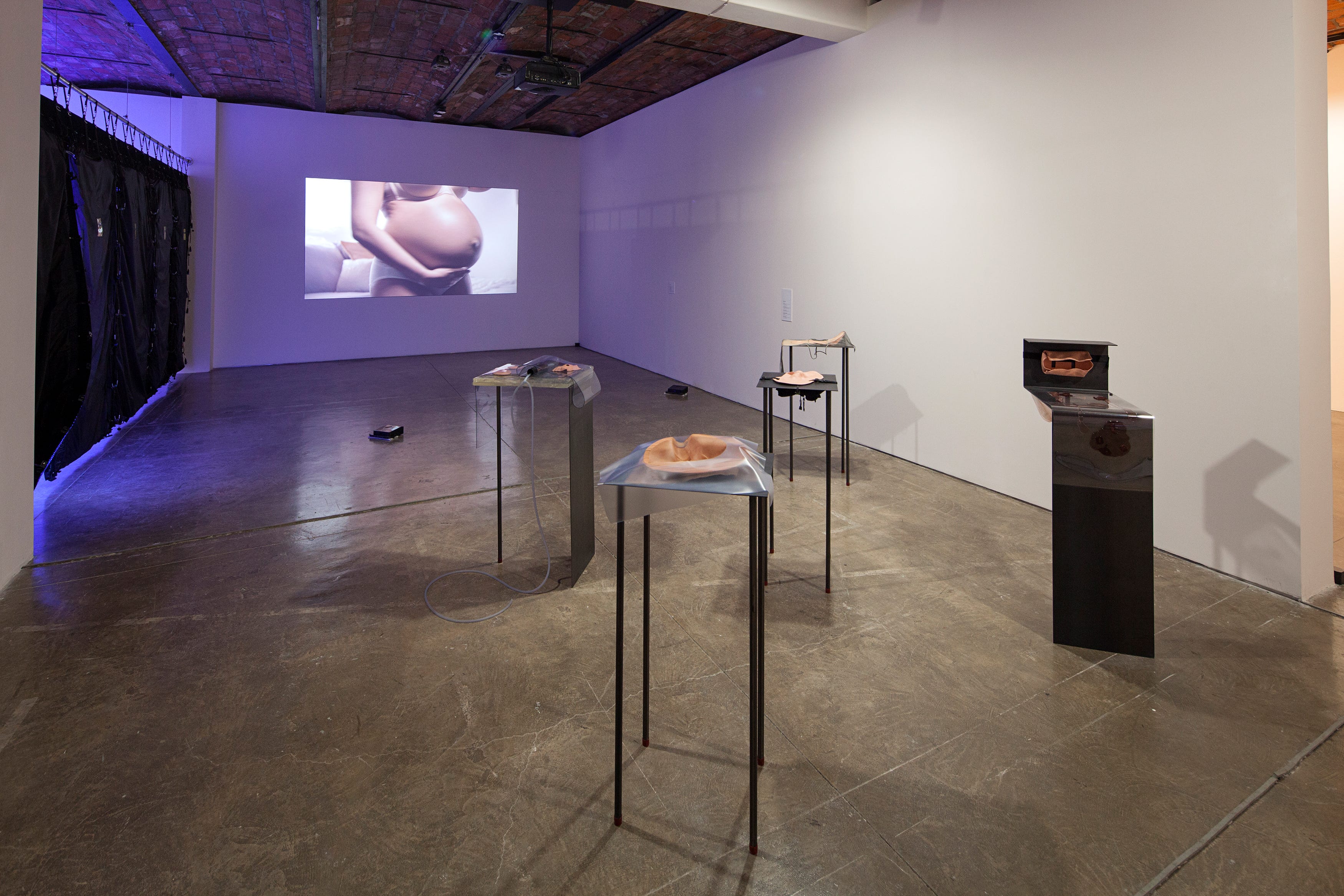
In this period, anything and everything felt possible. We didn’t know it at the time, but creative life was about to change. Soon, social media and real estate would massively transform the culture and economics surrounding art.
So, Josh Kline, your path starting out during the 2000’s, was vastly different from mine in the 2010’s. And today, in the 2020’s, the young artists that publish their work to Do Not Research, will likely take an even stranger route.
To begin, I wonder if you could tell us what it was like starting out in New York when you did? Maybe it will help us trace how we got to where we are and what exactly has changed for this new decade of artists?
Josh Kline: My peers and I were reacting against the art and the art world of the 2000s. Most of the doors into New York’s art world were through pedigreed MFA programs at Columbia, Yale, Bard; through West Chelsea’s galleries; and through the Whitney Biennial and Greater New York. The curators of these museum surveys would pick up artists from summer group shows at Chelsea galleries or MFA thesis shows or open studios. Likewise, New York gallerists scouting for young talent would search the same MFA events and those two museum surveys. If you were starting out and your work wasn’t in one of these places, it was almost impossible to catch a break. I was working as a video art curator. Anicka Yi was working as a bookkeeper. Margaret Lee and Antoine Catala were artist assistants. We didn’t have rich parents or MFAs and no one would show the work we were making.
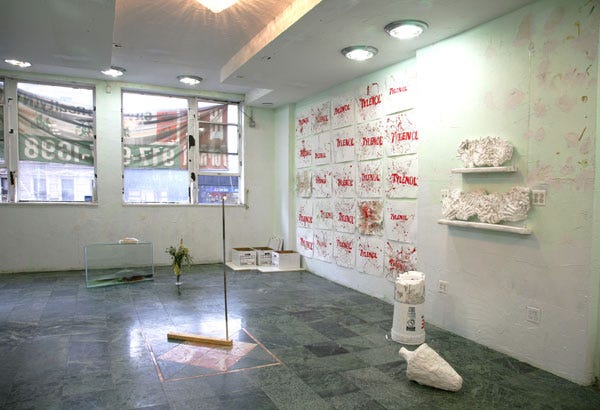
After the Financial Crisis, there was suddenly a lot of empty real estate in Manhattan. A few artists—like Margaret Lee—found ways to get access to it. In the winter of 2009, Margaret was throwing parties in an abandoned jewelry showroom at 179 Canal Street, two floors down from a studio she rented to do work for Cindy Sherman. Anicka Yi, who I was collaborating with at the time, called me one day and said that Margaret might be open to letting us use the space for video or photo shoots or other projects. I pitched Margaret a 3-day group show which would include work by my peers—a bunch of experimental weirdos. Since it was a rough project space, all the rules about who could and couldn’t be shown and schools, etc. went out the window. I included my own work alongside works by Margaret, Anicka, Antoine, as well as Trevor Shimizu, Amy Yao, Alisa Baremboym (and others) - who would later become the core of 47 Canal’s early program. The show, which opened on May Day in 2009 at 179 Canal, was titled Nobodies New York. The show inspired Margaret to do a whole month of programming, which later became a year of projects and shows. A bunch of people ended up taking studios in the building along the way - including Michelle Abeles, Gloria Maximo from Yemenwed, Mieko Meguro, among others. The first time I ever made an installation was at 179 Canal.
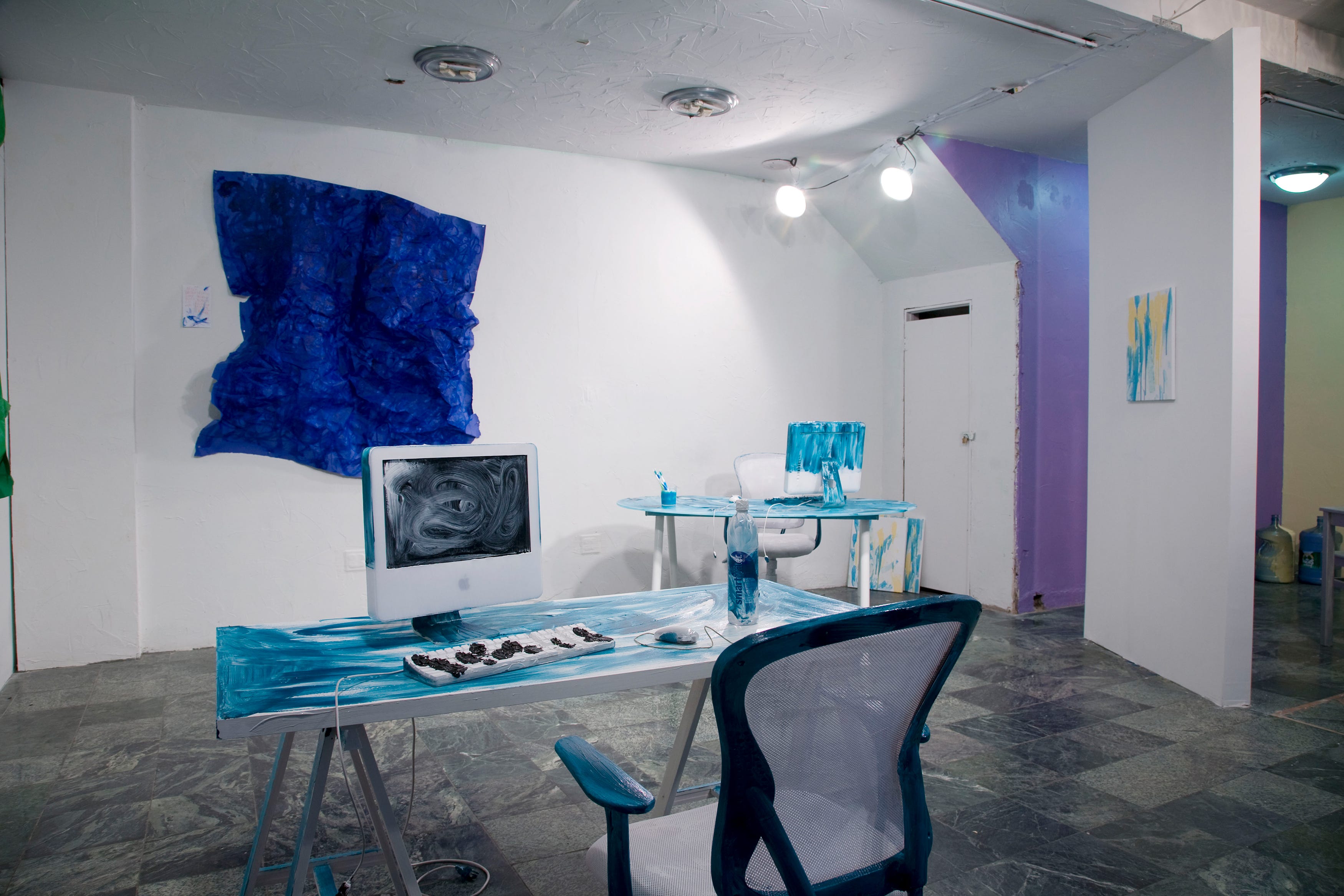
I was in my 20s in the 2000s. At the time, I remember thinking that the art world was incredibly conservative. So much of the art that was in favor was focused on the past, reinhabiting or reenacting various moments from 20th Century modernism–minimalism, German expressionism, various flavors of abstraction and conceptual art, Warhol in the age of the world wide web, etc. (all while ignoring the wars that America was prosecuting in the Middle East). At the time, we wanted to make a break from that kind of art as well - to carve out space for new forms, new materials, new ideas about what art could be in the 21st Century. It’s weird to be writing this now—the Contemporary Art shown in American galleries in the 2020s feels even more conservative than what was going on in the 2000s.
JC: I find myself in a position where I’m talking to a lot of young artists and creatives. While the legacy art world has become more conservative, there are many para-institutional projects that are alive in the social media space right now. Many of these projects begin as criticisms of the established institutions. Inevitably, the question arises: “what is the thing that you actually like?” What is the work that you want to canonize or the work that you feel like you’re in conversation with? So I’ve made a concerted effort to try and construct a lineage of shared values, aesthetics and ideas.
Was there a generation that you looked up to when you started out?
JK: Sort of. But also maybe not? I worked as a video art curator at Electronic Arts Intermix for 10 years and was heavily influenced by the artists I worked with there, especially people like Dan Graham, Michael Smith, Carolee Schneemann, Bruce and Norman Yonemoto, Dara Birnbaum, among others. But when I was starting out as an artist in the late 2000s, and even in the very early 2010s, with very few notable exceptions, the art world was fixated on the art of the past. Other artists at the time had to justify their work in relation to art history and art in the canon.
Working at EAI made clear to me just how much those artists that I admired had been focused on their own present when they made their breakthrough work in the sixties and the seventies. The work happening in that present mattered to them as much as, or even more than, what had happened before. That didn’t feel like it was the case in the late 2000s. What I wanted was the same agency that those artists had. I felt like our present, in the 2000s, had as much potential to generate radical new ideas as that “golden age.”
Coming at it from that perspective, the artists who had the greatest impact on my work, and my thinking about what art could be, were my peers: Anicka Yi, Antoine Catala, Darren Bader, Margaret Lee, Georgia Sagri, Dis, A.K. Burns, Trevor Shimizu, Stewart Uoo, Ajay Kurian, Yemenwed. In a way, it felt like we were all developing something together. There were also other artists around my age who I wasn’t in direct dialogue with like Ryan Trecartin, Trisha Baga, or Simon Denny. Just realizing—do you know Yemenwed’s work?
JC: No! The others I do, but not this one.
JK: They came before Dis—out of the same scene. Maybe they were the first of the new NYC collectives in the late 2000s who were dealing with contemporary aesthetics in New York. Along with Ryan Trecartin and Circular File, the collective I was part of with Anicka Yi and Jon Santos, they were some of the first artists to abandon ship on retro art. Just like with DIS, Yemenwed’s members worked at dayjobs in fashion, advertising, architecture and design and used their professional skills in their performances and videos.
JC: It’s an interesting way to look at it. In the sixties and seventies, artists were relatively free from the canon and they were making work that responded to the moment. Comparatively in the 2020s artists are indebted to the canon. This is especially pronounced now. I’ve run project spaces that have literally paid to rent works by canonical artists from the institutions.
JK: Wow.
JC: There’s a direct financial relationship, not just a metaphor there. Perhaps, instead of focusing on the canon, was there someone who was a contemporary of yours, but was maybe just a few years older? Perhaps someone that you could conceivably exhibit work alongside in the same group show?
JK: Now there are plenty of older artists I’d be excited to be in dialogue with in exhibitions. When I was younger, I would have said, “no”. We were reacting against the previous generation. We were also reacting against a really segregated, white art world. Most of 47 Canal’s roster was made up of Asian Americans and immigrants. Until Margaret walked away from her role there, it was an Asian-American-run gallery.
JC: At the 179 Canal project space, if I recall correctly, there was an implicit cooperative model where, if artists wanted to have their show open on the weekend, they would have to personally sit at the gallery to keep the doors open.
JK: That’s right.
JC: Incredible. Could you explain some of the ways that space worked? I think that’s a fascinating example of how to bootstrap a young creative scene.
JK: It was Margaret’s project space, but everyone who was involved brought a lot of energy and ideas into that space. Anicka and I brought our own communities and combined them with Margaret’s. People would gallery-sit their own shows and sometimes each other’s shows because Margaret couldn’t be there on the weekend all the time. It was a lot of work for her and we recognized that. So we wanted to pitch in. We would help each other and pack up art. We would pitch in with painting the walls. It really was this fleeting, utopian moment for all of us before 179 Canal became a commercial gallery.
JC: You mentioned the artist Ryan Trecartin before. I always think of Trecartin’s work as a powerful example of how the art world used to lead culture in that period. Today, if you look at TikTok or YouTube, Ryan Trecartin had anticipated that style with incredible foresight 10-15 years early. But something new has happened. It now feels like social media is leading culture and the artworld merely responds to it.
For example, the memes that are produced by the White House have a tremendous effect on what we talk about as a society. Today, these images have a much greater impact than anything shown in an art gallery. One of the ways of understanding the past few years is that, after social media, the culture we started to produce became more so “the discourse” than discrete art objects. I think this is part of how I find myself here, making a video podcast, today. Social media had the effect of turning all the lectures and panel discussions around art into “content”. On the podcast, I find myself discussing many of the topics that I used to explore in the artworld.
Back in 2013, PS1 hosted several left accelerationist speakers, including Nick Srnicek, in a program titled “Dark Optimism” organized by Triple Canopy. At the same time, in another part of the museum, you curated the highly influential art exhibition “ProBio” at that same institution. This felt like a thriving and exciting period of contemporary art where bold new ideas demanded urgent discussion.
Soon after, the internet picked up the themes of left accelerationism and transformed them into hyperbolic memes like “Fully Automated Luxury Communism” or even “Fully Automated Gay Space Communism”. In the years following, these hyperbolic “e-deology” labels began to emerge from the internet itself and then trickle into the institution. Somewhere around 2015 or 2016, the flow reversed. We stopped looking to art to find new ideas and instead began browsing online. As my friend “Lil’ Internet” from the New Models podcast likes to say; “We used to upload our lives to the internet. Now we download our lives from the internet.”
As a young person, the art that I admired always had a good conversation or a lecture around it. Today, I will literally repeat sentences or quotes that I first heard in the context of the artworld. Now, I relay these ideas to a popular audience that exists outside the institution. Before the takeover of big social media platforms, can you recap what the art world was like? Was there more or less discourse at that time?
JK: Ryan Trecartin and Lizzie Fitch were the first American artists who made a break with the retro-art and retro-culture of the 2000s and engaged with the vernacular of the present. Seeing them make that breakthrough was a revelation. It opened up so many possibilities.
What was the art world like before social media? The internet wasn’t a cool space for art in the 2000s. It wasn’t a space for serious dialogue. Unless you were Cory Arcangel or Paper Rad—who were explicitly making work on the web—it wasn’t cool to have a website as an artist. That was something that was kind of looked down upon. It felt like you were trying too hard. Maybe you would post a flyer for your opening. But you wouldn’t post images of the work.
The scene I was part of didn’t care about the circulation of art online as images. That wasn’t what we were trying to do, even the artists who were working with photography. It was really about the experience of these artworks in space, about installation, about things that you would have to smell or be in a room with, things that can’t be captured by images.
I think social media is one of the main reasons that the art industry has become so focused on painting and other handmade forms of art. The glut of spam, slop, memes, etc, has cheapened the image and conceptual gestures. We’re awash in these things now.
The amount of discourse has remained the same or maybe increased—there’s so much more content about art circulating online, but the quality of it has declined overall.
JC: Around 2010, my longtime friend and collaborator, Brad Troemel, would give a lecture about peer-to-peer networks. In this talk, he would contextualize the internet as a new stage of teleology. My peer group saw the internet not just as a communication network but as a profoundly new method of organizing society. Rather than dismissing social media as a novelty, it was something that we should think about in a very serious way. Today, 15 years later, I still feel that way but without any of the optimism that I had back in 2010. This transformation has been realized in mostly the worst way possible and its effects have largely been disastrous.
On this topic of teleology, the internet quickly transcended its initial role as a simple communication network. Through long discussions in peer organized reading groups at the time, I began to understand the internet as the early digital infrastructure for neoliberalism. Platforms offered the possibility to create transnational or non-contiguous societies linked together through markets. All of this was hard coded into their design.
Soon after, these online marketplaces began to disintermediate all aspects of creative industries, Spotify is a great example here. You said before that formal concerns now dominate discourse in the art world. Before social media, I understood the artist lecture and the art object as being bundled together. There would be really interesting stories and philosophies that would make the argument about why a particular object on the wall was important. The artist lecture created the value and that value was held in the artwork as a token object.
After social media, those two things were disintermediated or de-bundled. Platforms found a way to remove gatekeepers and to optimize separate markets for art discourse and art objects. Now artists have a dedicated outlet for conversations, such as podcasting, while artworks have become purely formal and serve a separate audience. What we used to say in museums, we now say on Substack. As a result, art objects started to do something different. Did the artworld as a whole benefit from this earlier model of gatekeepers? Or has this disintermediation been a net benefit to art?
JK: I don’t think gatekeepers were enforcing that earlier paradigm you’re describing. It’s just the way that everybody was working. I knew Seth Price when he was at the beginning of his career. We were both working at EAI. Nobody forced him to write Dispersion.
JC: “Dispersion” was a key text for our generation. We read that in a lot of reading groups.
JK: Seth was influenced by this earlier generation of artists that were at EAI. He was following the model of people like Bruce Nauman or Dan Graham. The work those artists made was conceptual and this went hand in hand with writing. These artists were a massive influence on me as well. It’s less about gatekeeping and more about a different approach to art-making where you’re working out your ideas through writing. The writing helps you develop the concepts that power the artwork. But it wasn’t a requirement that you had to write in order to have a career.
The economics of New York City were different at the time. Those economics allowed for lower prices for art. It allowed for lower overhead for galleries and more experimental art in those spaces. You had much more experimental and adventurous collectors from an earlier generation. They had come of age with art from the sixties, the seventies, etc, and were interested in conceptual art and conceptual gestures. In general, there was more rigor around collecting and it was more of an intellectual pursuit. This has definitely changed. Recently, Gavin Brown spoke at the Seaport Talks at TJ Byrnes about how those collectors have been shut out because of the increase in prices and the change in the economics around art.
But there are still artists who write. You all are still writing. It’s just that there’s no longer space within the commercial side of the American art industry for artists like you. Unless you figure out how to merge your ideas with painting.
JC: I’ve failed to do that for the past 10 years.
JK: Me too.
JC: One of the things that you and I have discussed a lot in the last year or so, which is explored in a piece you wrote for October, is the rising cost of living and rent in New York City. This has had a major impact onto art. Maybe we could summarize a few key points of that essay to contextualize some of the things we’re talking about here.
JK: There are two main ideas in the essay (which I unpack in much more detail). The first is that New York real estate and the cost of doing business here–which includes the cost of living in New York City–have pushed American art into a deeply, deeply conservative space after the pandemic. The second point, which leads back to the first, is that the structure of the American art industry forces most American artists to be present in New York in order to start and then to maintain an art career. All the gatekeepers are here. And they’re deeply lazy about doing studio visits in smaller American cities. There are a few exceptions that prove the rule, but as an American artist, if you’re not in New York, it’s been very difficult to start a career.
JC: I’ve participated in a few different think-tank projects around this very problem. The two solutions that come up, which I think are still meager and ill-fitted, is that (1) museums allocate bigger budgets specifically for travel to create a more geographically diverse survey of what “American art” could be or (2) there is some type of institutional funding that directly subsidizes the cost of making art in these major metropolitan cities. This would need to vastly bring down or eliminate the cost of artist’s studio space. This doesn’t directly alleviate rent and all of the other economic pressures. The question that’s implicit here is: Can the art sphere itself address this crisis? Or is that something that needs to be solved in the realm of politics?
JK: I think it’s time for more radical solutions. Some of these are absolutely political-- we all need to fight politically for a fairer economic system. But I also think that artists could solve many of these problems by abandoning New York City and its art institutions. They can build their own art worlds in spaces where real estate and living space are more accessible and more affordable. This would allow them to claim the same kind of space, time and agency that boomer artists had in the sixties, seventies, eighties, and nineties in New York. Artists need to go to places where they don’t have to work so hard to support themselves, and where they can make work in opposition to the institutions and the market.
The institutions are not really a space for Gen X or Millennial artists. The art world was much smaller in the “golden age” back in the sixties or seventies. Much, much smaller. All of the now canonical boomer artists were able to have institutional shows at much younger ages than American artists working today. There were more exhibition slots for them in the institutions and in the galleries than there are today. Most of the slots in institutions are still being taken up by boomers. And this is true of the rosters and exhibition schedules of the bigger commercial galleries as well. I’m one of the few artists of my cohort who has had a mid-career survey at a major American institution.
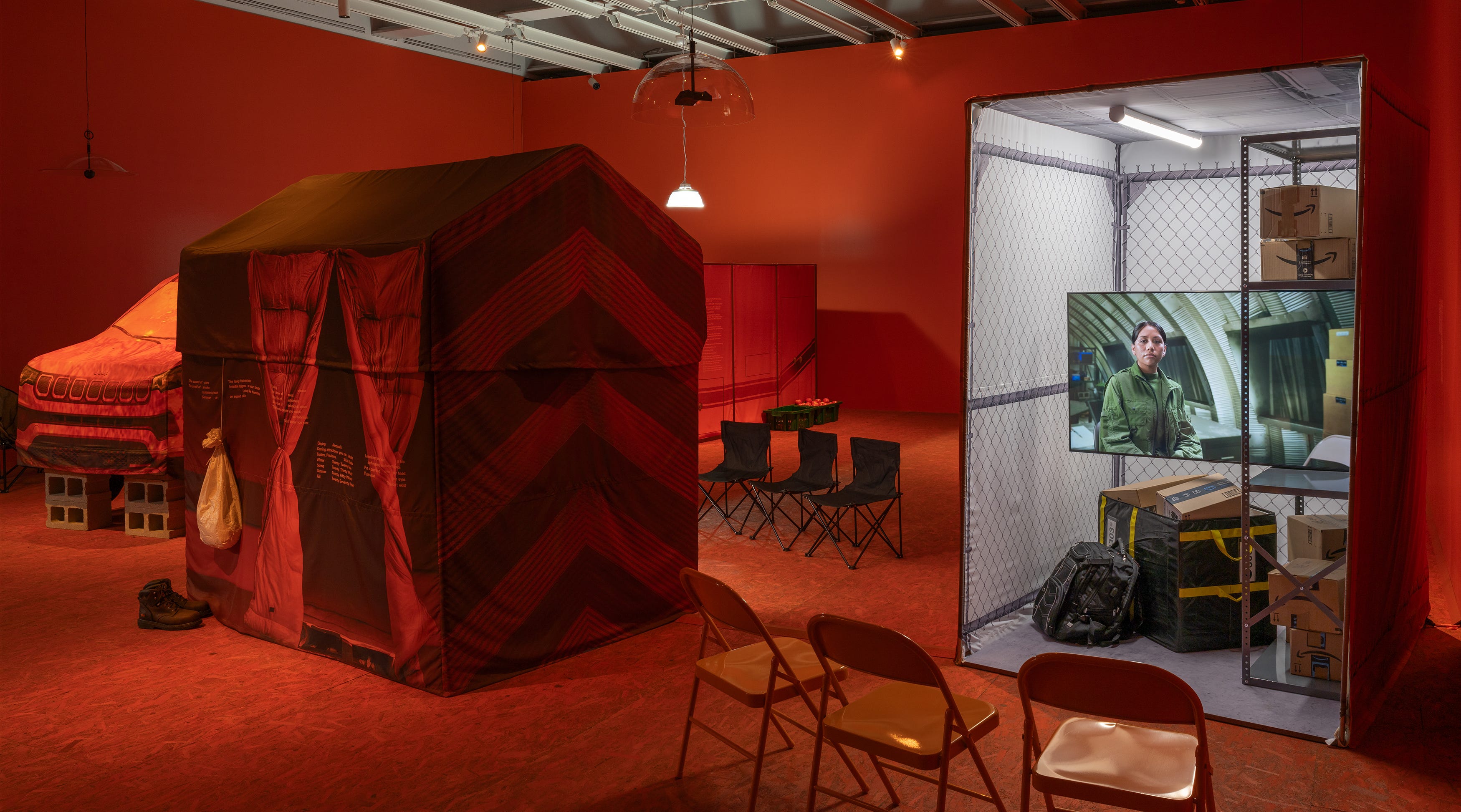
Boomer artists, curators, and collectors built their own institutions in New York and those institutions championed their art. PS1, Artists Space, Dia, The Kitchen, White Columns, even Electronic Arts Intermix where I worked. These are all products of the seventies. When I think about the potential institutions founded in the 2010s in New York, Triple Canopy might be the last one standing. None of our artist-run project spaces were able to turn into institutions. When was the last major art museum founded in New York? The New Museum was founded in 1977.
I don’t know if the current system will really ever offer that much to younger generations of artists. I think it might be time for the ones who don’t just want to make paintings to abandon ship and accept that what happened financially for artists in the nineties, and maybe even in the 2000s, is not going to be possible for American artists who want to experiment. Market support for experimental art may not be possible anymore in the US.
JC: I want to, as strongly as possible, echo everything that you just said. These are conversations we’ve been having for a while and I think these are very serious issues for American art. This is why we’ve chosen to pursue the 501c3 not-for-profit status for Do Not Research. We’re currently in the waiting period, between 22 and 120 days, and we’ll get a confirmation letter from the IRS. Institution building is very serious and necessary now because of this upward drift of age for artists that participate in museums and art fairs, etc.
We both agree that the ideal conditions for making art is a society in which the cost of living is low, the wages are high and you can work part time while you go about your decommodified art practice. Ideally, you can work 3 days a week in the service industry and you can make your weird experimental video art on the side. You can pursue these things absent the pressures of the market. Those are the ideal conditions that create an enormous, explosively experimental art scene that is so exciting.
JK: It’s possible it’s happening right now in other places. For instance, in South East Asia.
I think art could learn a lot from cinema. Film is an inherently more democratic art form and yet it can be just as complicated, rigorous and interesting as contemporary art. It reaches a wider audience. Filmmakers have a different kind of agency than artists do. As an artist you’re subject to all sorts of unwritten industry rules and taboos. The worst of which is that artists aren’t supposed to pitch projects to curators or gallerists. We always have to wait to be asked by the gallerist or the curator, which isn’t the case in film.
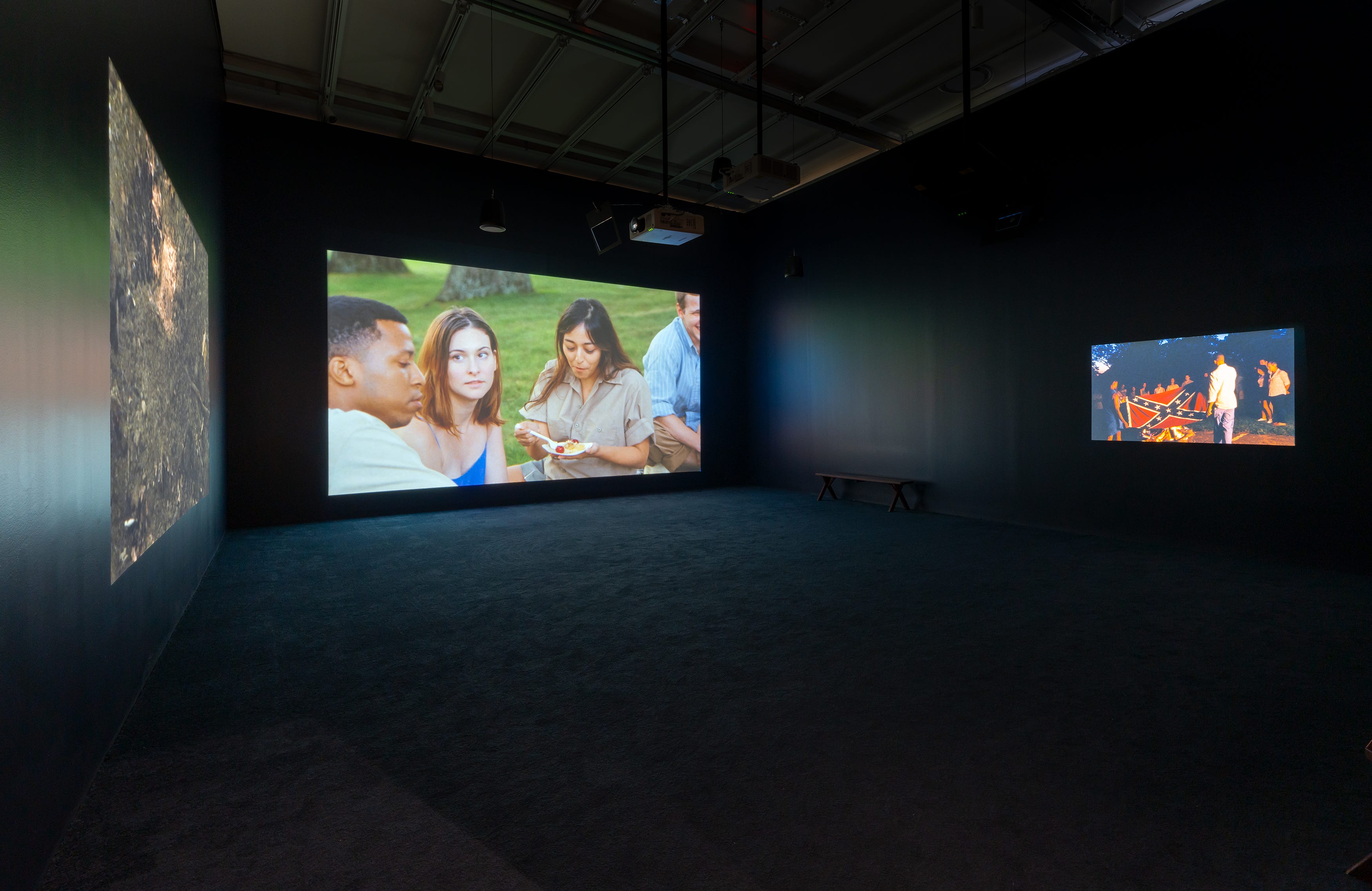
Film economics (even in the difficult state they’re in today) are also interesting to look at. Films bring in revenue through the box office. If you’re Bong Joon Ho, David Cronenberg, or Celine Song and people are interested in seeing your film, they pay for tickets. While the financing or seed money comes from investors, the return on investment comes from the public. This is very different than art. Artists don’t get a share of museum ticket sales for their shows. They get an honorarium which doesn’t really cover anything. American artists are supposed to make a living by selling art to rich people–which may or may not work anymore. Your art could have a mass audience, but if rich people aren’t buying your art, it becomes really difficult to make and exhibit ambitious work. Whereas, if you’re a filmmaker and you have a dedicated audience, people will support you and enable you to make more films. This is similar to the way that podcasts work now.
Part of this proposition is that artists need to find a way to free themselves. This probably means younger artists—who aren’t locked into New York, who don’t have families here, who aren’t invested in this place. If they can find a way to free themselves from New York, maybe that could also lead to different ways to fund an experimental art practice in the present.
JC: Social media is ultra-populism and the art world is ultra-elitism. Perhaps film represents a synthesis of the two. It has a democratic mechanism in how it generates revenue that can check or balance the risk of elite capture from investors. I think that’s a fantastic idea.
So, the conditions for making art continue to narrow. I had always considered your work as both an aesthetic and political avant-garde. In the scope of your career, have you hit any friction because of the political content in your work?
JK: Yeah, for sure. Almost all my work is directly political. I’m explicitly trying to make work about current events, as well as about where it’s all leading in the near future. I’m attempting to make complicated work that’s legible for and accessible to people without an expensive arts education. That directness and openness, which for me is a political part of the project, drives certain people in our field crazy.
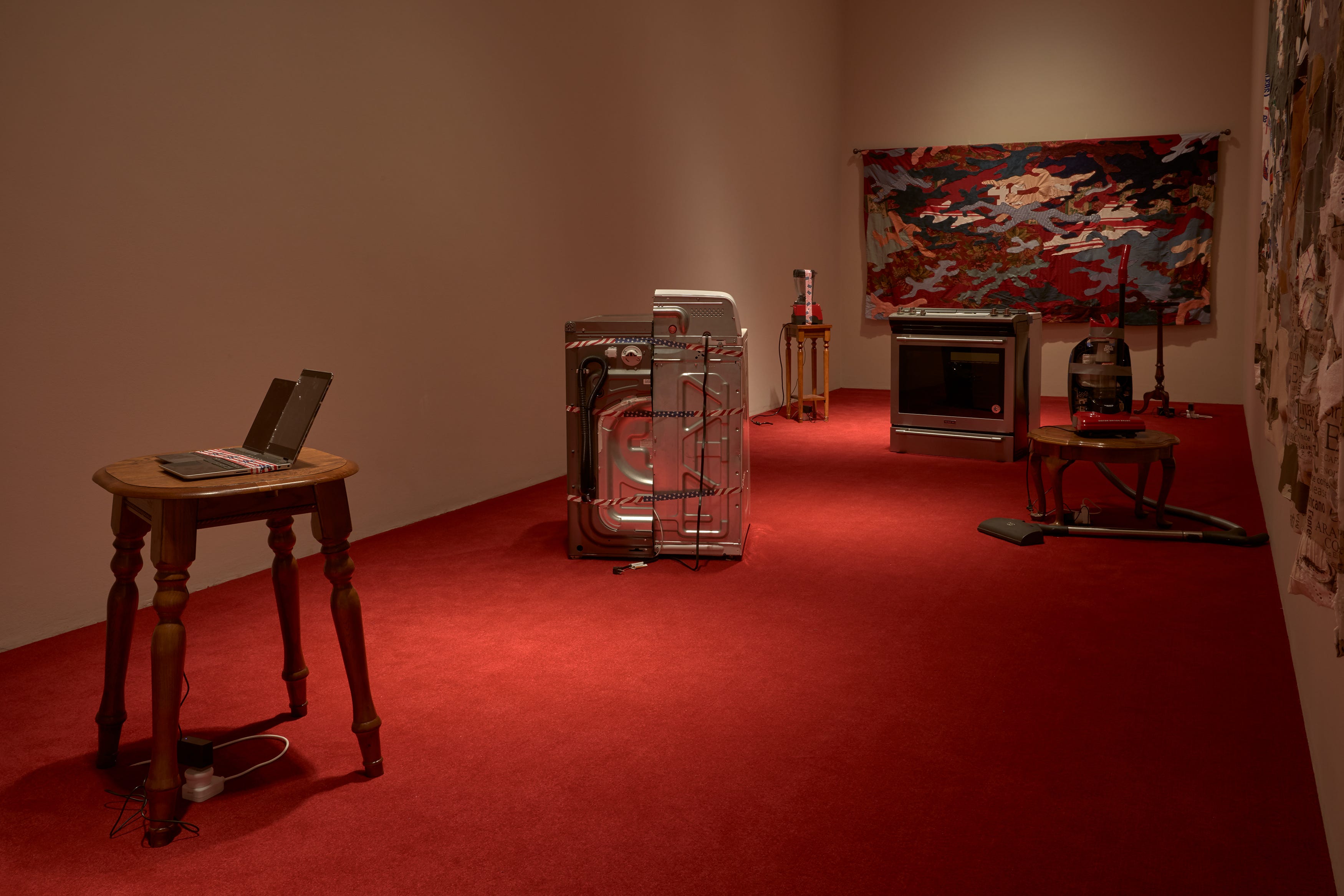
JC: Was there a certain period in which the political pressures on art seemed to tighten? For example, was 2016 an inflection point at which the conversations took a certain turn?
JK: I think they opened up in 2016. I never thought that I would see an art world so politically engaged. I mean the art world still wasn’t really dealing with economics or class, but it was certainly dealing with some of America’s core problems, like race and the legacies of slavery, Jim Crow and American apartheid. The American art world was even starting to make space for artists talking about the theft of indigenous land and the genocide of native peoples. This was all entering mainstream art discourse and filled the galleries before 2023. It was being supported by collectors. In that way, I think things did really open up. Abroad, a massive post-colonial discourse in art was also flourishing. There was also an opening up to other voices in contemporary art, from other parts of the world, like Southeast Asia, the Middle East, Africa, and Latin America. Documenta 15 was curated by Ruangrupa.
If anything, I think the tightening up is happening now. Over the last two years. In the United States, there’s a kind of purge going on. The market is in the process of purging itself of political work. It’s slowly purging itself of the artists of color who rose to prominence between 2016 and 2023. There’s a new wave of self-censorship in the galleries, institutions, and as a result in artist studios.
JC: The potential for radical politics, or niche philosophical ideas, to appear in art was always the thing that attracted me to this field. Professional art is the field that does not abide by discipline of any other field. If you’re a journalist, university professor or documentary filmmaker, any other walk of life, there are certain standards like peer review and scholarly citations that are required. But in art, you are allowed, or even encouraged, to make data agnostic predictions. Artists became trendcasters and could predict what themes would float to the top of culture. In some cases, this openness of art can be incredibly generative. Ryan Trecartin or K-hole’s “normcore” is a fantastic example. Also, Sean Monahan’s “vibe shift”.
On this topic of social media, there’s a striking image of all the tech barons lined up to pay deference to Trump at the inauguration. There’s been a major shift in American culture towards the right. Where does art go next? Does art make a similar cultural turn? How does the art world react to the Trump 2 era?
JK: I don’t think anyone has a clue. I feel like it’s going to be difficult for explicitly right-wing art to enter the institutions. I think that there are enough people with left-wing or at least liberal politics in positions of power in the museums and not-for-profit spaces, that this probably can’t happen. Also, many of the major art museums in America are not dependent on government funding. They can probably avoid what’s happening to the Kennedy Center and Columbia. That said, I think most museums are likely to become more cautious in their programming and about how much they wade into explicit politics.
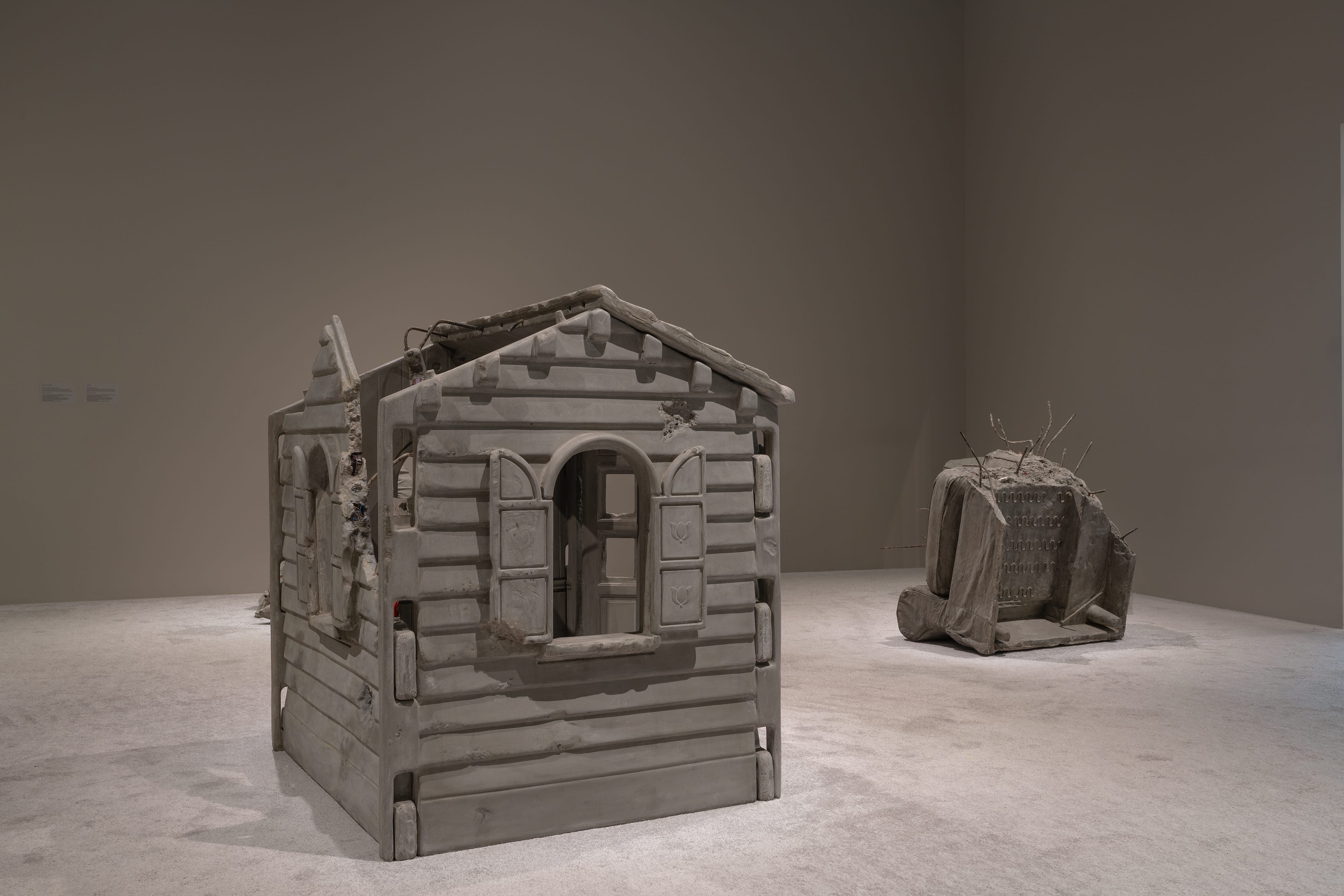
JC: Given all of the topics that we’ve discussed and seeing how these pressures are shaping American creative life, if we hope to carry on some type of radical thought within contemporary art, what are the primary functions that an institution like Do Not Research should seek to fulfill?
JK: Honestly, I think you need to make exhibitions in the real world with the artists in your community. Multiple exhibitions! And then you write about it. You write about the work and you make arguments for it. Give it an art historical context and argue for its relevance in the present and the future. I think this model still has a lot of power. The exhibitions are the ultimate proof. The work has to actually be good and the only way to know that is to see it in space.
JC: Well, I’m convinced. I agree. Josh Kline, your work is just such a tremendous inspiration and I have admired your practice for so long, it’s great to get the opportunity to do this.
JK: Thanks, Josh, likewise. Thanks for inviting me to be a part of this.
Hi buddy!