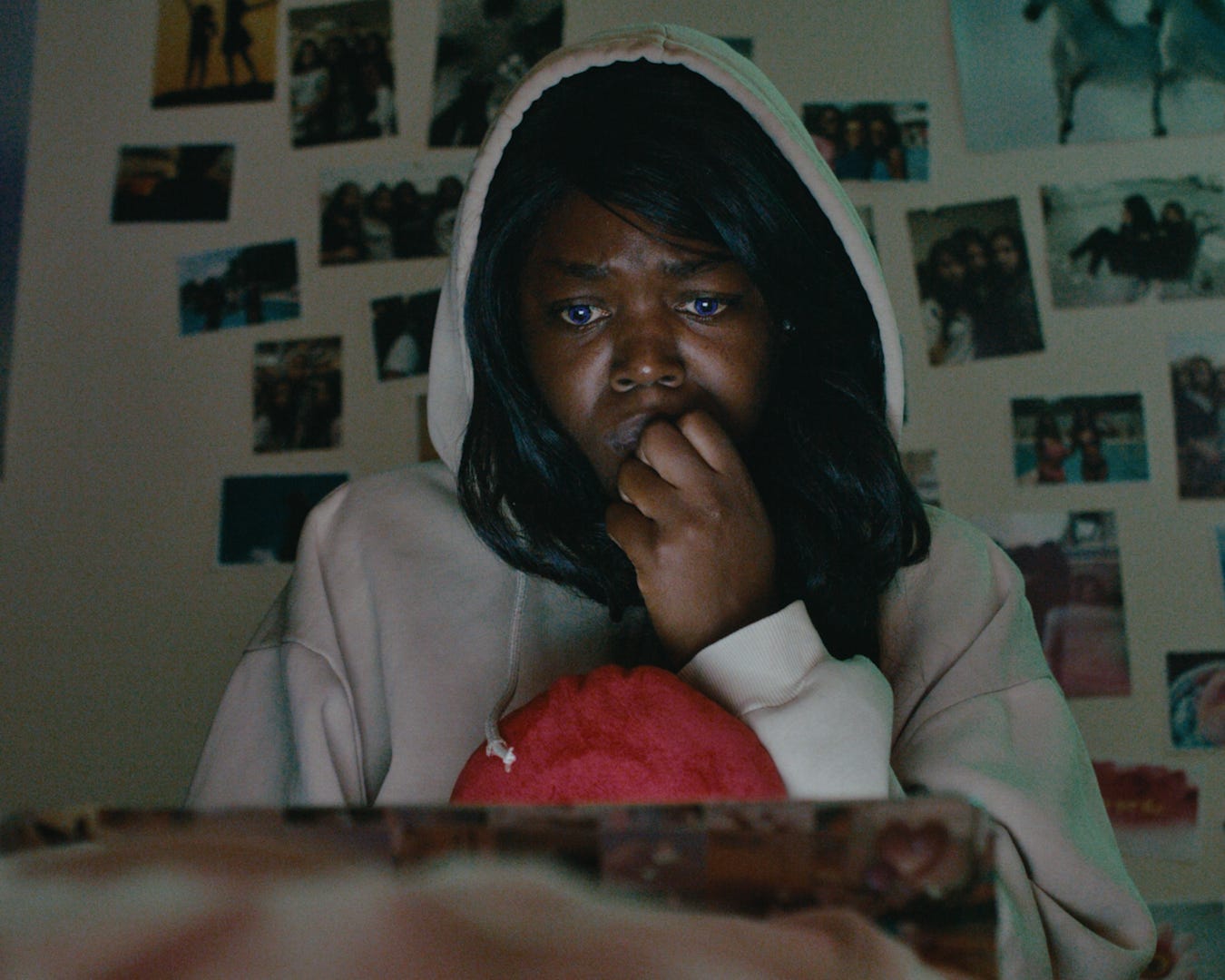
Alexandria’s Genesis

Dian Joy is an artist based in London.
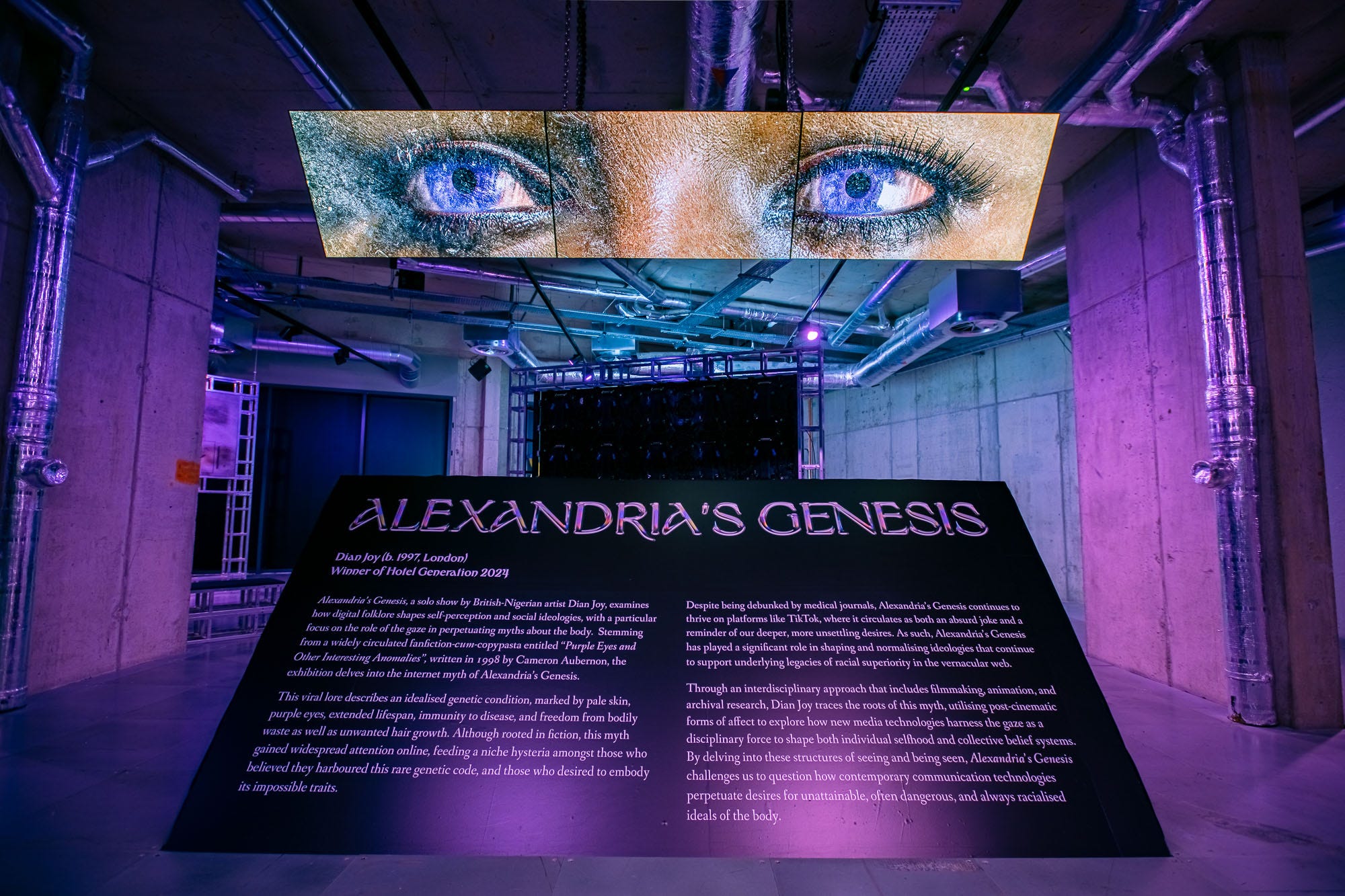
Alexandria’s Genesis, a solo show by British-Nigerian artist Dian Joy, examines how digital folklore shapes self-perception and social ideologies, with a particular focus on the role of the gaze in perpetuating myths about the body. Stemming from a widely circulated fanfiction-cum-copypasta entitled “Purple Eyes and Other Interesting Anomalies”, written in 1998 by Cameron Aubernon, the exhibition delves into the internet myth of Alexandria’s Genesis.
This viral lore describes an idealized genetic condition, marked by pale skin, purple eyes, extended lifespan, immunity to disease, and freedom from bodily waste as well as unwanted hair growth. Although rooted in fiction, this myth gained widespread attention online, feeding a niche hysteria amongst those who believed they harbored this rare genetic code, and those who desired to embody its impossible traits.

Despite being debunked by medical journals, Alexandria’s Genesis continues to thrive on platforms like TikTok, where it circulates as both an absurd joke and a reminder of our deeper, more unsettling desires. As such, Alexandria’s Genesis has played a significant role in shaping and normalizing ideologies that continue to support underlying legacies of racial superiority in the vernacular web.
Through an interdisciplinary approach that includes filmmaking, animation, and archival research, Dian Joy traces the roots of this myth, utilizing post-cinematic forms of affect to explore how new media technologies harness the gaze as a disciplinary force to shape both individual selfhood and collective belief systems. By delving into these structures of seeing and being seen, Alexandria’s Genesis challenges us to question how contemporary communication technologies perpetuate desires for unattainable, often dangerous, and always racialized ideals of the body.


This exhibition is a conspiracy. A fanfiction. A myth. A copypasta. A mutated reality that distributes its truth by any means possible. Operating in the dystopian struggle between fact and fiction, disinformation and information, fake and real, Alexandria’s Genesis situates itself between beliefs, insecurities and desires to form a fanfiction of a fanfiction.
To highlight how the lure of Alexandria’s Genesis—a viral fantasy of genetic perfection and eternal beauty—functions, Dian pushes the myth to new extremes, revealing the mundane yet persistent logic of whiteness lurking beneath the surface. Through her material engagement with the myth and its origins, Dian demonstrates how such fantasies, myths, and conspiracies persist and evolve, highlighting their potent ideological and affective charge.
- Nora O Murchú
And that is what, in a sense, is bothering us.
A conversation with Brian Yue and Dian Joy


Brian
So can you tell me more about the name of the show Alexandria’s Genesis?
Dian
Yeah. So the name of the show is Alexandria’s Genesis, which takes its title from a viral fanfiction cum copypasta of the same name. This text posits the idea that there is a sort of genome for a perfect human being with purple eyes, a perfect body, the perfect white skin…the list goes on. And when it came to naming the show, I tossed up a bunch of ideas. So the show actually in its full title, is Alexandria’s Genesis, or purple eyes and other interesting anomalies.
The latter half of the title “Purple Eyes and other interesting anomalies” was the name of the piece of literature that Alexandria’s Genesis was enveloped under when it first appeared online. And there was something very interesting in that for me, this notion of “other interesting anomalies”. Because while this work on the surface looks at Alexandria’s Genesis as a viral phenomenon, more than this, it (for me) became a kind of example par excellence to discuss the idea of media circulation and memetics as they relate to the social world both online and offline. And in that you get “and other anomalies”.
Yeah… I thought for a long time about…About calling it something else or coming up with a title that was maybe…That obfuscates the point a little bit more, but I felt like if I’m going to do a research project about something why try to hide it like that? It kind of just is what it is.
B: So like in a way, it actually talks about this myth that you’re referring to, a mythology that exists on the Internet. And then so…so who was Alexandria, the protagonist within this myth?
D: So within the original source material, this genetic condition had been around since the hieroglyphic days of Egypt, however it only appeared —allegedly—in Europe during the Dark Ages, In a girl called Alexandria Augustine, I believe. As the legend goes, her eyes were grey at birth and began to turn purple after some years. Because of this, her parents took her to see a priest…And the priest was like “be not afraid” or whatever. I know what this is. It’s a genetic condition called Alexandria’s Genesis.
B: How fabulous. Like I guess, I guess it taps into this very deep and long kind of imagined history slash legend slash myth…it’s building on top of this kind of, you know, like our common imagination of like, you know…for the lack of better words…how bad movies steep their plot on something that seems almost believable.
D: Hyper referential, yeah.
B: Exactly, but. But, you can, you can see why…Why this tale became so virulent.
D: Exactly! Richard Dawkins, in his book The Selfish Gene, posited the theory of memetics, suggesting that ideas or images—discrete units of cultural transmission—aren’t just ephemeral. Instead, they act like living agents that mutate over time to propagate themselves, much like genes. Take Alexandria’s Genesis, for instance. It started as a lengthy document posted online by a girl who wanted to write a piece of fan fiction. It then evolved into a shorter text that gained traction on a conspiracy theory forum, where it began to be believed by many. Eventually, it got even shorter and found its way to Tumblr. And the girls (myself included) were like, “Oh my God, I can’t believe this thing exists and I can’t believe I don’t have it!” Its life became more, sort of, “bite-sized”…in a way that allowed it to…keep propagating itself online. And obviously, you know, I’m talking about it as if it’s this sort of living thing.
But people are, in essence, at the back of this phenomenon, which is something you can’t forget. That human element is crucial to its propagation and evolution.
B: That’s amazing. So in actuality, we’re not officially sure if it’s true or false, it could be real.
D: No, no, it’s not true. It’s not real.
B: You know, it seems like this really in-depth journey into a very obscure, but I think, interesting corner of the Internet. One that I think today we don’t really encounter so much as our social media engagement has collapsed into, as you were kind of saying, sound bites, 60 second videos, and you know very glossy posts. It seems like it’s this earlier generation of Internet engagement that I think really informs your practice. Can I say that?
D: Yeah, to a degree, yeah
B: And then that becomes something that you capture within your work then, the way…the way we deal with these spaces. So I wanted to ask you like, I recall you were collating a digital index of videos from the Internet, like can you tell me a bit more about that?
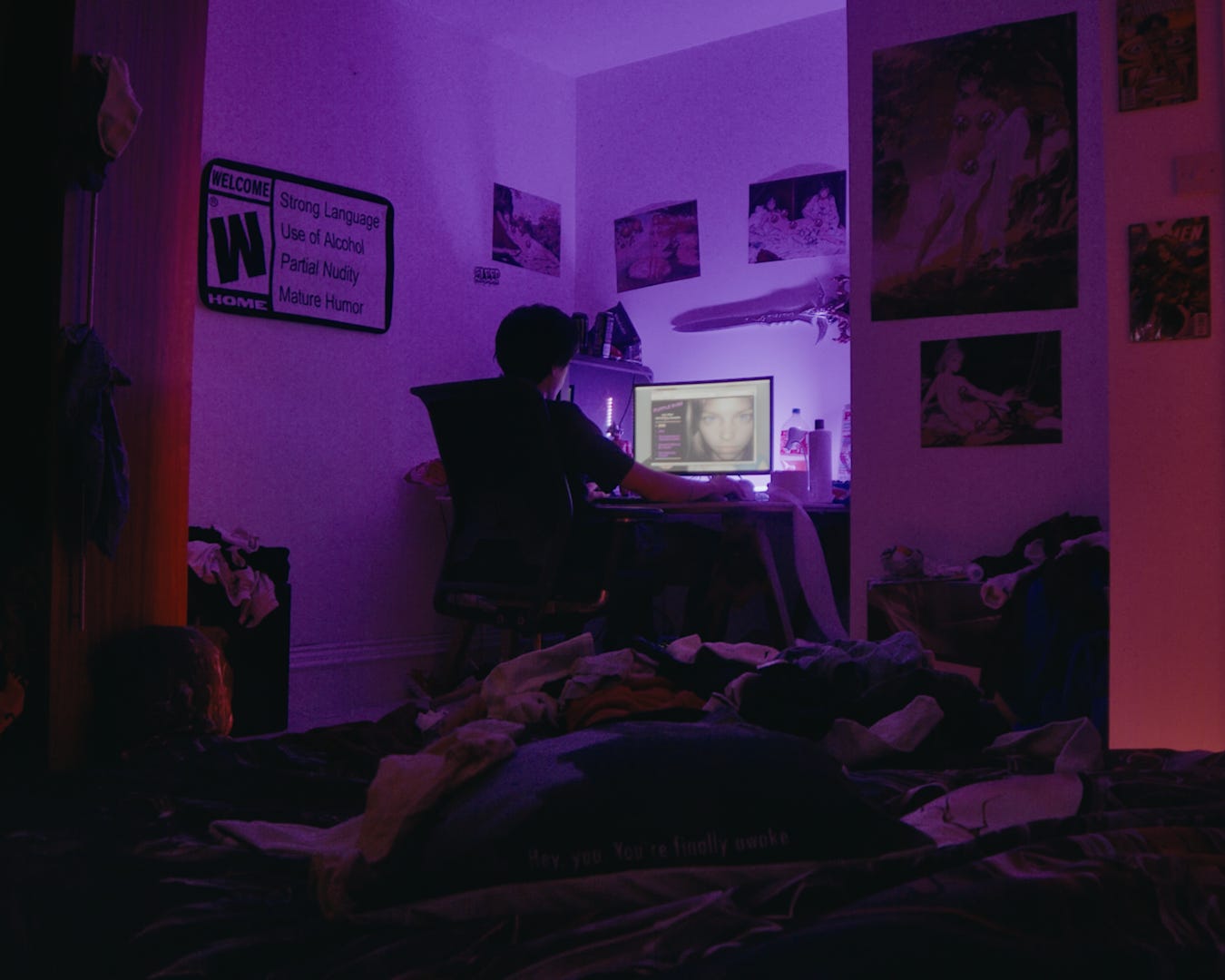
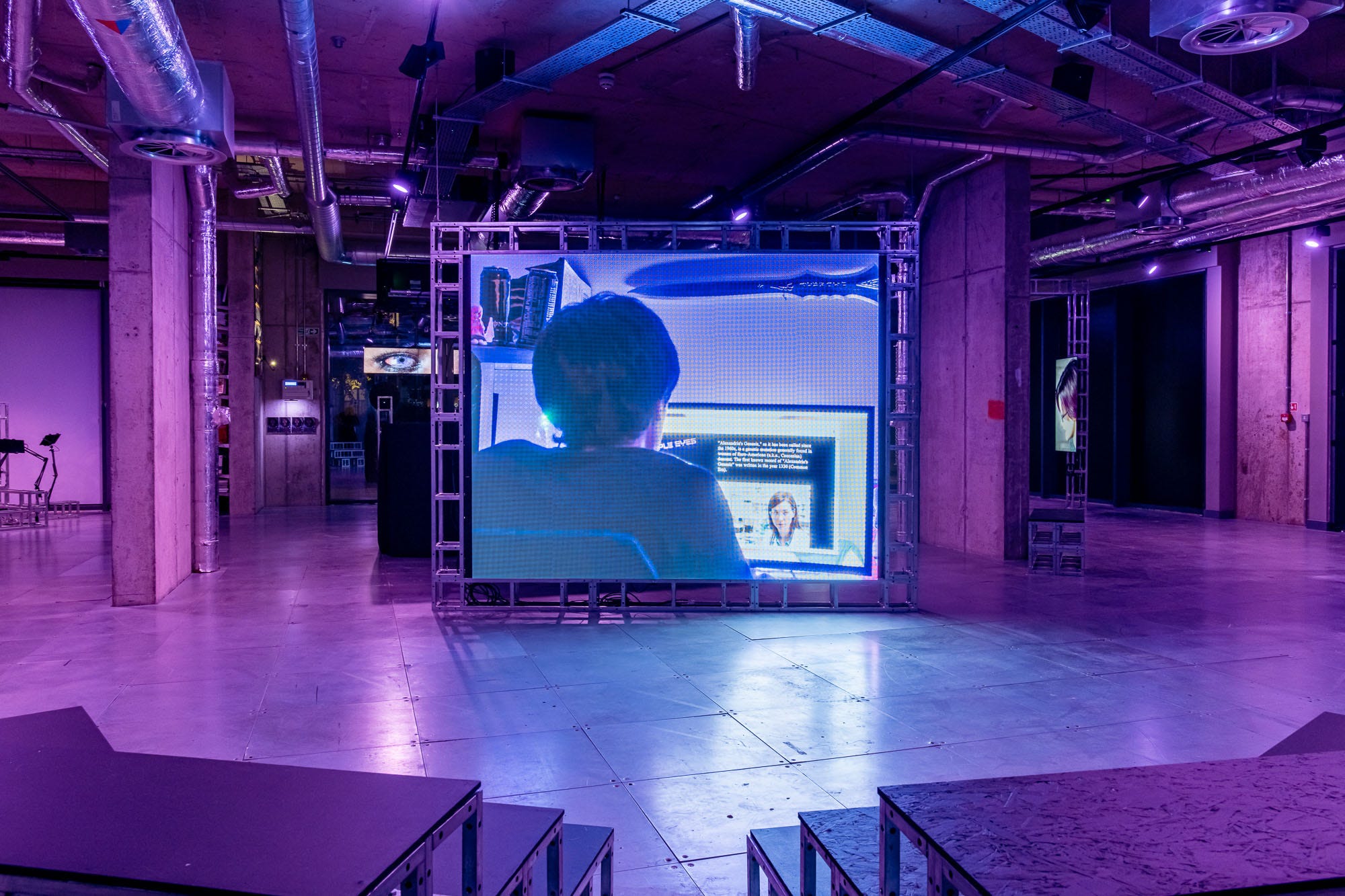
D: Yeah. So I spend a lot of time on my phone, as many people do. And while this project deals with a phenomenon that in some ways is a thing of the past, the cornerstone of this project is using this myth as a departure point to talk about the landscape of the Internet today as well. It becomes the…let’s say the case study to explore the ways in which ideas and modes of behaviour reify themselves online and how they, you know, mutate to propagate themselves into the future. And I was looking at viral content as this sort of disciplinary regime, as something that, something that…creates the conditions for us to, you know, sort of watch and discipline ourselves, in a “Judith Butler performative acts” sense. And I thought that was really interesting. I was talking to a friend recently about the work and mentioned that…Well the reason the main characters in the main film are high schoolers is because adolescence is in many ways the point at which we really start to police ourselves through the gaze of others. And I think, with digital media or content, it’s almost the same instinct as policing ourselves, but the gaze is more reflective—it’s your own gaze looking back at you. What you’re observing is your own echo chamber, a byproduct of a massive recommender system.However, there’s also a constitutive relationship between the subject and that system; you are reflected everywhere, and you look back at yourself.
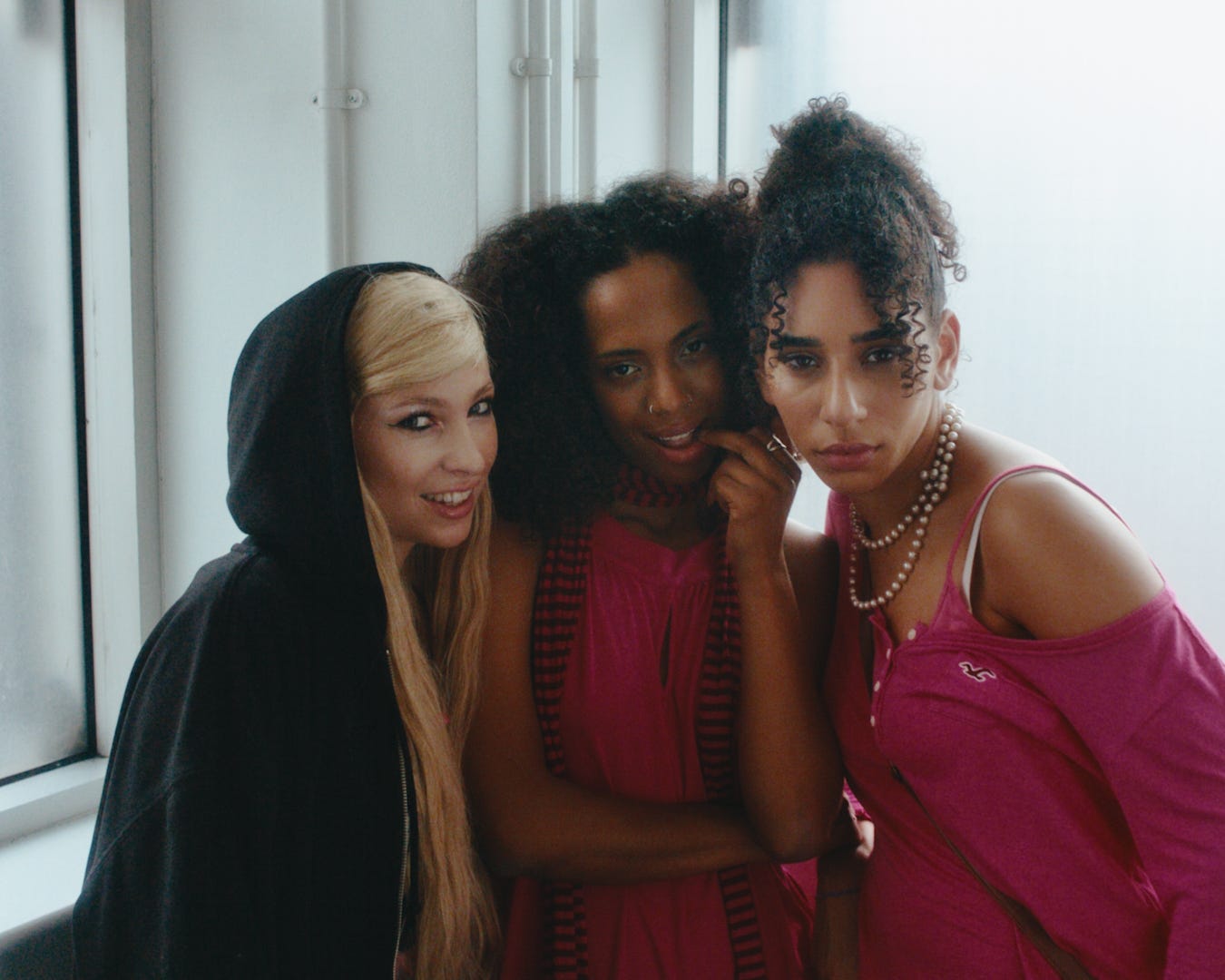
B: That’s amazing. I really want to pick out a word within, you know, everything you said, the gaze. I think you know, viewing your practice, I see that you spend a lot of time looking and observing things. How does…how does this process of observing and looking at images found on the Internet activate a commentary about, you know, the gaze, our gaze and the gaze of others.
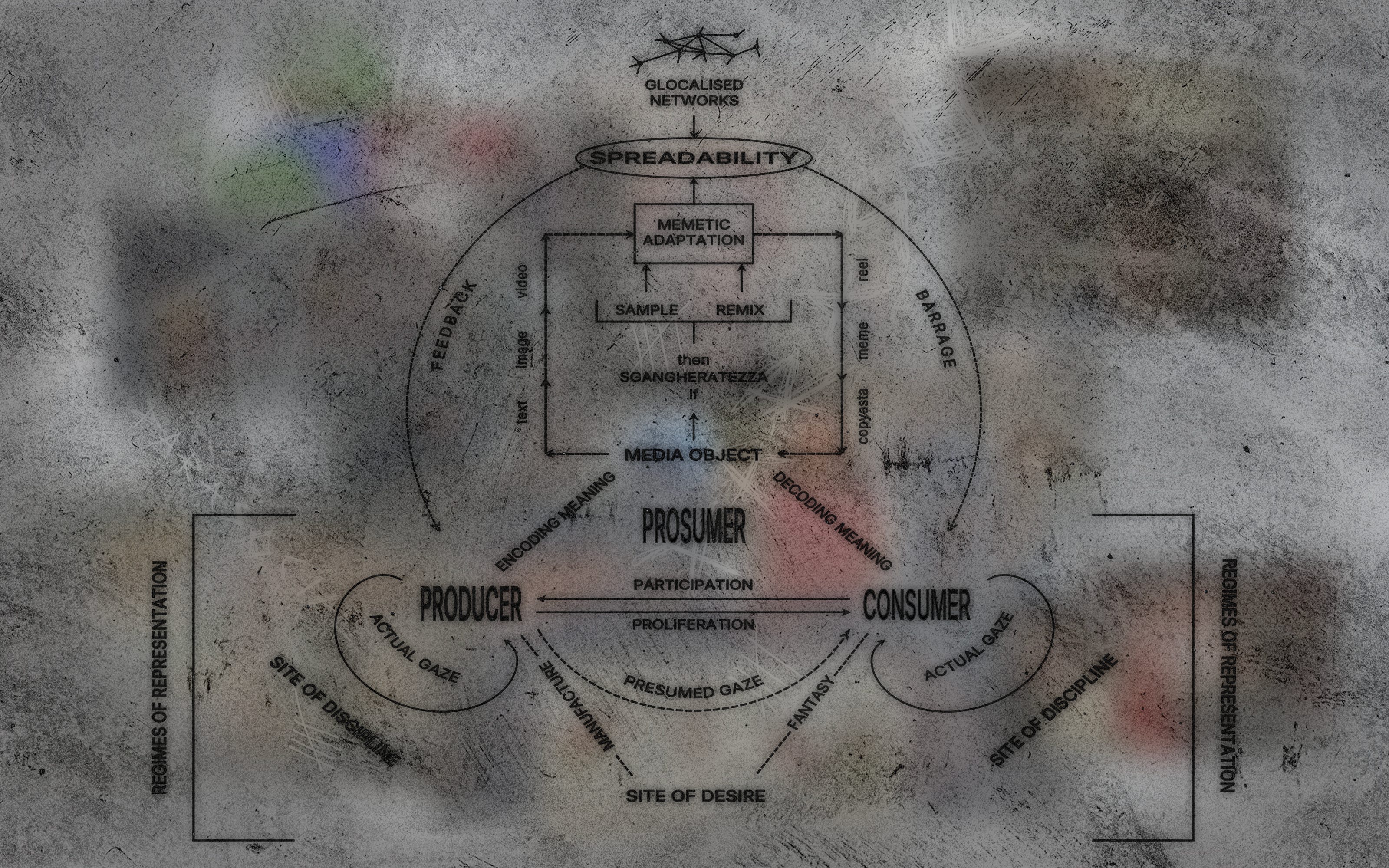
D: Yeah, I think…I think the gaze is a really interesting thing…It’s something that I’ve always kind of returned to. When thinking about the gaze, I am always interested in the power disparity between the watched and the watcher. I noticed…as I began to notice…the kinds of perversities that can be implicit in these things…I mean in general, the media landscape has changed so dramatically over time. At least from the 1920s onwards, we were in a broadcast culture where media was really given to us. And then you know at the sort of turn of the century in 1996 you get the launch of the Internet and we shifted from a broadcast society into a “prosumer society”, right? Where we are not only the consumers of media but also the producers of media and that’s something really interesting from the point of the gaze. Because it’s not no longer a completely single sided dynamic, but something that also necessitates some kind of participation.
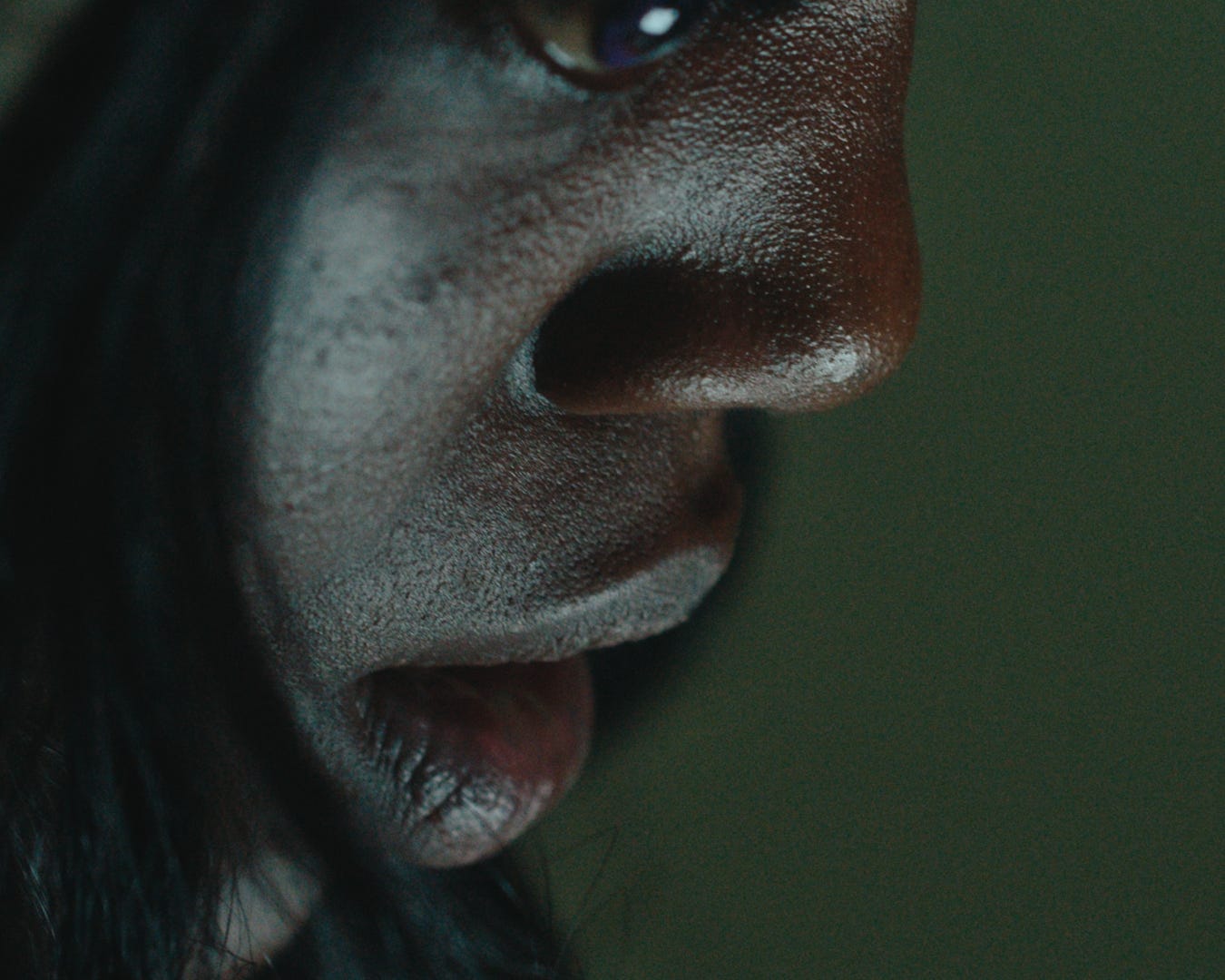
B: But I think that’s really amazing because actually, I want to segue on to this idea of like, you know, it’s not just a mediated… like a passive gaze, but instead actually in itself, a relationship. You engage in something more profound. I’m reminded of Stuart Hall’s concept of, like, you know—with media—there’s both an encoding process and the decoding process, and this process is not smooth. Just as much as the producer encodes a meaning into something they disseminate. It is due to the decoder, you know, the viewer, the observers to…to understand and to generate their meaning. So I find that it’s really interesting that you’re activating that, you know, you engage the viewer of your work, and ask them to question their position within it.
D: It’s very funny that you mentioned Hall. He was someone I was reading a lot of when I was doing the research for this work. I always go back to him.And there’s this quote here from a transcript of a lecture he gave at university, which I’m just going to read out because it’s so great :
“We have a notion in the way in which we talk about images that flood us and barrage us with meanings; as if we can stand outside of them and allow them to be there. The fact is that, if we are concerned about the proliferation of images in our culture, it is because they constantly construct us,through our fantasy relationship to the image, in a way which implicates us in the meaning. And that is what is, in a sense, bothering us. We’re not bothered because we are barraged by something which means nothing to us. We are bothered precisely by the fact that we are caught. We do have an investment, in the meaning which is being taken from it.”
B: Wow. I think that’s beautiful.


D: Yeah, yeah. And I think it’s, it’s that notion of fantasy and that notion of desire and implication that is so central to the work. In a previous project, I was researching desire as a subversive instinct, a way to, sort of, bypass recommender systems or really any system of exponential control that tries to sort of codify us and understand our behaviour as part of its routinised method of control. But now I think I’m really interested in the ways in which desire is disciplined, the way in which it is disciplined within the world itself, but also now almost pre-reflexively disciplined online in the ways in which we engage with this sort of, yeah, the barrage of content.
B: That’s amazing. I just wanted to pick up on something. So, I think the body becomes a site of discourse within this… and maybe perhaps your own body? I think ultimately there is a conversation about race and then about representation to be had. So how does your experience as a black female and as a black British female kind of square with all of this very different and othering experience of seeing your body?
D: I think the body…the body is always going to be a site of political discourse, right? Whether we like it or not. And in some weird regard, living in a neoliberal context has made it so that, like, a lot of different bodies are so “radically accepted” until we experience these extreme moments of rupture.
So, for instance, a body, you know, as ******* brutalised by an instance of police brutality, a body subjugated to slow death, a body plagued by genocide or ethnic cleansing. A body that is, for instance, seen as a threat because of the way it exists in public life.
I think part of the great con of Western ideology is that, like…there’s this idea that every-body is celebrated as long as it, you know, fits within this dominant regime of Western affluence and secular harmony. But the minute you, you know, sidestep that conditional, you find that bodies that might otherwise be celebrated for the very traits said same culture would have found abhorrent in the decades before…these bodies, or rather, these people, become the sites for these horrifying failures and really Western hypocrisy itself. And obviously we are talking about extremes here, but these failures can be little failures, small everyday ruptures and quotidian acts of ideological violence. Like the internalised racism within the fantasies of a teenage girl who wants purple eyes, for instance.
*smiles*