
Cultural Palantirism
Abuse of Fantasy Fiction Comes as No Surprise


Aimee Walleston is a writer and professor based in New York.
Mating political ideologies with artists (and their attendant artworks) is a popular pastime. As contemporary art has waned in influence, a different kind of ideology/culture hybrid has been waxing in the shadows—with perhaps more hegemonic force than ever previously realized.
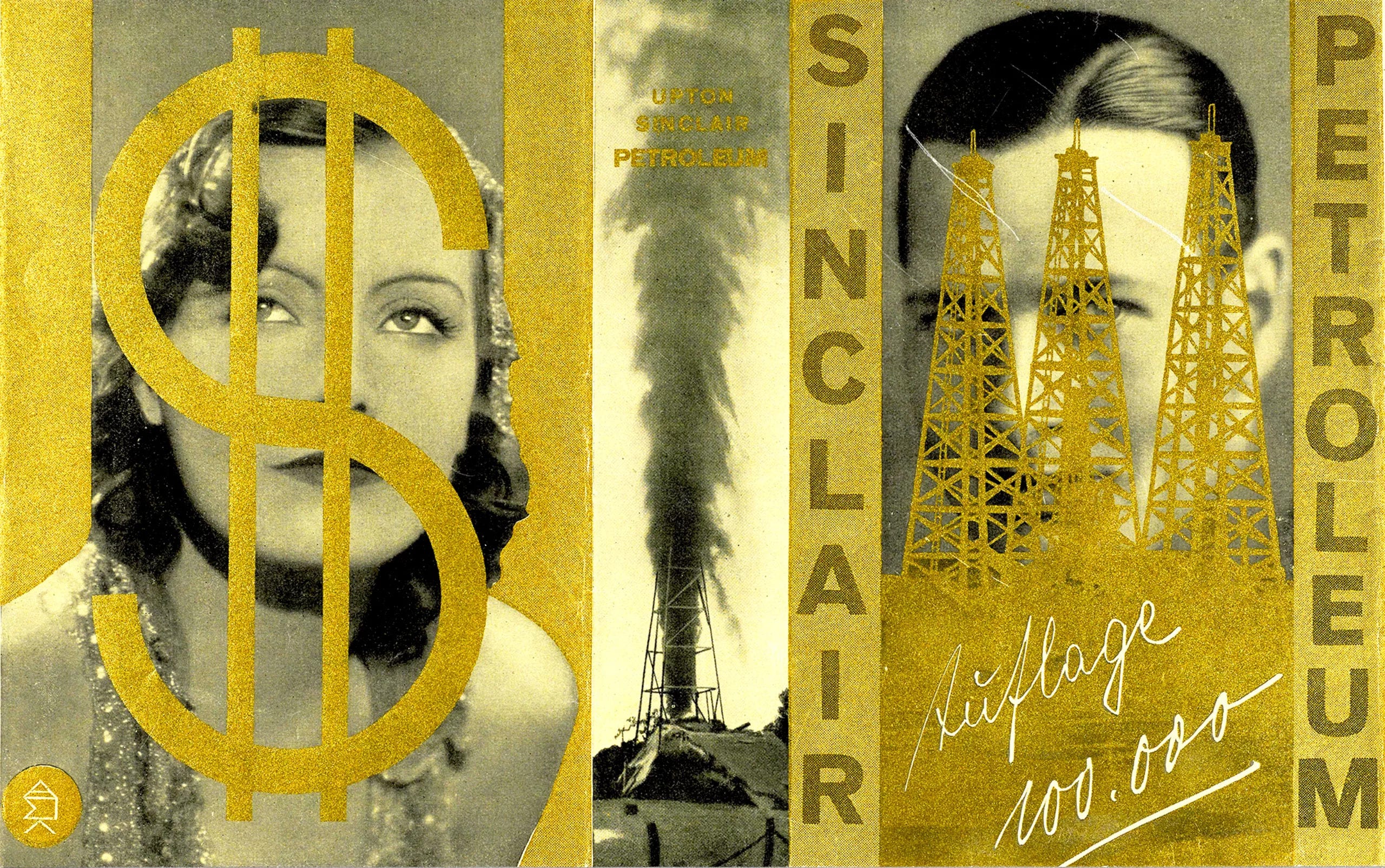
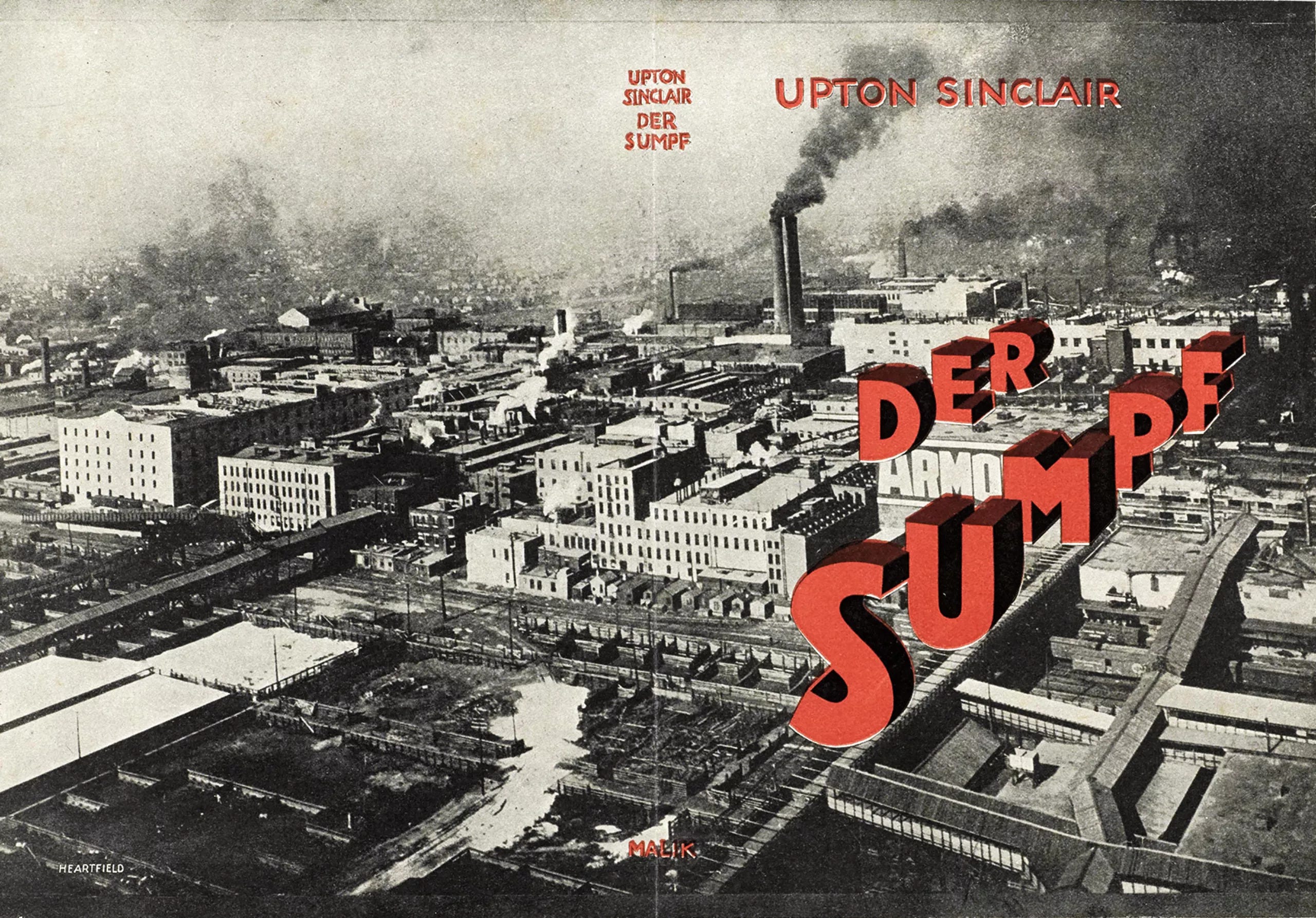
“Cultural Bolshevism" (Kulturbolschewismus) is a term that came into being in 1931. Coined by Carl von Ossietzky, it was first used by the journalist to mockingly describe the Nazi Party’s sweeping antipathy toward Modernist “degenerate” art forms, and anything tangentially related to them. The ideas behind the term, however, came years before, from German Dadaists. In 1920—around the same time as the publication of Lenin’s “Der ‘Linke Radikalismus,’ die Kinderkrankheit im Kommunismus”—writer and gallerist Wieland Herzfelde helped organize the First International Dada Fair in Berlin. He and his photomontagist brother John Heartfield (who worked for the left-wing workers weekly the AIZ and basically made nothing but political art, including book covers for Upton Sinclair) were both members of the Communist Party, and it is believed that their politics are what prompted German writer Richard Hülsenbeck to state: “Dada is a German Bolshevist affair.”
Cultural Bolshevism came and went fairly quickly, followed, in 1938, by “Cultural Marxism.” The first citation for this moniker is by the British Union of Fascists, who claimed that: “The minds of the prospective victims must be...perverted and poisoned to the necessary degree of receptivity. Herein lies the task of cultural Marxism, the preliminary bolshevisation of the mind, facilitated by the indiscriminate toleration-psychosis of liberalism, inherent in Social-Democracy, and leading to its final inevitable collapse.”
As a derogatory term, Cultural Marxism has doggedly persisted into the 21st century, and is currently still used as a conspiratorial stand-in to describe (with hostility) many things in culture, most of which are not in any way Marxist (as has been proven many times over). When this term is used today, it often refers to anything vaguely Progressive, Postmodern, Liberal, Leftist, Frankfurt School, Social Justice-y, or involving blue hair dye and cat ownership. Those who use the term think that Cultural Marxism is what is taught at most universities, and is in fact the only thing taught there.
Socialist artist-types might never apply the moniker of “Cultural Marxist” to themselves, but there is a “Marxish” type of art that is somewhat commonly produced, wherein artists (Ayoung Kim being a recent example) explore phenomena like labor and capitalism in their work. There is further a confusing form of ersatz-Marxism-as-social-praxis that pervades the worlds of art and culture, typically manufactured by those who expand the boundaries of what they think of as “Marxism” to areas far outside of what is covered in, say, Das Capital. Confronted with what they see as a WWMD? (What Would Marx Do?)-type situation of real or perceived cultural inequity (like a billboard featuring fashion models of only one body type), this type of culture-maker often proposes that the “Marxist” thing to do would be to stand against that inequity by supporting the perceived underdog, who they see as good and who they perhaps also relate to in some way.
These are the loose geneses and descriptors of largely 20th century terms and ideas that serve to corral artists, artworks, and general socio-cultural tropes into easily identifiable political categories, however inaccurate they may be. In this spirit, I want to propose a potentially inaccurate term for a real 21st century cultural condition: “Cultural Palantirism.”
In 2025, I became extremely interested in the Zizians. I found much of the journalistic writing and podcasting reporting on the Zizians published to be pretty good, given that I think the professionals and amateurs involved likely had very little experience dealing with the so-called “Rationalist” ideas that underpin Zizian philosophy. So I won’t repeat much of what I found and analyzed. Instead, I will use this group and their ideas as one of a few jumping off points for the cultural condition, aka Cultural Palantirism, that I am diagnosing.
The origins of my thinking on this topic began quite a few years ago, through personal experience. Before and during the pandemic, I was part of an online intellectual discussion group. I joined this group with the idea that the other people involved in it were similarly invested in the things I wanted to think about at the time: i.e., what is the way forward for humanity in a time of obvious social and cultural transformation? A wide variety of topics were discussed in this group, and most of them I found interesting, if for the singular fact that none of them were topics I would be able to talk about with my friends. However, one thing that slightly bothered me was how often the participants would veer toward analogies from, specifically, Game of Thrones—a show I had at that point never watched. References to Ned Stark, “winter is coming,” and White Walkers, among other citations, occurred with such regularity that I began to think: If these people just want to be a Game of Thrones stan club, I do not think I want to be involved in this.
Participating in this group was not the first time I encountered fantasy fiction being twisted into an endlessly referenceable “text.” I grew up in a household that loved and admired certain fantasy fictions (specifically Dune, and also to a lesser extent Lord of the Rings). My parents had renounced the religion they’d been born into, and I have surmised since that these texts, with their epic adventures and morality tales, filled the void left by abandoning organized religion and its similar explanatory texts.

But the Game of Thrones mentions by members of this online community were my initial taste of people who would reference the texts of fantasy fiction as though they were a kind of formed ideology. The key thing for me was that these people weren’t talking about Game of Thrones as entertainment, or even a cultural phenomenon (which, as a critic, is how I’m used to talking about art and other cultural products). They were using themes and characters within the show to try to explain the world without it. A lot of these people were in the Post-Rationalist online communities, so in some ways it seemed to me like they were attempting to develop a lingua franca that they could all reference. Like everyone tuning to concert pitch. And people do this all the time, which is why it didn’t really strike me as anything special (wiretap any brunch spot in America and you will hear a gaggle of mimosa’d women screaming “You’re such a Samantha!” in reference to Sex in the City).
And that’s where I will begin with my diagnosis of Cultural Palantirism, and its attendant cultural influence. What starts as a simple gesture of shared cultural interest to get everyone on the same page apparently devolves into the abduction and abuse of beloved fantasy fictions, in the service of ideology.
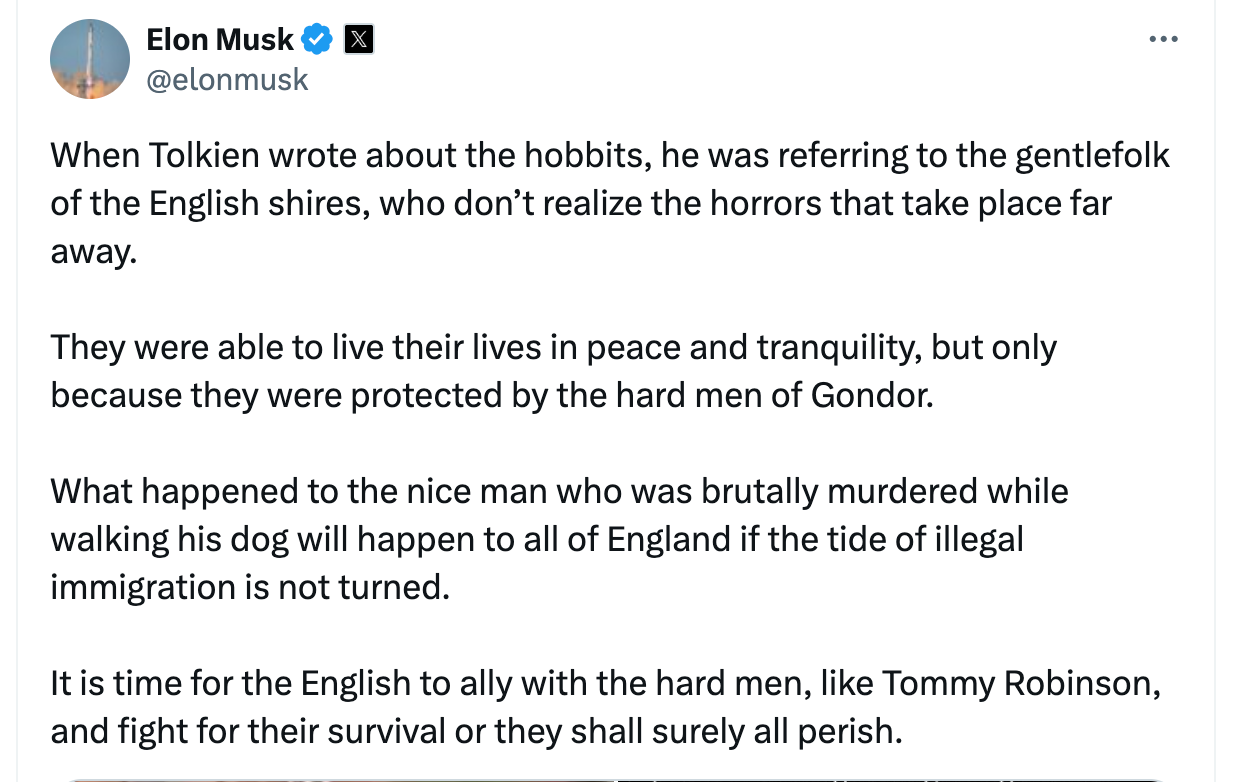
I have named this condition Cultural Palantirism for Palantir Technologies, the single biggest perpetrator of Cultural Palantirism I have found, which is saying a lot. Palantir Technologies was named, by co-founder Peter Thiel, after a seeing-stone found in LOTR—the name is Elvish for “far-seer.” CEO Alex Karp refers to Palantir’s mission as “saving the shire” and has called his employees “hobbits.” Where Cultural Bolshevism suggested that artists were inspired by political ideology and sought to incorporate it in their work to create a realpolitik that more directly mirrored their personal values, Cultural Palantirists inversely weigh down relatively ideological neutral cultural texts with their own agendas. This enforces the notion that they are doing things like “saving the shire” instead of doing what they are really doing—which is controlling culture partially by using a lingua franca that everyone who has ever been under the spell of these texts will relate to positively in some way.
Silicon Valley and the tech sector writ large is awash in people from relatively nerdy backgrounds (this is not a judgment, just an observation). This population has historically had a deep love for fantasy fiction. In 2013, Sean Parker of Napster spent $4.5 million (and illegally damaged a Redwood forest) staging a “Hobbit-themed” wedding—a nuptial Sir Ian McKellen turned down an alleged $1.5 million to officiate, stating: “I’m sorry, Gandalf doesn’t do weddings.” At this point in time, such a gesture just seemed like an instance of “new money/nerd taste,” and not an indication that fantasy fiction texts were set to be used by a certain subset of individuals as a way to both explain and run the world. Nor did it suggest that these individuals would begin to have more and more sway over dominant culture.
It is here that we can circle back to the Zizians. One member of the Zizians allegedly liked LOTR so much that they taught themselves Elvish, but it was not Tolkien’s text that brought this group together. It was, in some large part, the Harry Potter-themed fanfiction by Rationalist superuser Eliezer Yudkowsky. Founder of and a research fellow at the Machine Intelligence Research Institute (MIRI), Yudkowsky recently published If Anyone Builds It, Everyone Dies, which details the existential risk of artificial superintelligence. I’ve come to refer to this book as “One Ring to rule them all, One Ring to find them, One Ring to bring them all, and in the darkness bind them,” because I am of the opinion that the people with the loudest voices in these conversations do not have a grip on human reality, and instead view our world and its real or manufactured problems through the lens they are most comfortable with—the worlds of fantasy fiction.
Before publishing this recent book, Yudkowsky spent five years (beginning in 2010) constructing a serial Harry Potter fan fiction text of some 122 chapters and 660,000 words, titled Harry Potter and the Methods of Rationality (HPMOR). The text, which is well known, uses characters and plotlines from the original Harry Potter books to explain Yudkowsky’s take on “rational thinking” and the singularity, among many other things. This text is the catalyst for bringing two of the Zizians together, and Ziz herself was a MIRI donor in the early 2010s.
Ziz’s many writings, some of which I have unfortunately read, often reference both fantasy fiction and fanfiction. I’m not going to provide a deep dive into her texts or Yudkowsky’s, nor do I intend to speculate on why they inspired the ZIzians, or what the Zizians believe and why (as several others have done this much better than I could, including Evan Ratliff’s exhaustive report in WIRED). What I am going to suggest is much more simple: If you asked Yudkowsky or any of the Zizians to name their favorite artists, or their favorite museums, or their favorite literature, they would likely not have an answer for those questions, other than the aforementioned fantasy fictions, the Star Wars series, and perhaps some dumb fantasy series on Netflix. Text-based fantasy fictions like Dune, LOTR, and the Harry Potter series (as well as the films, shows, and fan fiction they sponsor) seem to be what a large percentage of younger and not so young people in tech (Yudkowsky is Gen X cusp, Ziz herself is a Millennial) view as important and influential “art,” even though most of it (barring Dune) isn’t art at all. It is fantasy entertainment.

This is not to suggest that there is anything wrong with people consuming and loving fantasy narratives as inspiring entertainment. I have known people whose lives were changed for the better through their interaction with this material. I used to ride the horse of a man who became an equestrian (a good one) and stable owner because his Dungeons & Dragons character rode horses, and I think for a nerdy, socially uncomfortable type of young person, engaging proactively with these fantasies can inspire bravery that can lead to better outcomes in their external reality. Rather than fantasizing about “x-risks,” for example, riding horses can put you in direct contact with them, as the age-old adage that I’ve heard at every stable goes: “It’s not if you get hurt riding, it’s when.” Using fantasy as a preliminary step for encountering the scarier aspects of reality can be very useful. Believing in fantasy as a better alternative to reality—to wit: one of the Zizians wanted to raise children with their Zizian partner “in the simulation”—leads to a reality-detached psychology that rationalizes things like murder.
It is not texts like LOTR or Harry Potter that are radicalizing (none of these types of stories is a political call-to-action in the way that, say, Lenin’s texts were). It is instead the manner in which these texts are appropriated or interpolated by ideologists who use them to suit their individual truth claims. If you are a grown adult who writes a Harry Potter fan fiction infused with your own ideology (with the reminder that the Harry Potter books were meant for middle schoolers [not middle-earthers], and that Harry is 11 years old in the first book)—isn’t what you are producing basically a coercive, ideological grooming manual for young people who like Harry Potter? One Redditor posted, astutely, that: “HPMOR just feels like he knew no one would want to read his giant essay ‘The Methods of Rationality’, so he reworked it as a story and stuck the names of Harry Potter characters in there.”
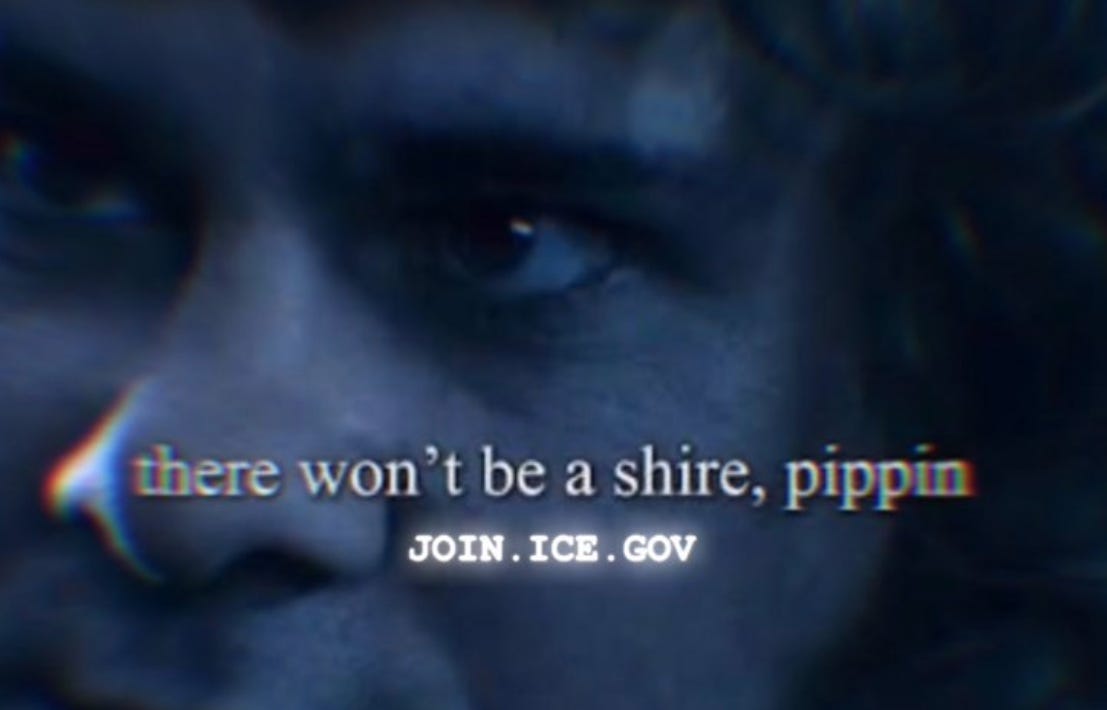
Similarly, when the U.S. government goes on X and uses Tolkien language to insist that “There won’t be a shire, Pippin”—unless people start enlisting in ICE, I think that’s fairly coercive, and really not what the original author intended. WIRED recently wrote on this, and the Tolkien appropriation phenomenon, citing Emma Vossen, a Tolkien scholar and assistant professor of Game Studies at Brock University in Ontario, Canada. Vossen claims that, “Attaching yourself to Tolkien is part of a larger psychological phenomenon... Those who wish to oppress need to see themselves as underdogs (i.e., Hobbits) to justify their actions and values to themselves. It’s very similar to the way the far right uses and abuses the bible to justify their actions.”
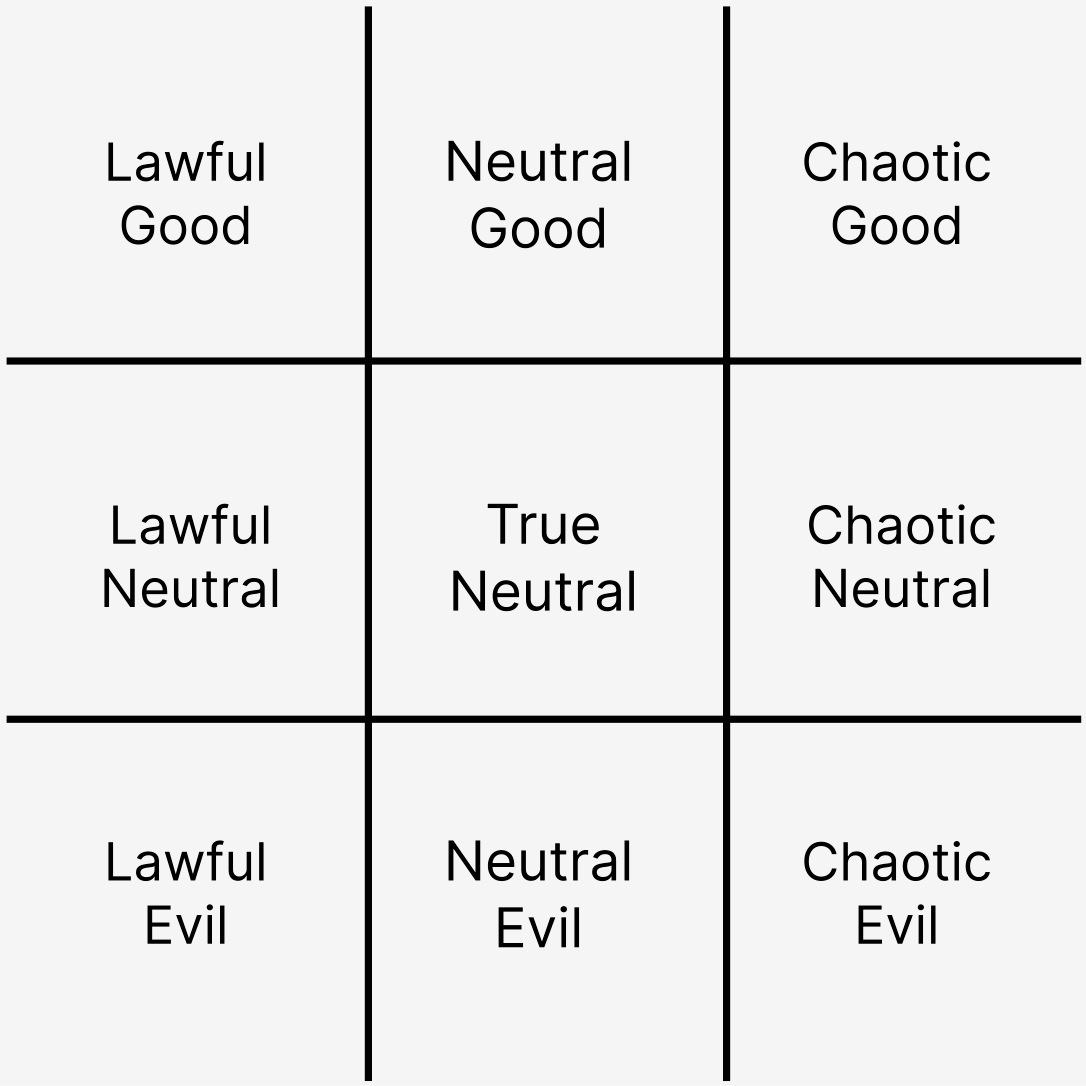
I find her mention of the underdog quite telling. It circles back quite neatly to the idea of Cultural Marxism, and what people are doing when they interpolate a text or ideology to neatly configure a world where they are always the best (Ziz, for example, appropriated and riffed on the D&D concept of alignment to affirm to herself that she was a “double good”). What I have found increasingly interesting about this time period is how much art as a cultural force has been cast aside for this type of material, as though a cultural vertigo has claimed the imaginations of smart people and has forced them to remain in the realm of fantasy.
I think about the writings and attendant movies, television, video games that actually do seem to be heavily influencing thought and cultural production right now. Rather than expanding it, they seem to be collapsing it into a suite of beloved sci-fi and fantasy narratives that almost everyone is familiar with on some level. It’s as though the fear of the future has left everyone trapped inside a familiar narrative or a video game. In these arenas, the future may have its twists and turns, but it never leaves the world it is constructed within. It’s a closed loop. You can have new adventures within, but they never go farther than the limitations you already know exist.
 | A guest post by
|